 Reviewed by Daniel · El Albir resident since 2007 · Updated November 2026 · Write to me
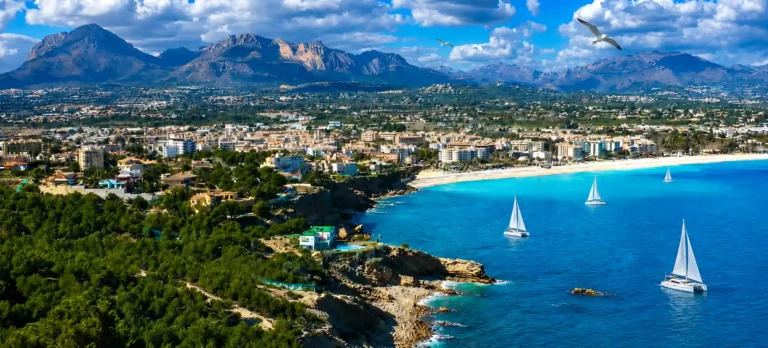
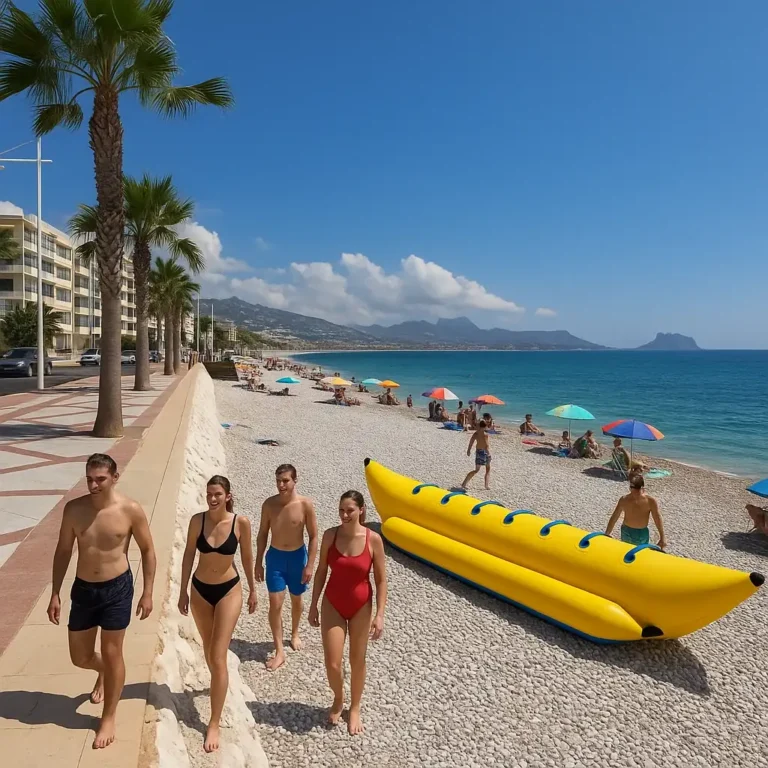
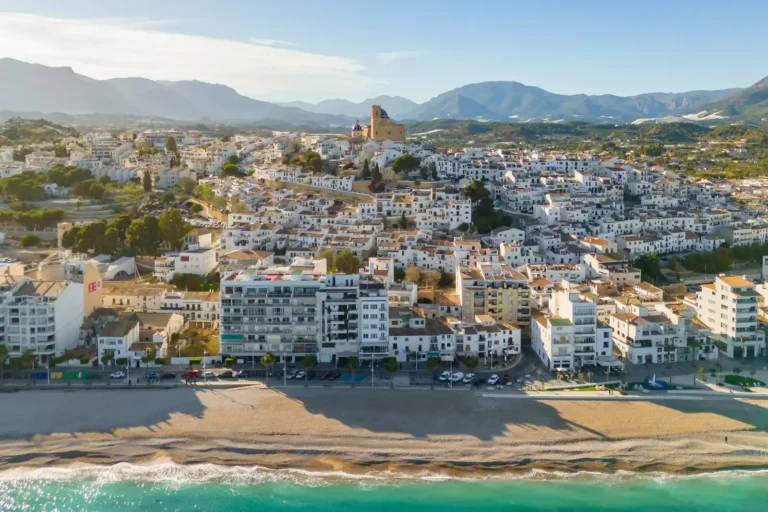
Altea has about 8 km of coastline and hardly any sand: rounded pebbles, hidden coves and water so clear you can see the bottom several metres down. That’s its advantage. With no sand stirred up, the sea is cleaner, and since many people go looking for fine sand, it’s quieter here.
Contents
ToggleI’ll take you through them from south to north, starting with the one that joins El Albir, with just enough to help you pick yours and a link to the guide for each.
Cap Blanch: the one that joins El Albir
It’s Altea’s first beach coming from the south, the natural continuation of Albir beach. It’s long, gravel and pebbles, with the sea almost always calm, and so wide you’ll find a spot even in August. In season it has lifeguards, showers and sunloungers.
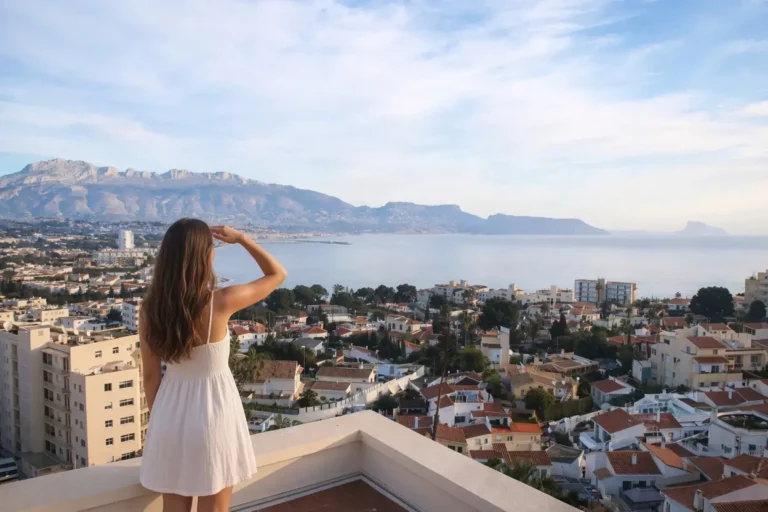
Local’s tip: at sunset, look north: Altea village, the Peñón de Ifach in the distance and the Sierra de Bernia changing colour. From here you can walk to the centre of El Albir along the promenade.
La Roda: the town beach
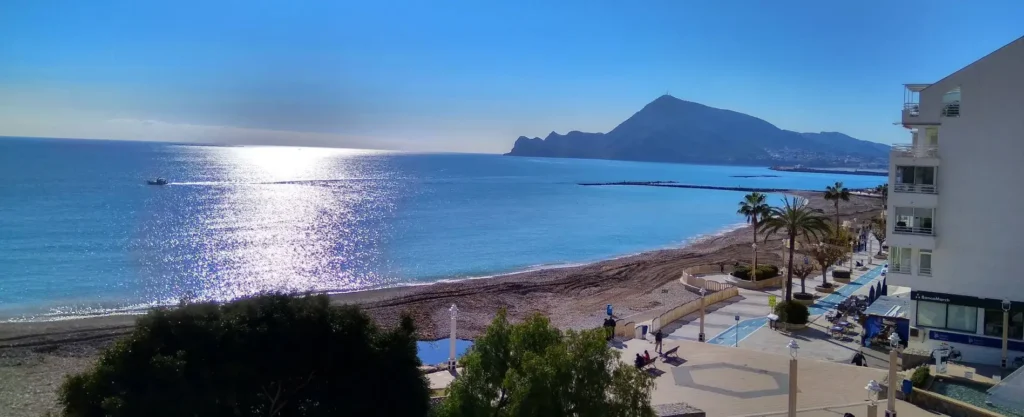
Altea’s urban beach, at the foot of the old town. You come down from the palm-lined promenade and you’re straight in the water. It’s the most popular and has the most facilities (lifeguards, ramps, amphibious chairs, ice-cream parlours and restaurants opposite), but it never fills up like the sandy beaches of Benidorm or Calpe.
Local’s tip: it’s stony. A thick mat or a sunlounger makes all the difference. And in summer, either get up early or come by TRAM, because parking nearby is a lottery.
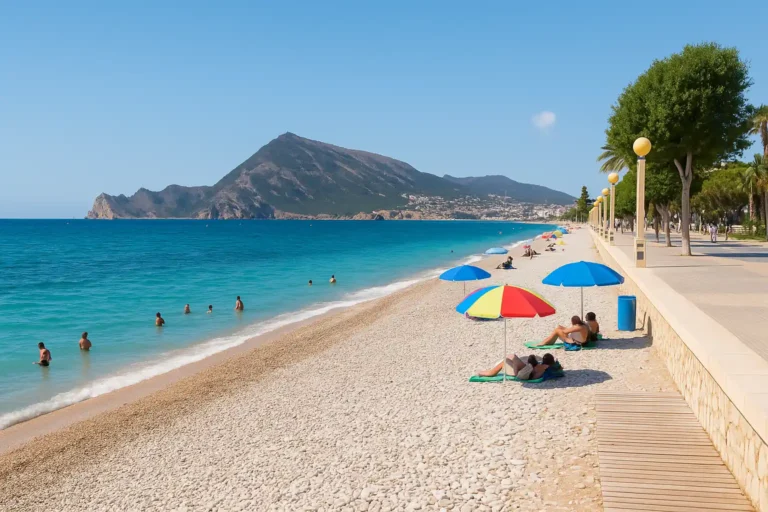
L’Espigó: the calmest water in Altea
A little beach of about 100 metres next to the port, separated from La Roda by the breakwater. Because it’s sheltered, the water is incredibly still; on windless days it looks like a swimming pool. It’s popular with families with small children and older people who want to swim without waves, without leaving the centre.
Local’s tip: it has no showers or beach bar of its own, but La Roda is a few metres away and the ice-cream parlours are just across the road.

Cap Negret: black stone and snorkelling
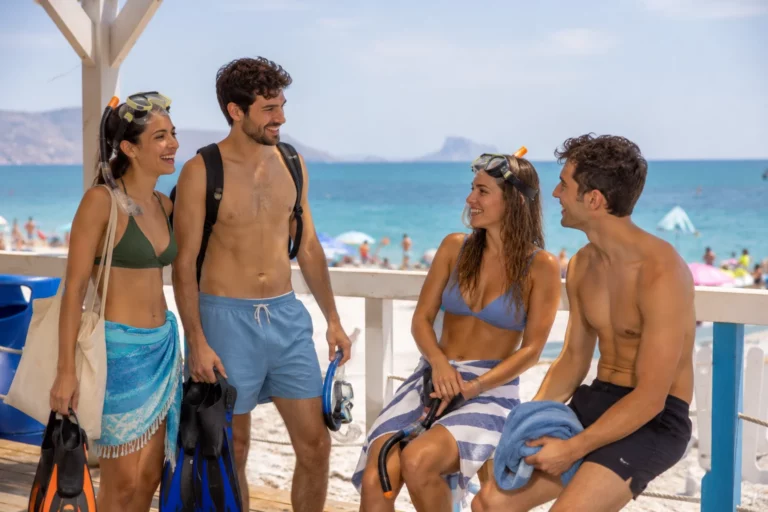
About 2 km of gravel north of the River Algar, with stretches of dark, almost black stone that give it its name. It’s quieter than La Roda, with superb water for snorkelling and the Sierra de Bernia behind. You can walk or cycle there along the promenade from the Algar, and there’s a TRAM stop nearby.
Local’s tip: among its rocks there’s a Civil War bunker, half flooded by the sea. And if you want to read hearing nothing but the waves, head to the northern end.
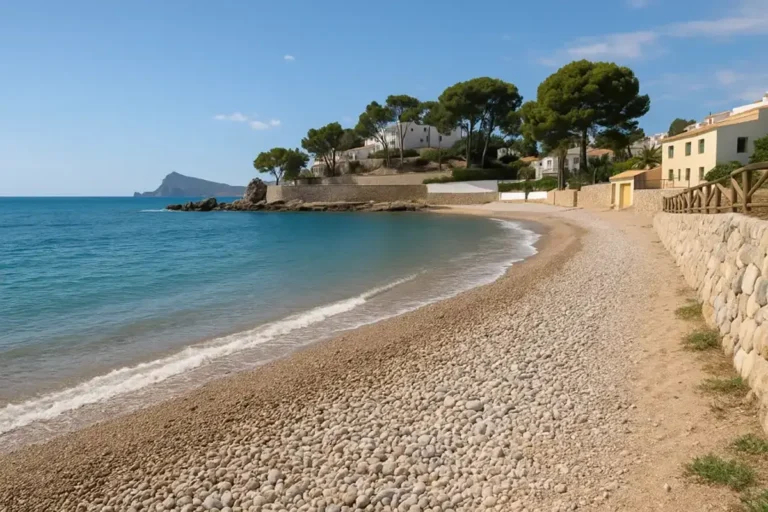
Cala del Soio: the locals’ cove
A tiny cove of large stones and rock, next to the Portet de l’Olla and beneath a pine wood. It’s used almost only by people who live nearby. You reach it on foot by skirting the little harbour, along poorly signposted stony paths. It has no facilities at all: bring everything you need.
Local’s tip: from here you can see the Peñón de Ifach and Albir’s Punta Bombarda at a single glance, the two ends of the bay. If you don’t fancy the path, swim or kayak over from La Olla.
Everything about this cove, how to get there and why it is protected: Cala del Soio, the full story.
La Olla: the island beach
About 3 km from the centre, opposite the island of l’Olla. It’s pebbles in a setting of market gardens, with no tall buildings and old-school beach bars (rice dishes and fish looking out to sea). You can swim or kayak to the island, but it’s a protected islet: don’t touch anything.
Local’s tip: in August, around San Lorenzo, this is where the Castell de l’Olla is held, the great fireworks display launched from the island. That night, Altea’s quietest beach is packed to the rafters: arrive very, very early.

La Solsida: the hidden cove
A natural cove hidden below the Galera de la Solsida development, of pebbles and rock, invisible from the road. It’s unofficially nudist and everyone is respected. Even in August there may be only a handful of people. It has no facilities.
Local’s tip: the path down is steep and covered in loose stones. Wear good shoes, keep your hands free and travel light, because the climb back up is hard going. Go with someone: there are few people around and hardly any phone signal.
Mascarat: turquoise water beneath the Toix
At the far northern end of Altea, beneath the Morro de Toix and next to Campomanes marina. It’s a cove of turquoise water sheltered from the wind, one of the best in the area for snorkelling. You walk down a path that starts from the steps next to the beach bar. On the other side of the headland is Barra Grande, smaller, unspoilt and only for people used to walking over rock.
Local’s tip: get up early. From here you get some of the best sunrises in the area, with the sun coming up beside the Peñón de Ifach.
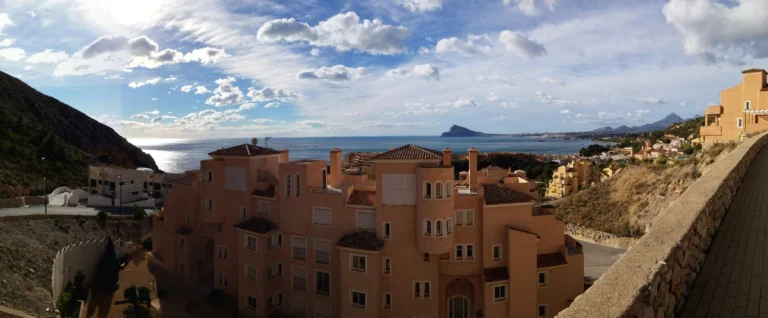
Altea and El Albir: two beach styles five minutes apart
Albir beach and Altea’s beaches share the pebbles and the clear water; in fact, Cap Blanch is the continuation of both. The difference is in the approach. El Albir has one long beach with everything to hand, the promenade and the Serra Gelada above it. Altea spreads its coastline across coves waiting to be discovered. The best part is you don’t have to choose: you live in one and swim in the other.
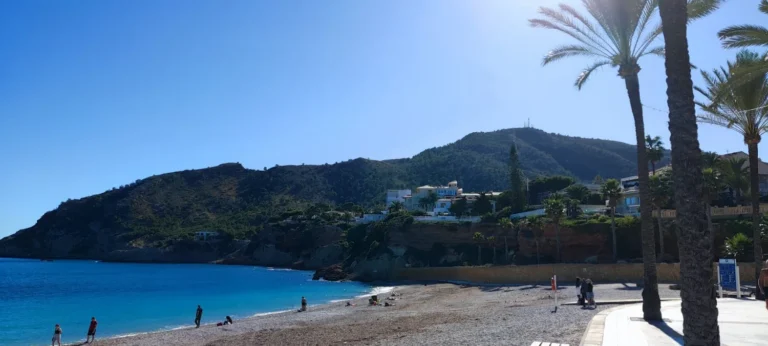
Frequently asked questions about Altea’s beaches
Are there sandy beaches in Altea?
No, almost all of them are pebbles and gravel. Some coves, like Mascarat, have a little coarse sand mixed in. For fine sand, the nearest is Benidorm or Calpe. In return, in Altea the water is clearer and there are fewer people.
Which is best for children or older people?
La Roda, for its facilities and access, and l’Espigó, for having the calmest water in town. El Soio, La Solsida and Barra Grande aren’t recommended because of the way down.
Which is Altea’s quietest beach?
The harder it is to get to, the fewer people there are: La Solsida and Barra Grande. Of the easy-access ones, the northern part of Cap Negret and La Olla.
And now, pick yours
If you come to Altea, don’t stick to La Roda; the coves are the best thing it has. For the rest of the town (where to eat, what to see, where to sleep), go back to the guide to Altea. And if you wonder what it would be like to have this sea on your doorstep all year round, in our guide to living in El Albir I tell you about real life five minutes from these beaches.
To plan your visit to the area, start with the El Albir guide written by a local.
You may also be interested in
I'm Daniel and I've lived in El Albir since 2007. LiveinAlbir.com started because so many people would stop me in the street to ask where to eat, where to stay, which areas are worth it and what living here is really like.
Questions about El Albir? Write to me and I will get back to you.