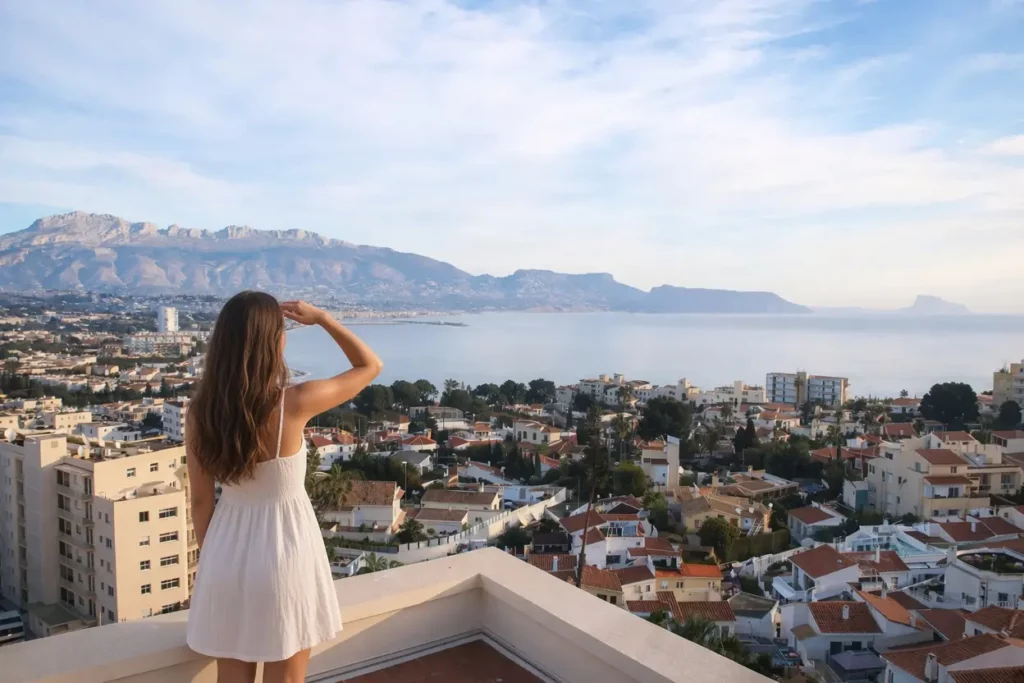
El Albir is small, and that’s exactly its great strength: everything worth seeing is within walking distance. In a single day you can walk over the stars of Spanish cinema along the promenade, step into Roman baths right beside the beach, and climb through a nature park up to an 1863 lighthouse with the Mediterranean at your feet.
I’ve lived here since 2007. These are the six places I show anyone coming for the first time, along with what almost nobody tells you: when to go, what’s closed and when, and where most visitors get it wrong.
Table of Contents
ToggleEl Albir’s must-sees at a glance
| Place | Approx. time | Entry | Watch out for |
|---|---|---|---|
| Walk of the Stars | 30-45 min | Free | Best at sunset |
| Playa del Albir | Flexible | Free | Pebble beach — bring water shoes |
| Roman Villa | 45-60 min | Free | Closed Mondays |
| Albir Lighthouse | 1h30–2h round trip | Free | No shade the whole way |
| Serra Gelada coves | Half day | Free | No facilities, tricky descents |
| Serra Gelada Natural Park | Half day or more | Free | Long routes, no water |
Approximate times, depending on your pace.
The Walk of the Stars
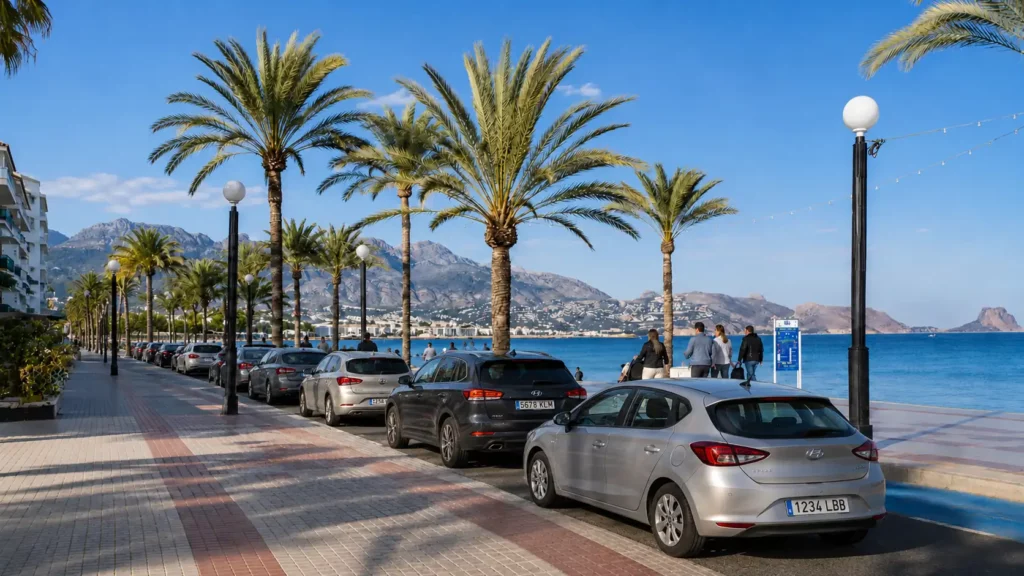
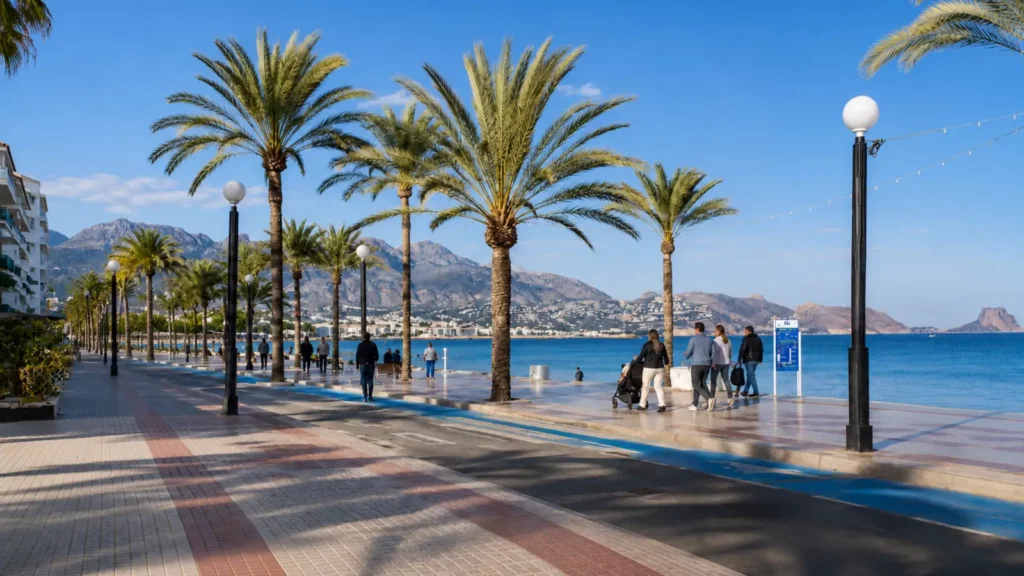
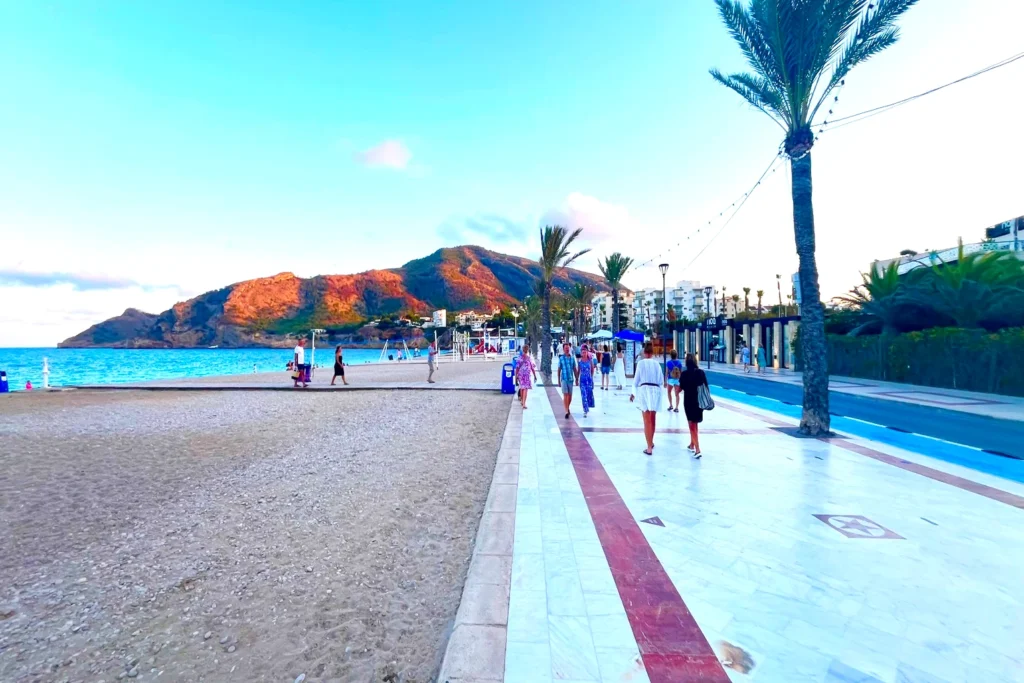
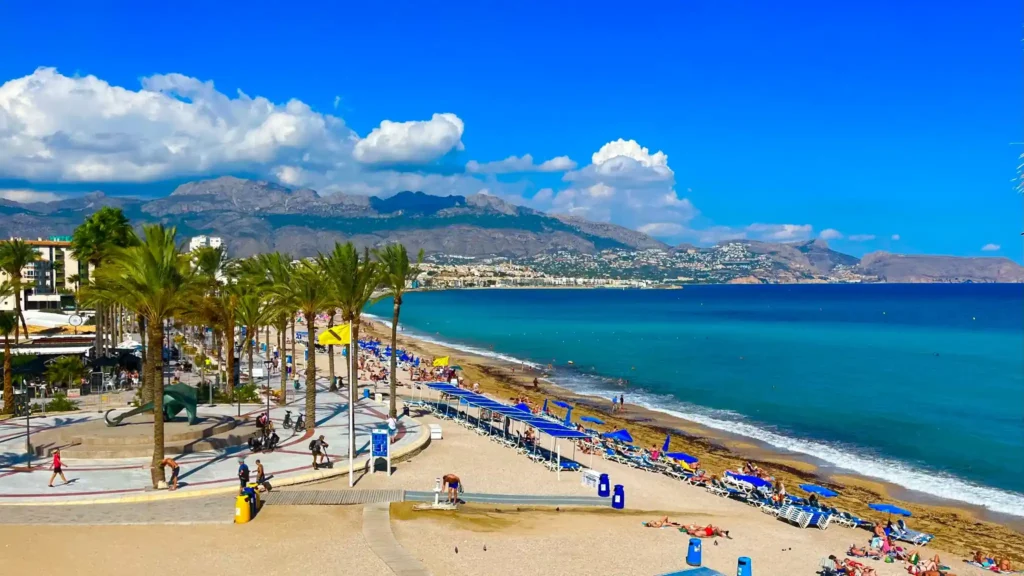
It is El Albir’s seafront promenade, recently redesigned as a pedestrian space, and the point where almost everything starts. Set into the ground are more than sixty stars bearing the names of Spanish cinema figures honoured at the l’Alfàs del Pi Film Festival, held since 1989. The first stars were laid in 1991, and each edition normally adds three more.
If you come in early July you will coincide with the festival and the unveiling of that year’s stars. The rest of the year, the best moment is sunset, when the promenade fills up with locals.
The Albir tourist office is on this same promenade, handy for checking the day’s opening hours.
Albir Beach
The first thing to know: it is pebble, not sand. It runs for about half a kilometre, it holds a Blue Flag, and the water is among the cleanest in the district precisely because of that stone bed. Without water shoes, getting in and out is uncomfortable.
In summer it has lifeguards, showers, toilets, a children’s area and something very few beaches offer: a free beach library from mid-June to mid-September, with newspapers and books in several languages, including Norwegian, Dutch and English.
Rules worth knowing: dogs aren’t allowed from June to September, and glass is banned all year round.
The Roman Villa of Albir
A few metres from the sand stands the first open-air museum in the Valencian Community. The remains were found in 1979 during building work, excavations resumed in 2008 with the University of Alicante, and the museum opened in 2011. You walk around it on raised walkways, and the most striking parts are the baths, considered among the best preserved in the province, and a family mausoleum.
It has something you do not expect at an archaeological site: virtual reality headsets that drop you into three scenes of life in the villa, among them a bath in the thermae and a banquet. There is also a room with 45 pieces found during the excavation.
Entry is free. The classic mistake is turning up on a Monday or on a winter afternoon: outside summer it only opens in the mornings, and it closes on Mondays. In summer it switches to mornings and evenings. Check the current opening hours on the town hall website before you go.

Albir Lighthouse
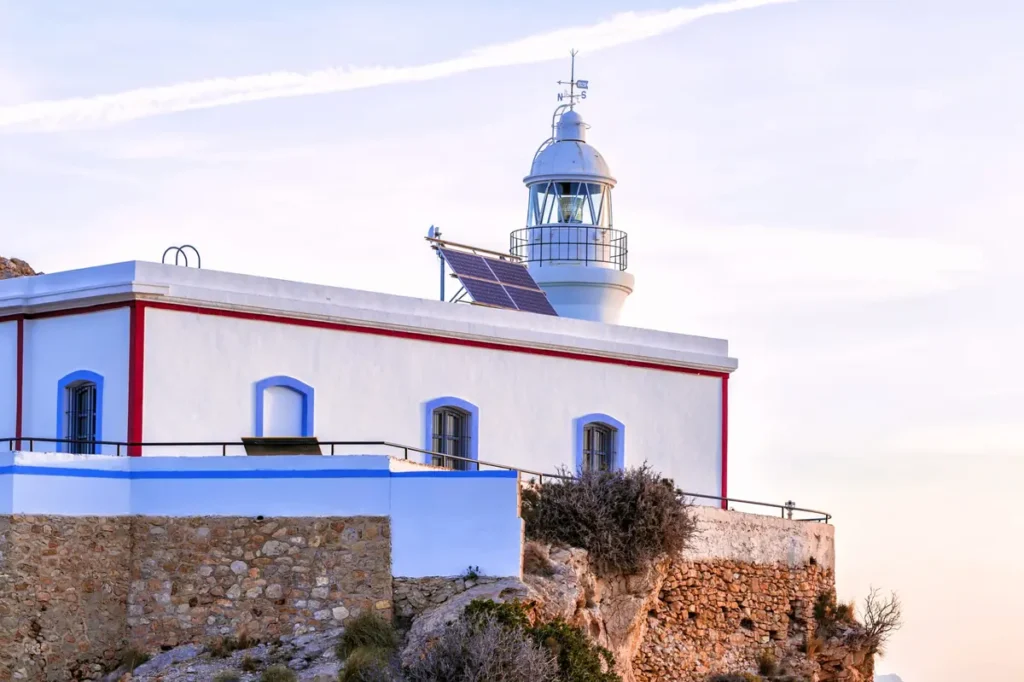
This is the one visit nobody should skip, and it is not just my opinion: in 2026 the path to the lighthouse was named Spain’s Best Blue Trail, and in 2025 the town hall estimated more than 300,000 visitors, admitting the real figure is higher.
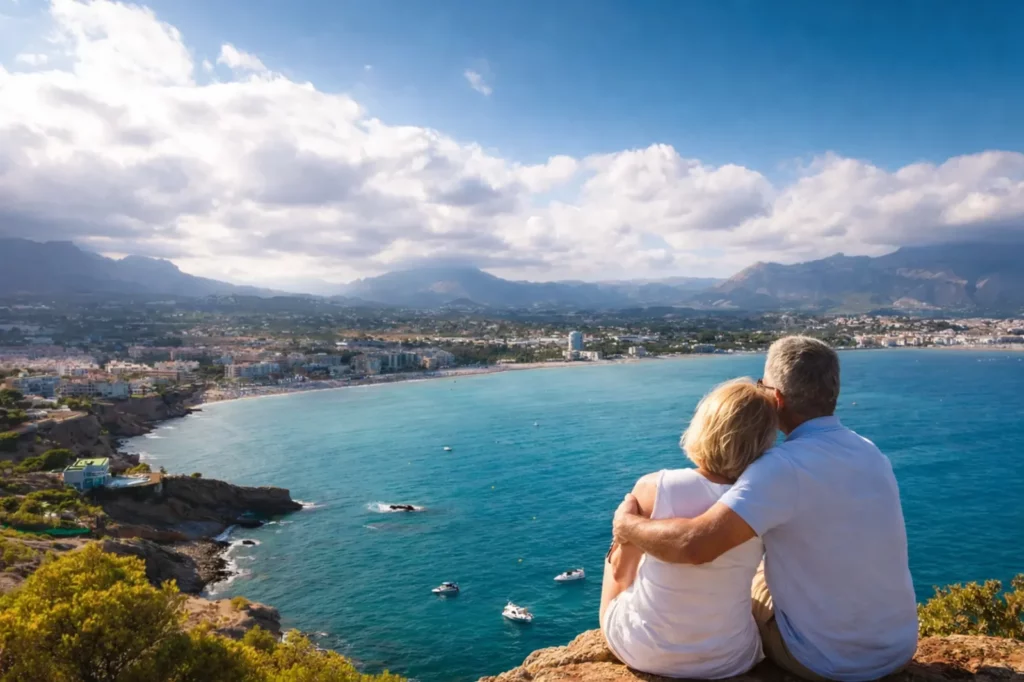
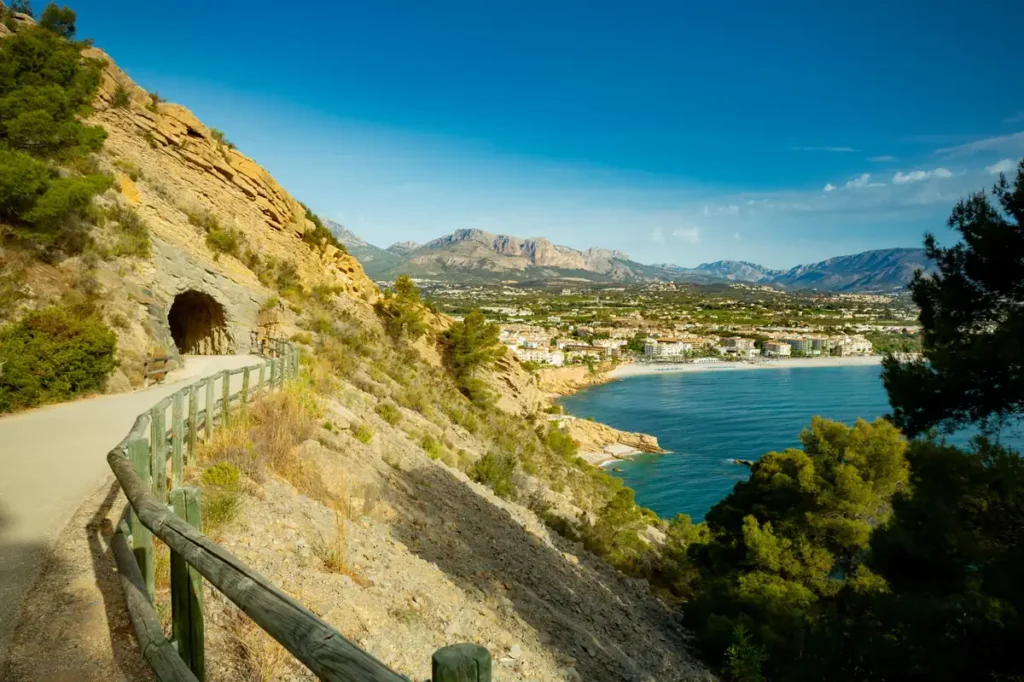
It is about 2.5 km each way along a paved road closed to traffic, with a gentle gradient. Along the way you pass a tunnel cut into the rock, an old ochre mine, the remains of the Torre Bombarda and several viewpoints over the bay of Altea. With luck, you will spot bottlenose dolphins from above.
The lighthouse was built in 1863, 112 metres above the sea, and today it houses a free interpretation centre on the life of the lighthouse keepers and on the Serra Gelada, open mornings, with hours that change by season.
What you need to know:
- There’s no shade and no bar anywhere along the route. In summer, head up early or late in the day, with water, a hat and sun cream.
- Bikes are only allowed before 10 a.m. and after 8 p.m.
- Dogs must be kept on a lead at all times.
- Since it’s paved, it works with a pushchair or wheelchair. For people with reduced mobility, there are adapted all-terrain chairs that can be booked in advance.
The Coves of Albir: Amerador, Metge and Mina
The ways down to three coves inside the natural park branch off the lighthouse road itself, and each one is different.
Cala del Amerador
The smallest, almost at the entrance to the park. Its access path is in poor condition and signposted as restricted.
Cala del Metge
The best known and the prettiest. The turn-off is about 300 metres after the start of the road. The final descent is tricky, but down below the water is perfect for snorkelling. Go in the morning: in the afternoon it falls into shade.
Cala de la Mina
The wildest, with a bed of large rocks and more swell. For anyone after solitude who knows how to move over stones.
None of them has any facilities. The classic mistake is heading down as if it were the beach on the promenade: in flip-flops, with no water and with small children. Closed shoes for the descent, water shoes for swimming, and everything you need in a backpack. They are not accessible with reduced mobility.
If you would rather not walk down, many people arrive by kayak or paddleboard, following the cliffs round from the beach.

Serra Gelada Natural Park
The range that closes off El Albir to the south was declared a nature park in 2005 — the first land-and-sea one in the Valencian Community. Of its 5,500-plus protected hectares, around 88% is sea: posidonia meadows, islets and seabird colonies such as the crested cormorant.
On land, the cliffs drop more than 300 metres to the sea, and a fossil dune clinging to the slope is one of the Community’s geological landmarks.
From El Albir you have two very different options.
The lighthouse walk
Easy, paved and for everyone.
The trek to Benidorm over the Alt del Governador
About 8.5 km of steep ups and downs, with no water fountains, passing the range’s highest point — around 438 metres according to the park’s signs. Only if you’re fit, and better outside summer. You can take the bus back from Benidorm.
What almost nobody tells you: three more corners
The usual guidebooks stop at the lighthouse and the beach. Right at the entrance to the natural park there are three spots we locals actually use and most tourists drive straight past.
La Cantera: viewpoint, picnic area and via ferrata
An old Serra Gelada quarry turned into a recreation area, with picnic tables, a children’s play area, a viewpoint towards the Puig Campana and the Ponoig, and a via ferrata on about 30 metres of wall. It is a beginner route, one of the easiest there is, and it takes under an hour, so it even works with older children. You need your own gear or an activity company. It is a 15-minute walk from the lighthouse car park, and it is also the starting point for the climb up the Alt del Governador.
The Old Carabineros Barracks
On the same Camí Vell del Far, at the entrance to the park, stands one of the oldest buildings in l’Alfàs del Pi: the 1829 Carabineros barracks, restored as the Natural Park office and information point, with a garden open to the public. A good place to ask about the state of the trails before you set off.
The Torre Bombarda
Next to the lighthouse stand the remains of a 16th-century watchtower, built to warn of approaching pirates and listed as a Site of Cultural Interest. From up there it commands the whole bay of Altea, and you understand why they put it where they did. Most people reach the lighthouse, take the photo and turn back without ever noticing it.
How to see El Albir depending on the time you have
Two hours in the morning
Roman Villa, Walk of the Stars and a while on the beach. All flat.
Two hours in the afternoon
Beach, a stroll at sunset and a terrace. Leave the Roman Villa for another morning, except in summer.
Half a day
The lighthouse early, a visit to the interpretation centre while it is open, and an unhurried walk back down. If you still have the legs for it, detour to Cala del Metge.
A full day
Lighthouse and Cala del Metge in the morning, lunch in El Albir, the Roman Villa if it is summer and it opens at night, or the beach in the afternoon, and a stroll at sunset to finish.
El Albir with reduced mobility
Much of El Albir is accessible, but not all of it.
| Place | Accessibility |
|---|---|
| Walk of the Stars | Pedestrian and flat |
| Playa del Albir | Boardwalks and an accessible bathing point with an amphibious chair beside the beach library, in season |
| Roman Villa | Adapted route |
| Lighthouse path | Paved; adapted all-terrain chairs available with advance booking |
| Coves | Not accessible |
| Serra Gelada traverse | Not accessible |
The most common visitor mistakes
- Turning up at the Roman Villa on a Monday or a winter afternoon and finding it closed.
- Walking up to the lighthouse at midday in August with no water.
- Going down to the coves in flip-flops or with small children.
- Coming to the beach expecting fine sand.
- Taking a bike along the lighthouse road outside the permitted hours.
- Bringing the dog to the beach in summer.
Frequently asked questions
Can you see El Albir without a car?
Yes. Every place on this page can be reached on foot from the centre.
Do you have to pay to get in anywhere?
No. The Roman Villa, the lighthouse interpretation centre, the path and the coves are all free.
How long does it take to walk up to the lighthouse?
Between 40 and 50 minutes uphill at an easy pace, about 2.5 km. There and back with stops, reckon on an hour and a half to two hours.
When is the best time of year to come?
Spring and autumn for walking; June and September if you want to combine swimming and excursions with fewer people.
What is there to see in El Albir with children?
The Roman Villa with the virtual reality headsets, the lighthouse path with a pushchair, the children’s area on the beach and, with older children, the via ferrata at La Cantera. The coves are better left until they walk confidently.
Can I swim in the coves?
Yes, but with no lifeguards and no facilities. Cala del Metge is the easiest for a swim; Cala de la Mina, with rougher water, is best avoided.
And once you have seen it all
That covers the essentials of El Albir. If you are staying the whole day you will need somewhere to refuel: our pick of trusted restaurants in El Albir has options for every budget. And for the rest of the town, go back to the guide to El Albir told from the inside.
Opening hours and access conditions are subject to seasonal change. Check them on the l’Alfàs del Pi town hall website or at the tourist office on the promenade before your visit.