
Table of Contents
ToggleCALA DEL MASCARAT (ALTEA): COMPLETE TOURIST AND PROPERTY GUIDE
Cala Mascarat is a small coastal cove located in Altea, in the province of Alicante, within the famous Costa Blanca. It lies at the northern end of Altea’s coastline, close to the border with Calpe and beneath the imposing cliffs of the Morro de Toix, within the natural surroundings of the Sierra de Bernia. It is a cove of pebbles and gravel, with no fine sand, whose crystal-clear waters make it ideal for snorkelling and diving. The setting combines the best of Mediterranean nature—cliffs, pines and turquoise waters—with the proximity of exclusive residential developments and a marina, creating a picturesque contrast. Altea, the town Cala Mascarat belongs to, is known for its traditional charm and peaceful atmosphere; in fact, Altea is a popular destination for its old town and views of the Mediterranean, and Cala Mascarat is one of its most surprising coastal corners.
From a tourist point of view, Cala Mascarat offers a relaxed atmosphere, away from the crowds, ideal for those looking for peace and quiet and natural beauty. It is common to see visitors enjoying the sun on their towels (laid on the finer gravel areas) or exploring the rich seabed teeming with fish thanks to the clarity of the water. Although it is not a long beach, its setting between mountains and the proximity of the Campomanes marina (Marina Greenwich) give it services and access that other remote coves lack. In addition, some bathers practise naturism respectfully in the more secluded parts of the cove, something that is tolerated though not official.
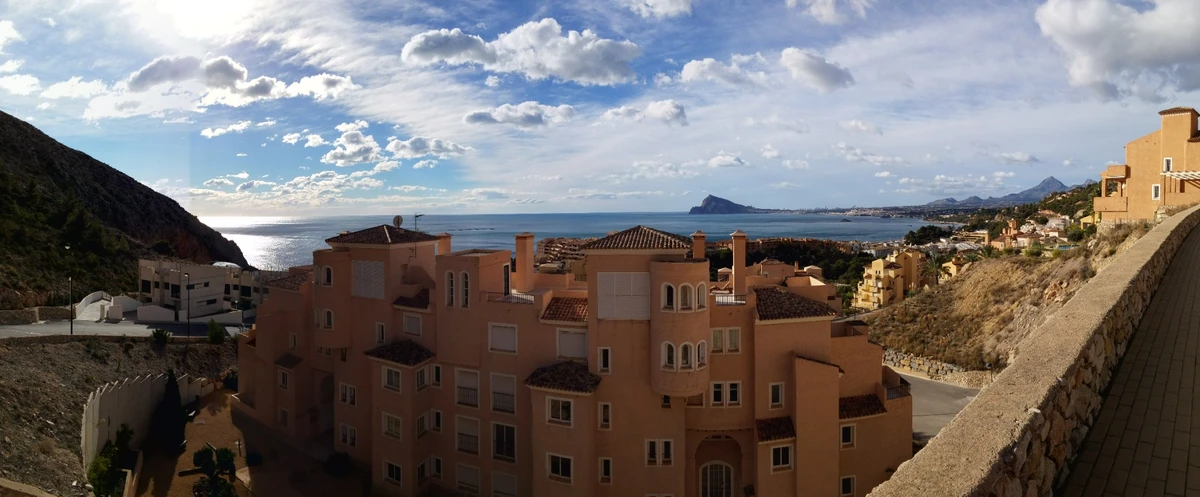
On the other hand, the property appeal of the Mascarat area is notable. The hills around the cove are home to luxury developments (such as Pueblo Mascarat and Altea Mascarat) with apartments and villas enjoying privileged sea views. This has made this corner an interesting place to invest in a home on the Costa Blanca, especially for foreign retirees or those looking for a second home in the sun. In this guide we will cover both the tourist aspects—how to get there, what to do, services, nearby routes—and a look at the lifestyle and property investment near Cala Mascarat. Get ready to discover why this cove is a little hidden paradise in Altea!
HOW TO GET TO CALA DEL MASCARAT (ALTEA)
Cala Mascarat (also known as Playa Mascarat or Playa de La Barreta) is located about 6 km north of Altea town centre and roughly 10 km south of Calpe. Below we explain how to get there easily, whether by private car, public transport or even with the help of maps and landmarks.
By car
Getting there by car is the most convenient and direct way to reach Cala Mascarat. If you are coming from the south (from Alicante, Benidorm or El Albir), you should take the N-332 national road towards Calpe/Valencia. After passing Altea town centre and the Olla/Cap Negret area, the road begins to climb towards the Sierra de Bernia. You will have to cross the historic Puente del Mascarat (an elevated viaduct) and then a few short tunnels. Just as you leave the tunnels, keep an eye out for signs to “Puerto Deportivo Campomanes / Marina Greenwich” or “Urbanización Mascarat”. That is the turn-off you need to take, on the right, to head down to the coast.
If you are coming from the north (from Calpe or Valencia along the N-332), you will find the same turn-off but on the left-hand side, before the tunnels and the bridge. Either way, the main entrance is marked by signs to the Luis Campomanes marina (Marina Greenwich). Follow that road (Calle Curricán) along its bends until you reach the flat area of the marina. You will see the sea and the Mascarat apartment buildings close to the shore.
Another alternative if you are coming along the AP-7 motorway: take exit 64 Altea/Calpe if you are coming from Alicante, or exit 63 Benissa/Calpe if you are coming from Valencia, to join the N-332 and then follow the directions given above. The journey from Altea town is about 10–15 minutes by car, and from Calpe also around 10 minutes.
Once in the Mascarat/Campomanes development, continue towards the beach following the internal streets: Playa Mascarat is right next to the marina, in the lower part of the Pueblo Mascarat development. You can use Google Maps by searching for “Cala Mascarat Altea” to get your bearings; the location is very accurate.
By public transport
Access by public transport is possible but requires a little planning, since there is no direct bus or train to the cove itself. The main options are:
Train/TRAM: Line 9 of the Alicante Metropolitan TRAM (narrow-gauge train) connects cities such as Benidorm, Altea, Calpe and Dénia. Currently, the stop closest to Mascarat is Garganes station (Altea) or Olla de Altea, but both are several kilometres from the cove. For example, Garganes station (in Altea centre) is about 6 km from Cala Mascarat. If you opt for the TRAM, the most practical thing would be to get off at Altea and take a taxi from there (about a 10–15 minute journey) to Playa Mascarat. In 2025, because of works on the line, there are also shuttle buses between stations, so it is worth checking the situation of the TRAM at the time.
Intercity bus: There is an intercity bus line between Altea and Calpe (for example, line L-10 run by ALSA, or local services) that makes stops along the N-332. Ask whether the bus stops at Mascarat or at Puerto Campomanes. In fact, according to the official guides, there is a bus stop about 400 metres from the beach (Altea–Calpe line). This stop is on the main road, near the entrance to the Mascarat development. If you manage to get the bus to drop you there, you will have to walk about 5–10 minutes down the paved slope to the beach.
Taxi: Taking a taxi directly from Altea (or even from Calpe) is a convenient option if you don’t have a car. Since the distance is not very long, the fare can be reasonable if shared between several travellers. Ride-hailing services such as Uber/Cabify may also be available in the area.
Bicycle: For the more sporty, it is possible to get there by bike. Bear in mind that the terrain from Altea to Mascarat involves significant climbs (the Mascarat area is a saddle between mountains). Even so, the road has a hard shoulder in many stretches and the view on the descent to the cove is spectacular. An electric bike could make the journey more manageable.
Once you are in the Mascarat development, you will need to find the footpath that leads to the cove. From the marina, a short stepped path takes you straight to the shore of Playa Mascarat Sur (the area known as La Barreta). Ask locals or marina staff if you are in doubt: the beach is next to the marina’s north breakwater, you can’t miss it.
Parking and location map
On arrival, you will see that the cove is divided into two main stretches, separated by the rocky point of Mascarat. Next to the beach and the marina there is a large dirt car park (unpaved) where you can leave your car free of charge. This car park is right behind the beach, which is very convenient so you don’t have to carry coolers or parasols for long. Its approximate capacity is about 30–50 spaces, so in high season (July–August, especially at weekends) it can fill up by mid-morning. It is advisable to arrive early to be sure of a space.
Important: Avoid parking on interior streets of the development that are signposted as private areas or reserved for residents. Neighbours report that badly parked vehicles are often fined or even towed. It is best to use the parking area provided at the beach itself or any open space indicated.
As for accessibility, from the car park there are short paths leading to the beach. The main path has a wooden walkway or ramps that make it easier for people with reduced mobility to reach the shore. However, getting around the beach itself is limited for wheelchairs because of the pebbles (the ground is uneven and there are no walkways over the loose stone). That is, you can reach the entrance of the beach by a ramp, but once in the stony area, moving around is difficult. There are no continuous walkways over the beach and no adapted shoreline with special shaded areas. Even so, being able to bring the chair up to the water’s edge is a plus for those who need assistance, and signs and signage have been installed to improve orientation and the experience of all visitors.
On Google Maps, the exact location is “Playa Mascarat / Playa La Barreta, Altea”. You can also search for “Cala del Mascarat” and it will point you to the same place. Note that sometimes a distinction is made between Playa Mascarat Sur (La Barreta) and Playa Mascarat Norte, the latter being a small adjoining cove in the municipality of Calpe. The main one, where the car park and the beach bars are, is the one on the south side (Altea).
In short, getting to Cala Mascarat is simple if you follow the directions: turn off the N-332 towards Puerto Campomanes, go down to sea level and park on the esplanade next to the cove. From there, you will already be enjoying this unique Mediterranean corner!
Parking and accessibility at Playa Mascarat
As we mentioned, the Cala Mascarat car park is right at the beach, on an earth esplanade. It has room for fewer than 50 cars and is not supervised (it is an open public car park). Although not huge, it is usually enough given the low number of visitors to the cove on weekdays. In high season, at weekends it can fill up; in that case, some visitors park along the road down or in areas near the marina (be careful not to encroach on private areas). There is no parking charge. Access to the car park is easy even for small caravans or camper vans, and in fact it is a place appreciated by motorhomers for staying overnight with sea views (although officially overnight stays may be restricted, many do so with caution).
As for accessibility, it is worth reiterating that it is not a fully adapted beach, but it does have a ramp that brings you close to the water’s edge. People in wheelchairs or with baby buggies can get from the car park to the start of the pebble area thanks to this walkway. There is no amphibious chair service or walkway over the sand, since technically there is no fine sand but gravel. For that reason, bathing for someone with reduced mobility may require help from companions to get past the first few metres of pebbles.
The cove has no promenade (it is a natural/semi-urban setting with no development on the seafront). Nor does it have showers, public toilets or foot washes installed directly on the beach (although some English-language sources indicate the presence of showers, they may be confusing them with facilities at the nearby marina; the official 2020 information confirmed that there are no showers or WC on the beach). There are usually bins and daily cleaning is carried out in summer, keeping the area fairly clean.
A plus point is the access signage: the beach is indicated with signs from the development and at the entrance itself there are information boards on rules of use and safety advice. In the summer season (July and August) there is sometimes a lifeguard service, or at least Red Cross staff who patrol the beaches of Altea. However, there is no permanent lifeguard post with a flag at this cove, so it is important to take extra care when swimming far from the shore.
For people with disabilities, Altea offers better adapted bathing options at larger beaches such as Cap Blanch (Albir) or La Roda (Altea centre). Even so, Cala Mascarat can be enjoyed by everyone with due consideration: access on foot from the car is relatively easy and the slope is minimal; it is simply the stony ground that is the main challenge for walking or settling in.
To sum up, in terms of parking and access Cala Mascarat comes out well: you can park very close to the beach (a great advantage compared with other remote coves on the Costa Blanca) and there is an access ramp. Once there, be prepared for a natural setting without much infrastructure, which is also part of its charm.
FEATURES OF THE COVE: SURROUNDINGS, SERVICES AND ATMOSPHERE
Cala Mascarat is a pebble beach, that is, instead of sand it has rounded stones of various sizes (also known as cobbles). This gives it a more rustic, unspoilt look, while also contributing to the clarity of the water: the absence of suspended sand makes the sea here especially transparent. Many visitors highlight the beautiful turquoise colour of the water and the visibility under the sea, perfect for seeing fish and rocky seabeds while snorkelling or freediving.
The total length of the bathing area is around 150–200 metres of usable coastline. In fact, Mascarat is divided into two small coves separated by the Punta del Mascarat. On one side, the main cove (south side, closest to the marina) is wider, about 150 m long by ~15 m of usable beach width. On the other side, there is an adjoining cove to the north (known as Cala de la Barra Grande), smaller and nudist/undeveloped in character, reached by a path (we will talk about it later). The Punta del Mascarat, which separates them, is a rock formation covered in pine trees that adds a touch of green to the landscape.
The natural setting is impressive: behind the beach rise the cliffs of the Sierra de Bernia and the Morro de Toix, up to 300 metres high, which drop into the sea and shelter the cove on the east side. This geography means the cove is relatively sheltered from westerly winds, although open to the sea towards the east. The sea is usually very calm thanks to the shelter of the headland and the marina breakwater. On windless days, the waters look like a swimming pool, ideal for swimming long distances. After strong storms, some posidonia seagrass may build up on the shore (an occasional occurrence some visitors have noticed), but overall the water quality is excellent. It should be noted that posidonia is a sign of good marine health and helps keep the water clean.
Available services: Despite being a small cove, in summer it has some services for the comfort of bathers. There is parasol and sunbed hire in the central part of the beach, run by one of the beach bars. Prices are usually reasonable (around €5–8 per sunbed per day, depending on the season). Marker buoys are also installed to delimit the bathing area, along with an anchorage area for pleasure boats, as it is common to see boats anchored a few metres from the shore. As we mentioned, there are no public showers or portable toilets on the sand, but the restaurants in the area may lend their toilet to customers if necessary.
Beach bars and food: Cala Mascarat is lucky to have two restaurants right on the beach. One is Chiringuito Mascarat (located in the left-hand corner of the main cove, at the foot of the mountain), which offers meals, drinks and a good beach atmosphere. The other is the Altea Harbour Club (located at the far right end, next to the marina rocks), focused on drinks and cocktails with views of the harbour. Thanks to them, visitors can refresh themselves with a cold drink, have a snack or even eat paella without leaving the beach. We will dedicate a special section to Chiringuito Mascarat later on.
The atmosphere in the cove is generally calm and family-friendly. It is not a crowded beach; occupancy is usually low or medium even in summer. On weekdays you may find only a few families or couples sunbathing. At summer weekends more people come, including locals from Altea and Calpe who know this corner. Even so, compared with the big urban beaches, Cala Mascarat offers plenty of personal space. It is not highly recommended for going with small children who want to play with sand, as there is none here and the stones can be uncomfortable for them. Nor is it the best option if you are looking for sports such as beach volleyball or games, given the uneven surface.
What does attract many people is snorkelling and diving: the rocky seabeds are home to fish, crabs and posidonia meadows, and with a mask and snorkel you can spend hours exploring. Kayaks and stand-up paddleboards are also hired at the nearby Club Náutico Campomanes, so it is common to see people kayaking around the cove or paddleboarding along the coast to the neighbouring coves.
Finally, it is worth mentioning that although it is officially not a nudist beach (as the municipal information states), nudism is tolerated at the end furthest from the marina and at the start of the adjoining cove. That is, on the left-hand side facing the sea, near the rocks of the Punta del Mascarat, some naturists often sunbathe without clothes. The atmosphere is one of mutual respect: textile and nudist bathers coexist without problems. If you prefer to avoid that area, simply position yourself more towards the middle or the marina side.
In short, Cala Mascarat is a semi-wild-looking cove with basic services, very clean, with incredibly clear waters and a dreamlike scenic setting. Its visitors are usually people who value calm, nature and a touch of exclusivity (let’s not forget it is surrounded by high-end residences and a marina full of yachts). If you are looking for loud music, packed beach bars and fine sand, it may not be your beach; but if you want to relax listening only to the waves and swim in transparent waters with views of cliffs, Cala Mascarat will make you fall in love.
Visitor reviews and standout experiences
There is nothing better than hearing the impressions of those who have already enjoyed Cala Mascarat to get an idea of the place. In general, visitor reviews on forums and travel platforms agree on several points:
Peace and beauty: Many people highlight that it is “a beautiful cove” and a calm one. For example, one visitor commented that they spent a week staying in the area and went down to Cala Mascarat every day because they liked it so much. They highlight the mountain and sea scenery, saying the views are spectacular, especially at sunset, with the sun disappearing behind the mountains and colouring the sky.
Crystal-clear waters, ideal for swimming: Almost every review mentions the clarity of the water. Some describe it as a “natural saltwater pool” because of how transparent and calm it usually is. They also praise it as excellent for snorkelling, with fish easy to see. One diver commented that even at shallow depth you can see posidonia and marine fauna, describing the seabed as “a paradise for divers”.
Wear suitable footwear: A recurring tip from visitors is to bring water shoes or beach shoes, since the beach is all stones and it can hurt to walk barefoot. Those who are not prepared sometimes suffer from how slippery or hot the pebbles are in the sun. So this tip is unanimous: don’t forget your water shoes to enjoy it fully.
Services and beach bar: Users appreciate that there is a large beach bar in front of the cove, which was a pleasant surprise for some who went without expecting to find anywhere to eat. Reviews of Chiringuito Mascarat (restaurant) tend to be positive as regards location and atmosphere. They mention that its cooking is simple but decent Mediterranean, with fresh fish and well-prepared rice dishes, and that the location is unbeatable for eating with sea views. Some especially recommend the arroz del senyoret and the fish of the day. They do also point out that at peak times the service can be a little slow due to demand, but overall the experience is good. For the Harbour Club, there are fewer reviews, but it is valued as a pleasant place for a drink at sunset.
Cleanliness and natural state: Several comments note that the cove is usually clean, with no litter (partly because it does not get overcrowded and thanks to the civic-mindedness of most visitors). The unspoilt natural setting is appreciated, with no buildings right on the shore (the developments are raised on the hillside, leaving the coast free). However, one visitor noticed the presence of seaweed on certain occasions: “Lovely beach, but when there is seaweed it gives off a bad smell,” said one critical review. This can happen after strong tides, when decomposing posidonia builds up. It is usually temporary and most say that the water is clean and free of odours.
Access and parking: As for access, reviews agree that it is easy to get there and that parking is not complicated. Compared with other hidden coves that require long walks, Cala Mascarat is convenient. Some mention the steep slope of the road down, but nothing alarming. They also appreciate that the car stays close so you can carry coolers up and down, etc.
Comfort limited by the rocks: As a less favourable point, almost everyone warns that since it is stone, lying down can be uncomfortable. They recommend bringing a thick mat or folding chair if you want to stay for many hours. “The beach is pretty but the stones are a nuisance,” some point out, again mentioning the matter of water shoes for getting into the water without hurting yourself. They also note that it is not very suitable for small children for the same reason (difficult for them to play on stones and to get into the water on their own).
Overall, reviews of Playa Mascarat are more positive than negative. Those looking for peace and nature give it very good marks, whereas those expecting fine sand and facilities may be somewhat disappointed. A very apt summary from one tourist said: “The best thing, the incredibly clear water and the peaceful surroundings; the worst, that it is stones so you have to go prepared”. That sums up the experience: with the right equipment, Cala Mascarat offers a magnificent beach day, different from that of the typical crowded beaches.
Finally, many visitors praise the safety and relaxed atmosphere: it is not a place for noisy partying, and the people who come tend to be looking for peace. It is common to strike up a conversation with some British or German expat who lives nearby and will tell you wonders about the climate and life in Mascarat. Without a doubt, experiences at Cala Mascarat leave a mark on those who discover it!
CHIRINGUITO MASCARAT: FOOD AND A GREAT ATMOSPHERE BY THE SEA
One of the added attractions of Cala Mascarat is being able to enjoy food and drink without leaving the beach, thanks to Chiringuito Mascarat. This establishment is located at the far left end of the main cove (facing the sea, under the Punta del Mascarat). It is a typical beach bar, with semi-permanent construction, a wooden terrace and palm-leaf parasols that shade the tables. Its usual opening hours in high season are approximately from 10:00 in the morning to 18:00 in the afternoon, every day, although in the height of summer they tend to stay open a little longer to serve early dinners or sunset drinks, especially at weekends.
Atmosphere and views: Chiringuito Mascarat enjoys a privileged location. From its tables you are practically touching the sand (or in this case, the stones) and have direct views of the crystal-clear sea. The atmosphere is informal, beachy and very international, catering to tourists as well as residents of the nearby developments. There is usually chill-out music in the background at a low volume, creating a very relaxed atmosphere by the sea. Many visitors simply drop by for a coffee in the morning, enjoying the sea breeze, or for a refreshing cocktail after a swim.
Food offering: The Chiringuito Mascarat menu offers Mediterranean and Spanish cooking, simple but well regarded. The rice dishes stand out (especially the arroz del senyoret and the seafood paella), which it is advisable to order in advance to be sure of a portion, since they are prepared fresh to order. They also serve a variety of fresh fish from the bay (depending on the day’s catch, grilled or fried), typical tapas such as squid, salads, and light options such as sandwiches and bocadillos. In reviews, customers have praised the quality of the fish and seafood, considering that “for a beach bar, we ate very well”. Don’t expect sophisticated gourmet cooking, but decent, generous and tasty summer dishes. They also have vegetarian options (salads, a dish of grilled vegetables) and limited but possible vegan options, as well as simple children’s menus if you go with kids.
As for drinks, nothing is missing: ice-cold beers, tinto de verano, sangria, classic cocktails (mojitos, caipirinhas) and of course soft drinks, coffees and ice creams. A simple pleasure is to order a granizado or fruit smoothie and take it to your sunbed to savour it in the sun.
Service: The beach bar staff are usually friendly and speak several languages (Spanish, English, a little French/German), since the clientele is varied. At peak times (for example at 14:00) you may have to wait a while for your food, but the surroundings make the wait more bearable. You can also simply order takeaway and eat it at your spot on the beach. Prices are reasonable considering the location – a rice main is around €15–18, bocadillos ~€6, beers ~€3 – similar to other beach bars on the Costa Blanca.
Altea Harbour Club (Beach Club): On the other side of the cove, at the end next to the marina breakwater, is this other venue. It is not exactly a beach bar on the sand but a small beach club associated with the marina. It is more of a lounge bar: many go for a glass of wine, a gin and tonic or a beer at sunset. The music can be somewhat livelier in the evenings (they sometimes organise small events or soft live music). From there you can see the moored boats and the boats coming in and out of the marina, which gives it a particular charm. The food offering is smaller (snacks, perhaps a casual burger or pizza), but for drinking it is ideal. It is common to see boat owners and people from the developments chatting there. This place usually opens later into the night than the beach bar, especially in summer.
Tip: Because of these two venues, don’t forget some cash just in case (they usually accept cards, but the signal on the beach can sometimes fail). Also, in high season it may be a good idea to book a table for lunch at Chiringuito Mascarat if you are a large group or want paella, since it fills up quickly with just 2–3 tables. You can phone the same morning to place the order. The contact number is usually shown at the entrance to the beach bar or on social media.
All in all, Chiringuito Mascarat and the Harbour Club add value to the experience at Cala Mascarat: having a paella with sea views to hand or a cocktail as the sun goes down is a small luxury that few unspoilt corners offer. The combination of good food, drink and scenery means many visitors remember their time at this beach bar fondly. Don’t hesitate to drop by when you visit the cove, even if only to cool off with a drink in the shade!
HIKING AND NEARBY VIEWPOINTS: RACÓ DEL CORB, PUNTA DEL MASCARAT AND CALA DEL SOIO
The Mascarat area does not only offer a beach, but also hiking trails and spectacular natural viewpoints in the surrounding area. If you love walking, exploring cliffs or discovering hidden coves, here are several very interesting options just a few minutes from Cala Mascarat.
Racó del Corb (Cala El Collao)
The Racó del Corb (also called Cala El Collao) is an unspoilt, hidden cove located just north of Cala Mascarat, on the border between Altea and Calpe. Many consider it one of the most beautiful and least known coves in the province of Alicante because of its secluded setting and its spectacular emerald waters. It lies at the foot of the cliffs of the Morro de Toix, which gives it a dramatic air: imagine bathing with a wall of rock almost 300 metres high rising behind you and no buildings in sight. Impressive!
Access: This cove has no easy access, which is why it remains so pristine. There are two ways to get there:
By sea: It is the most recommended way. From Cala Mascarat, if you hire a kayak or paddleboard at the Club Náutico Campomanes (marina), you can follow the coast about 1.5 km north until you reach the Racó del Corb. In about 20–30 minutes of easy paddling you will be there. Many people make this trip by kayak to discover the cove from the water, which is a fantastic experience. You can also get there by swimming if you are a strong swimmer and have a safety float (it is about 15–20 minutes of swimming), or in a small inflatable boat. The cove has no jetty or anything, but you can anchor nearby and swim a few metres.
By land: There is a path that goes down to the cove, but it is steep and somewhat dangerous if you are not experienced. It is reached from Calle Pagell in the Mascarat development (Calpe). At the end of that dead-end street a track begins that descends the hillside, with some very steep and slippery stretches. There is even a rope/chain installed to help on the final descent. It is only advisable for confident hikers, with good footwear and without much to carry. Don’t try to go down loaded with coolers, parasols or small children; it would be risky. If you decide to venture down, it is better to go accompanied and in plenty of daylight. The advantage is that on arrival you will probably be the only person in the cove (in the middle of August there may be 2–3 groups at most).
Features: The Racó del Corb is a cove of boulders (large stones), about 200 metres long by barely 10 m wide. It has absolutely no services (not even bins), so you must take all your rubbish with you. Its waters are incredibly transparent, with intense turquoise tones thanks to the reflection of the rocky seabed and the posidonia. It is a paradisiacal place for diving and snorkelling, possibly even more so than Mascarat, since being within the Serra Gelada Natural Park the marine life is very rich. You will find giant posidonia meadows, shoals of fish and sometimes octopuses or other creatures. Bring a mask and snorkel without hesitation. It is also essential to wear water shoes to move over the rocks (even more so than at Mascarat).
The feeling in this cove is one of total peace and contact with nature. The imposing cliffs make you feel very small. There are usually some wild goats on the slopes (keep an eye out, sometimes they peer out from the rocks!). Being so sheltered, there are no waves and the sea looks like a millpond. That said, in winter it barely gets any direct sun because of its position between mountains, but in summer it has sun for a good few hours.
If you visit the Racó del Corb, you are literally living a small adventure. Caution: It is not recommended if you don’t like difficult hikes or if you are alone; better to opt for the kayak in that case. But if you manage to get there, you will understand why this corner remains secret and special. It is one of those places that still feel unspoilt on the touristy Costa Blanca. For many explorers, the effort is worth every drop of sweat on discovering this hidden treasure.
Punta del Mascarat and Cala Barra Grande
The Punta del Mascarat is the rocky headland that divides Cala Mascarat from Cala Barra Grande. It is not a built “viewpoint”, but it can be explored on foot to get elevated views of the area. From Cala Mascarat itself, at the end by Chiringuito Mascarat, a small path and some steps lead up to the development (Calle Ronda del Atardecer). Halfway up, there is a turn-off to the right that becomes a coastal path skirting the hillside above the cove. Following this path, you will pass close to the swimming pool of some apartments and then descend along a stony track to Cala de la Barra Grande.
Cala Barra Grande is a tiny cove, about 50 metres long, very secluded and with no urban development around it. It is made up of rocks and boulders, with some sandy areas depending on the season (sometimes storms deposit or remove some sand). It has no services of any kind and no lifeguard; it is totally natural. Being sheltered by the Punta del Mascarat, its waters are as calm as or calmer than those of the main beach, making it another paradise for snorkelling and swimming in solitude. Many people also use it as a nudist cove given its privacy.
Getting to Barra Grande on foot requires that small hiking effort (about 10–15 minutes from Cala Mascarat). It is not advisable to go heavily loaded (better to take just a rucksack with water and the essentials), since the final descent is steep with loose earth. But once there, the reward is a hidden little cove where you may well be almost alone even in the height of summer. It is the perfect place for those seeking total disconnection. It could be considered the “hidden gem behind the Punta del Mascarat” that some blogger spoke of.
As well as going down to the cove, climbing to the top of the Punta del Mascarat will give you magnificent views. If instead of turning off onto the path you follow the steps to the top, you will reach the street, from where you can approach the edge of the cliff (carefully) and see panoramas of the Mediterranean towards Calpe on one side (with the Peñón de Ifach in the distance) and towards Altea on the other. There is no fitted-out viewpoint, but the view from different high points of the Mascarat/Monte Toix development is impressive. In fact, many climbers come to the walls in the area because there are climbing routes on the Morro de Toix, and from above they overlook the whole bay.
In short, the Punta del Mascarat offers both adventure (the descent to Barra Grande) and natural viewpoints for photographs and admiring the landscape. It is a highly recommended mini excursion if you are already at the beach and are curious about what is “on the other side” of the rocks.
Mascarat Canyon Trail
Another nearby route, without being exactly a coastal viewpoint, is the Mascarat Canyon. It is a rocky gorge located right where the N-332 crosses the sierra (at the historic Mascarat Pass). There is an easy hiking route that lets you go into this narrow canyon and see the old bridges and tunnels from below. It is a short but very spectacular route for taking photos of the Mascarat bridges (an old stone one and a modern road one) boxed in between vertical walls. The trail entrance is up the old road that runs parallel to the new one (you reach it near the petrol station before the bridge). It is suitable for practically everyone and takes an hour there and back. This route connects with other longer ones that climb to the Morro de Toix, for advanced hikers.
The Mascarat Canyon has its own local legend about a bandit called “El Mascarat” who used to hold up this pass in ancient times, hence the name. Walking it is like travelling into the past and understanding the difficulty people once had crossing from Altea to Calpe before the bridges were built. It is a different walk from a beach plan, but if you are one of those who like to discover charming places and nearby routes, you will be interested in reading more in our guide to the surroundings of El Albir: charming places and nearby routes, where we mention the Mascarat Canyon and other trails in the region.
Cala del Soio
La Cala del Soio (sometimes called El Soyo) is another small hidden cove in Altea, although it is not next to Mascarat but further south, in the Cap Negret/La Olla area (about 4 km from Mascarat). We include it here because it is a unique cove that is worth getting to know if you are exploring the Altea coast. It lies on the boundary between Cap Negret beach and La Olla, near an old jetty (Porto Senso).
Features: El Soio is a very rustic cove, formed of dark-coloured pebbles (volcanic black), remains of ancient volcanic formations in the area. The landscape is curious, with fossil dunes and a large rock called El Perret that closes off the cove on one side. Its waters are clean and there is usually quite a lot of posidonia. For that reason it is another excellent spot for snorkelling and diving, with abundant marine life. It is about 80 metres long and there is hardly ever anyone there; it is one of those coves that are half-empty even in the height of summer. It has no beach bars or houses around it, so the feeling of naturalness is total.
Access: It can only be reached on foot or by bike; there is no direct access by car (you must park at Cap Negret and walk about 10–15 minutes following the coast). This makes it little frequented. The path runs through pinewoods and some rather enclosed stretches, so sports shoes and carrying water are recommended. At the end, you come to this secluded cove where you will probably be enjoying yourself alone.
Cala del Soio is ideal for those who want to “get lost” for a while and switch off listening to the waves. Given its proximity to other larger Altea beaches, it can be an interesting short visit. Note: Don’t confuse it with Playa del Soyo, which sometimes appears in listings; it is the same one. Some guides mention that there is a small harbour nearby and pinewoods where you can fish or have a picnic, which describes the setting well.
In conclusion, the surroundings of Cala Mascarat offer everything from easy walks with panoramic views to adventures to find secret coves. Racó del Corb for the most adventurous, Punta del Mascarat and Barra Grande for curious explorers, the historic Canyon for photography lovers, and other little coves such as Soio for those who want to keep discovering Altea’s hidden gems. Don’t forget your camera and your explorer’s spirit when you visit Mascarat, because the experience goes far beyond sunbathing on a towel!
INVESTMENT AND LIFESTYLE: LIVING OR BUYING A HOME NEAR CALA DEL MASCARAT
The Cala Mascarat area and its surroundings (which includes the Mascarat development, Pueblo Mascarat, nearby Altea Hills, etc.) has become an attractive spot for property investment on the Costa Blanca. Why? Because of the combination of privileged setting, tranquillity and discreet luxury it offers. Imagine waking up every day to views of the Mediterranean, steps from an almost private cove, in a mild climate all year round… That is what many foreign retirees, remote-working professionals or wealthy families are looking for when they buy a second home here.
Property on offer in Mascarat: Mainly we find high-end apartments and luxury villas. Many of the buildings are relatively new (from the 2000s onwards) and modern in style. There are apartment blocks in terraces on the hillside overlooking the marina, with large terraces, communal swimming pools and security. Higher up there are also detached houses and villas, some within Altea Hills (a prestigious gated development) and others on individual plots with cutting-edge architecture. Prices vary, from more affordable 1–2 bedroom apartments (from ~€150,000) to multimillion-euro villas with panoramic views. It is, without doubt, a medium-high income area.
Living at Cala Mascarat: Those who live here enjoy a quiet, exclusive lifestyle surrounded by nature. There is no traffic noise (the motorway is far away, and the national road passes above the ravine). Being a secluded development, there is little shopping within walking distance (apart from a few restaurants at the marina), so for daily shopping people travel to Altea or Calpe. But in return they have security and privacy. Many neighbours are foreigners – British, Dutch, Belgian, Russian – who spend long periods here or live all year round. There are also Spaniards who seek peace outside the city. The community is relatively small and quiet.
The Marina Greenwich (Campomanes) marina adds a plus: if you like boating, having a mooring for your boat a few metres from home is possible. The marina has bars, restaurants (including high-end dining), a diving centre, jet ski hire, etc. It is a social meeting point on summer evenings, but without the bustle of other harbours such as that of Altea town. Living in Mascarat means enjoying sunset strolls around the marina, morning swims at Cala Mascarat with hardly anyone around, and generally a leisurely pace.
Nearby services: Although Mascarat itself has no large shops, within a 10–15 minute drive you have everything: supermarkets, health centres, schools (in Altea town or Calpe), golf courses (the nearest is Golf Ifach, 20 minutes away), and of course restaurants and leisure in both Altea and Calpe. For those seeking wellbeing, a few kilometres away is the El Albir area, which offers spas and relaxation centres; for example, you can enjoy a quality spa in Albir if you live in Mascarat and want a day of pampering. The food offering in El Albir and Altea is also extensive, from international cuisine to renowned local restaurants – take a look at a recommended restaurant in El Albir for when you want to go out for dinner. Thus, living in Mascarat gives you the peace of an exclusive development but with all urban services a short journey away.
Property investment: Buying a property near Cala Mascarat can be not just a lifestyle indulgence, but also a good investment. Altea is a highly sought-after municipality with strict planning regulations (no skyscrapers or large developments are built, which keeps demand high and supply limited). Homes with sea views will always be in demand on the international market. In addition, this area attracts the luxury segment, which usually implies sustained appreciation. If you are interested, you can see options for buying a house in Albir and surroundings (which include Altea), or consult listings of houses for sale on property portals specialising in Mascarat to get an idea of current prices.
Many owners opt to make their home profitable through holiday rentals, taking advantage of the high summer season, when weekly rentals in Mascarat can be quite lucrative given how exclusive the location is. That said, it is a smaller market than Benidorm’s, for example, but very focused on quality tourism.
Lifestyle and community: Living near Cala Mascarat means embracing a lifestyle of beach, sport and relaxation. In the morning you may well go down for a swim or paddleboard before starting the day. The mild temperatures even in winter (Altea has more than 300 days of sunshine a year) encourage outdoor activities all year round. There are local hiking, sailing and other groups you can join. And if you want a little more atmosphere, in 10 minutes you are in Altea old town, with its cafés, markets and cultural offering; or in Calpe with its promenade and shops.
In terms of community, Mascarat is quite international but respectful of local traditions. Residents’ parties are held, and Altea organises cultural and gastronomic events and festivals (such as the very famous Castell de l’Olla fireworks in August). Residents value the security (Altea is very safe and Mascarat, being isolated, even more so) and the cleanliness and maintenance of the landscaped communal areas.
Property conclusion: If you are thinking of investing in or moving to the Costa Blanca and the idea of calm by the sea appeals to you, Mascarat should be on your radar. However, you may also want to compare it with other nearby areas: for example, Altea town if you prefer more urban life (we invite you to see our guide to Altea), or other quiet beaches such as El Albir just to the south. Each has its own charm, but Mascarat offers that unique touch of an exclusive cove. Either way, get advice from local experts and take a stroll around the area at different times of year to feel whether it fits your life plan. And, why not, take the opportunity to book a couple of nights in an apartment in Mascarat to live the experience before taking the plunge. Many fall in love with this cove at first sight and end up fulfilling the dream of waking up every day to the sound of the sea in this privileged corner of the Costa Blanca.
OTHER NEARBY COVES IN ALTEA, CALPE AND DÉNIA
The Costa Blanca is dotted with charming coves and beaches. If Cala Mascarat has left you wanting more or you want to keep exploring, there are many other nearby coves in Altea, Calpe and other parts of the province of Alicante that deserve a visit. We mention some so that you can extend your coastal route:
Coves in Altea: Besides Mascarat and the nudist Barra Grande, Altea has other little coves. One is the Cala del Soio already described, with its intimate atmosphere and dark volcanic stones. Another option is Cala La Solsida, located south of Mascarat (near the Altea Hills development). La Solsida is a small gravel beach, very quiet and frequented by locals, with clean waters; it also has an access walkway to make it easier to get into the sea. It lies next to a cliff and has no buildings around it, which makes it very picturesque. We could also include Cala de la Barra Grande (nudist) already discussed. If you want to get to know these Altea corners in depth, see our list of the best coves near Albir, Alicante – there you will find several Altea coves in detail, since Albir is next door and they share a coastline.
Best coves in Calpe: Continuing north, the municipality of Calpe offers some spectacular coves that complement its big beaches. For example, Cala Les Urques (also near Mascarat, just past Calpe’s Puerto Blanco) is a very quiet gravel cove with a good snorkelling area, located beneath some cliffs. Cala La Manzanera is another, famous for the singular Ricardo Bofill buildings in the background (the Muralla Roja and Xanadú) and for its emerald-coloured waters. And we can’t forget Cala El Racó, at the foot of the Peñón de Ifach: a tiny cove of pebbles with crystal-clear waters, ideal for snorkelling and with a buoyed underwater trail. In Calpe there are even signposted underwater routes for snorkelling in some coves. In general, the best coves in Calpe combine iconic views (the rock) with transparent waters and fewer people than the main beaches.
Coves near Altea (other municipalities): Further south, if you travel a little, in L’Alfàs del Pi (very close to Altea) is the Playa de l’Albir, a long pebble beach, very popular and with a promenade. Nearby there are small coves in the Serra Gelada Natural Park, such as Cala de la Mina or Cala del Metge (reachable by footpath from the Albir Lighthouse) – small, isolated and with hardly anyone there, with reddish cliffs. Further on, in Benidorm even, there are Cala del Tío Ximo or Almadrava, hidden beneath the skyscrapers. All this is to mention that within a range of 30 km you have plenty of options.
Coves in Dénia and Jávea: If your trip continues towards the north of Alicante, you will find in Jávea (Xàbia) and Dénia a true paradise of coves. Although somewhat further from Mascarat (~40–50 km), they are worth it. For example, Cala Granadella or Cala del Portitxol (La Barraca) in Jávea are very famous for their turquoise waters and green surroundings. In Dénia, the Les Rotes area is a protected coastline with several consecutive rocky coves (La Punta Negra, Trampolí, etc.) ideal for diving, with a special charm at sunset. If you are looking for coves in Dénia, turn your attention to that Les Rotes area, declared a partial marine reserve. Although these are already almost an hour by car from Altea, they are perfect full-day excursions.
As you can see, there is no shortage of coves near Altea. Each has its own character: there are family-friendly ones with a beach bar, unspoilt and secret ones, sandy, rocky, wide, tiny… We encourage you to go “island-hopping”, or rather cove-hopping, visiting several during your stay. Always remember to equip yourself well (water, water shoes, snorkel) and respect the natural environment. To plan your visits better, don’t hesitate to read local guides or our article on charming places and nearby routes around El Albir, which covers several recommendations for the area.
Every cove on the Costa Blanca is a little world waiting to be discovered. Who knows, perhaps Cala Mascarat is just the start of your adventure discovering the best coves of Alicante!
Practical tips for visiting Cala Mascarat
To finish this guide, here are some useful tips that will improve your experience when visiting Cala Mascarat. Take note of these recommendations:
Best time to visit: The summer season (June to September) is ideal for fully enjoying a swim at Cala Mascarat, as the beach bars will be open, there will be more atmosphere and the sea reaches pleasant temperatures (25–27°C). July and August guarantee liveliness but never overwhelming crowds here. If you prefer maximum tranquillity, May, June and September offer warm weather with the cove almost to yourself on weekdays. In winter, even if you don’t swim, the area has its charm for walking or hiking on sunny days. Altea enjoys a mild climate all year round, but logically the beach experience outside summer is more contemplative.
Essential equipment: Bring water shoes without fail. We repeat it because it is key: the beach is stones and it is best to go prepared with good water shoes; you will avoid slipping and walk comfortably. Also bring a mat or thick mattress for your towel, so you insulate yourself from the stones when lying down. Snorkel gear (mask and snorkel) is a must to make the most of the transparency of the water – you will see fish even a few metres from the shore. Don’t forget high-factor sun protection; although there are a few pine trees, there is practically no natural shade, so a parasol or hat will come in handy (or hire a parasol there). Water and something to nibble: although there is a beach bar, it is always good to bring your own plentiful water to stay hydrated and fruit or snacks in case you wander off exploring.
Arrival and parking: If you go by car in July/August, try to arrive before 11:00 to be sure of front-row parking. Otherwise, you may have to leave the car a little higher up and walk. Even so, parking is usually easier than at other popular beaches. The access from the road is a steep descent: drive carefully, especially when coming back up (many cars go up slowly enjoying the bends). Beware of GPS: sometimes Google Maps suggests odd routes through the developments; it is best to follow the signs to Puerto Campomanes.
During your visit – safety and respect: Although it is a safe cove for swimming, it never hurts to be cautious. Don’t swim out to sea alone, and if you dive, use a marker buoy because there are jet skis and boats nearby. There is no permanent lifeguard, so be responsible. If you go with children, watch them especially when getting in and out of the water over the slippery rocks. On the other hand, practise responsible tourism: don’t leave rubbish. It’s simple, there are bins at the entrance; use them or, better still, take your waste (cigarette butts, wrappers) to dispose of properly away from the beach. Cove environments are fragile; let’s keep them clean. Respect the flora (don’t uproot plants, posidonia should not be trampled with fins) and the marine fauna (observe but don’t take “souvenirs” or disturb the creatures). And of course, respect other visitors: Cala Mascarat is usually an oasis of peace, so let’s avoid loud noises, loud music, etc., so that everyone can enjoy the sound of the sea.
Nearby services: If you need something the cove doesn’t have (pharmacy, supermarket), the nearest urban centre is Altea la Vella (5 km) or Altea centre (6 km). At Puerto Campomanes there are a few restaurants and a couple of little shops selling nautical or basic items in summer, but for a full range it is best to go to Altea or Calpe. For example, if you fancy complementing your beach day with a wellbeing experience, very close by you have a spa in Albir where you can relax after the sun, or if you prefer to finish with a good meal, in the Altea and Albir area there are plenty of restaurants for a dinner with views. Plan ahead if you want something special (book restaurants in high season).
Further exploration: Left wanting more? Combine your visit to Mascarat with other activities: you can go up to the Morro de Toix viewpoint (by car to Altea Hills and then a short walk) for a panoramic view from above; or take a stroll around Altea old town at sunset, with its white streets and viewpoints, which is a short journey away (in our Altea guide we give you more ideas). You could also do a driving route through the Sierra de Bernia and descend to the Altea la Vella valley, enjoying spectacular scenery.
Final precautions: On days of heavy rain (uncommon in summer, more likely in autumn), avoid this cove as the ravines can come down in flood. After storms, check whether the beach is clean or whether the town council recommends caution. And very important in hot weather: although the sea breeze masks the sun, don’t let your guard down with sun protection and hydration. The reflection of the sun on the water can also burn, so apply cream frequently.
With these tips, we are sure your visit to Cala Mascarat will be a success. This corner of Altea is a gem that, well prepared, you can enjoy to the full: a paradise of crystal-clear waters, easy access and an exclusive atmosphere, but always remembering that we must look after it so that it stays just as beautiful. Enjoy Cala Mascarat and everything the Costa Blanca has to offer, responsibly and with lots of enthusiasm!
FREQUENTLY ASKED QUESTIONS ABOUT CALA DEL MASCARAT (ALTEA)
Where exactly is Cala Mascarat?
At the northern end of Altea’s coastline, next to the Campomanes Marina (Marina Greenwich) and beneath the Morro de Toix. It is the cove also known as La Barreta (south side).
How do you get there by car?
Via the N-332 following the signs to “Puerto Deportivo Campomanes / Mascarat”. If you are coming along the AP-7, join the N-332 (exits 64 or 63) and take the turn-off to the marina.
Is there parking and is it paid?
Yes. Free dirt esplanade right behind the beach. In summer it is best to arrive early (before mid-morning).
Can you get there by public transport?
Yes, with a combination: TRAM to Altea (Garganes/Olla) + taxi, or Altea–Calpe intercity bus with a stop on the N-332 (about 5–10 min on foot downhill to the cove).
What is the beach like: sand or stones?
It is pebbles (cobbles). You will need water shoes and, ideally, a mat or folding chair.
Is the water clear? Is it good for snorkelling?
Yes. Very clear water and rocky seabeds with posidonia: top snorkelling even at shallow depth.
Is it a quiet beach or a crowded one?
A quiet atmosphere and low to medium occupancy even in summer. Busier at weekends in July–August.
Are there beach bars or restaurants?
Yes. Chiringuito Mascarat (meals and rice dishes) and Harbour Club (drinks/harbour views) right on the beach (summer season).
Do they hire out sunbeds and parasols?
In summer there is usually hire in the central area of the beach.
Are there showers, toilets or foot washes?
There are no public facilities at the cove itself. Toilets usually depend on the nearby venues and the marina.
Is there a lifeguard?
There may be an occasional summer service, but there is no permanent post. Take care if you swim far from the shore.
Is it suitable for children?
Yes, but it isn’t ideal for playing: no sand and with stones. Best with water shoes and supervision when getting in and out of the water.
Is it nudist?
Not officially. It is tolerated in secluded areas (left-hand side facing the sea and the adjoining little cove).
Is it adapted for reduced mobility?
There is a ramp/walkway to the entrance of the beach, but the cobble surface makes it difficult to move along the shore.
Are dogs allowed?
It is not an official dog beach. Out of season some neighbours bring dogs down discreetly; in summer, avoid it and always check local rules.
Can you go kayaking or paddleboarding?
Yes. At the nearby marina kayaks/SUPs can usually be hired. A popular route goes to Racó del Corb (≈1.5 km).
When is the best time to go?
June–September for swimming and beach bars. May and September: calm + good weather. Winter: ideal for walks and viewpoints.
Is there natural shade?
Practically none. Bring a parasol, water and sun protection.
Which nearby coves are worth a visit?
Barra Grande (small/nudist), Racó del Corb (unspoilt, best reached by sea), La Solsida and Cala del Soio (Cap Negret).
Is it a good area to invest in or rent a property?
Yes. The developments of Pueblo Mascarat / Altea Hills have sea views, a quiet setting and a marina: high demand from international buyers.
Are there jellyfish or seaweed?
There may be occasional posidonia after storms (a sign of good marine health). Jellyfish depend on the day; check local reports.
Can you fly a drone?
Subject to AESA regulations and restrictions due to proximity to the development/marina. Check permits before taking off.
Can you camp or light fires?
No. Neither camping nor fires are permitted on the beach or hillsides.
Quick tip to enjoy it to the full?
Water shoes, snorkel, water, parasol, arrive early and, if you can, paddle over to Racó del Corb. A perfect plan.

