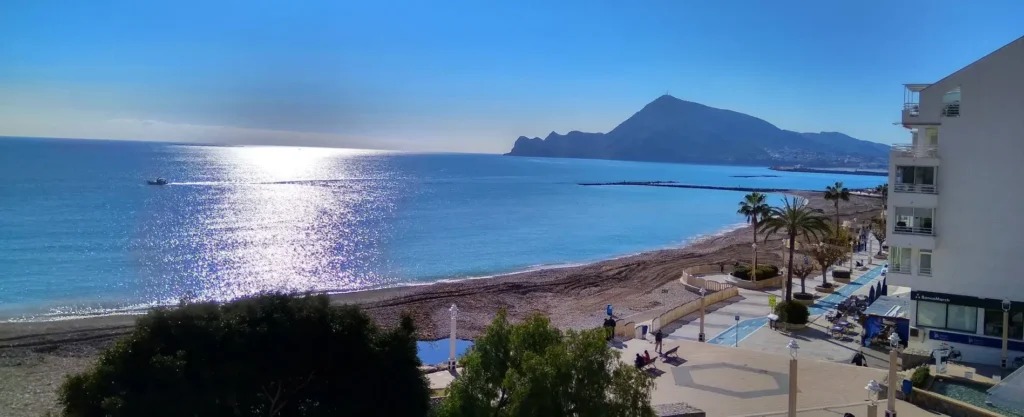
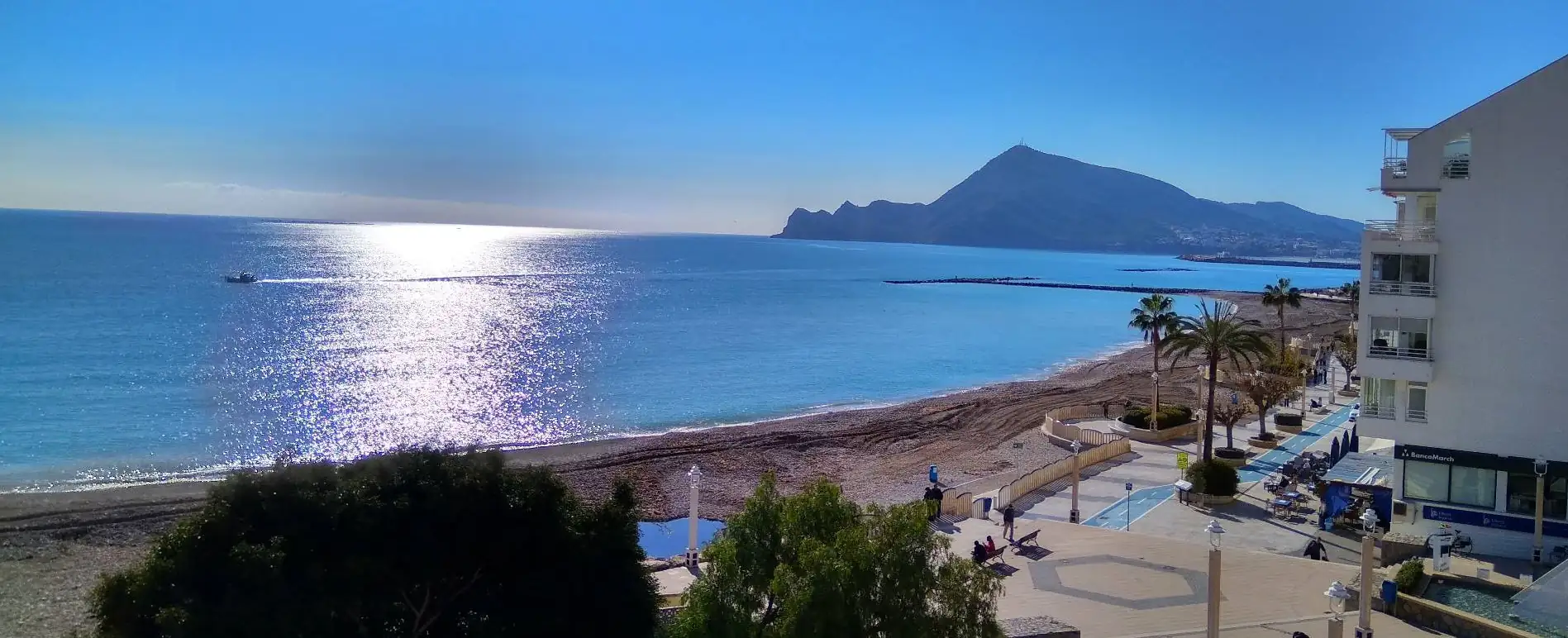
Altea’s beaches stretch across 8 km of Costa Blanca coastline: hidden coves, pebble beaches and clifftops with views unlike anywhere else. Places like La Roda, Cap Negret and L’Olla offer clear water and peace for swimming or snorkelling. This guide covers access, facilities and local tips to help you find your favourite Mediterranean spot.
Where are Altea’s beaches? Here’s a quick geographical overview: the Altea coastline runs from Cap Blanch in the south to the Mascarat coves in the north, just before Calpe. The beaches are mostly pebble and gravel rather than sand — typical of the northern Costa Blanca — which means the water stays exceptionally clear.
- Playa de Cap Blanch – Southern tip of Altea, in the bay adjoining El Albir.
- Playa de la Roda – Urban beach in front of Altea’s old town.
- Playa de l’Espigó – Small beach next to the port, also known as Playa de la Escollera.
- Playa de Cap Negret – Wide gravel stretch north of the town centre, below the Sierra de Bernia.
- Cala del Soio – Rustic hidden cove between Cap Negret and the L’Olla area.
- Playa de l’Olla – Peaceful beach facing the island of L’Olla, about 3 km from the centre of Altea.
- Playa de la Solsida (Galera-Solsida) – Small natural cove in the northern part of Altea, near Altea Hills.
- Playas de Mascarat – Several coves at Punta Mascarat, including Playa del Mascarat (next to Campomanes marina) and wilder coves such as Barra Grande on the border with Calpe.
Let’s go through each one in detail. We’ll cover the type of beach (sand or pebble), how to get there and where to park, what facilities are available and what makes each one special.
Table of Contents
TogglePlaya de Cap Blanch
Cap Blanch is Altea’s longest beach, stretching over 1,600 metres. It sits at the southern end of the municipality, right where Altea meets El Albir. The beach is made up of fine and medium pebbles that give the water a striking turquoise colour. It’s a wide, open beach — rarely overcrowded even in high season — with a good mix of families, couples and regulars who appreciate the space and calm it offers.
Access and parking: easily reached from the N-332 road. There’s a large free car park right next to the beach. The beach is also walkable from El Albir in about 15–20 minutes along the seafront path.
Facilities: sunbed and parasol hire, lifeguard posts in summer, showers and foot-wash stations, and several beach bars and restaurants along the promenade.
Playa de la Roda
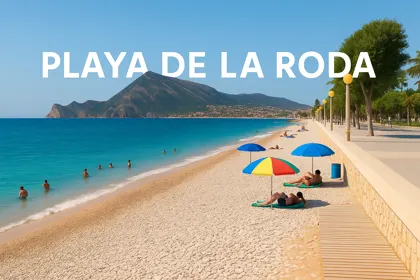
La Roda is the most central beach in Altea, sitting right in front of the old town. It’s a typical urban beach — lively, well-equipped and the obvious first stop for visitors. The beach is pebble, which keeps the water clean and clear. In summer it gets busy, but its length means there’s usually space to find a spot.
Facilities: lifeguard posts, showers and foot-wash stations, sunbed and parasol hire, play areas, and a wide selection of ice cream shops, cafés and restaurants across the promenade. In summer there are usually water sports activities: paddleboard hire, kayaks and short water sports courses. Thanks to its facilities and central location, La Roda is Altea’s most family-friendly beach.
Reviews: visitors highlight how clean and well-maintained it is, the magnificent views over the bay and mountains, and the vibrant promenade. The pebble surface is worth knowing about in advance — many recommend bringing a thick mat or beach shoes.
Playa de Cap Negret
Cap Negret is a long, wide beach of dark pebbles stretching north from the town centre, sitting beneath the foothills of the Sierra de Bernia. Despite being within easy reach of Altea, it has a more natural, quieter feel than La Roda. The beach is wide enough that it never feels crowded even in peak season.
Access and parking: the beach runs parallel to the old N-332 national road, with several access points. You can drive and park on the surrounding streets. On foot or by bike, there’s a coastal path connecting from the Algar river area through Cap Negret — ideal for a walk or cycle with sea views. From Altea’s centre it’s about 2 km. There are bus and TRAM stops near the Cap Negret hotel. Wooden walkways are put in place in summer to make access easier across the pebbles.
Cala del Soio
Cala del Soio is one of Altea’s most unspoilt and least-known spots. Getting there requires a short hike along a coastal path — no road access directly to the water — which naturally keeps visitor numbers low. The effort is rewarded with complete solitude and crystal-clear water over rocky seabed.
What makes it special: from this cove you can take in a panoramic view stretching from the Peñón de Ifach in Calpe all the way to Punta Bombarda in El Albir. Few spots along the coast offer both ends of the Altea bay in a single glance. The sea is usually transparent and intensely turquoise on sunny days. The submerged rocks create interesting seabeds for snorkelling — local divers rate it as a good entry point for easy dives, with plenty of marine life at shallow depth. A historical detail: the name “Soio” appears to come from an old ofite stone quarry that operated here a century ago, whose remains are still faintly visible. Today the cove is a Natural Monument for its geological value. For many, it’s the most authentic cove in Altea.
Internal links: Cala del Soio deserves its own article — coming soon. If you enjoy this kind of hidden spot, you might also be interested in the calas of El Albir.
Playa de l’Olla
L’Olla is a calm, sheltered beach about 3 km north of Altea’s centre, facing the small island of the same name. The beach is pebble and has a genuinely peaceful atmosphere — popular with locals who want to escape the bustle of La Roda. The island just offshore provides a natural windbreak that keeps the water flat and ideal for swimming.
Access: reachable by car via the coastal road, with parking available nearby. There’s also a bus stop within walking distance.
Playa de la Solsida (Galera-Solsida)
La Solsida is reached from the Galera de la Solsida residential area, on the slopes of the Sierra de Altea (about 6 km from the centre of Altea towards Calpe). It’s an isolated spot at the base of modest cliffs, which makes it barely visible from the road.
Type of beach and atmosphere: La Solsida is a small cove of pebbles and rock, completely natural in character. It’s known as an unofficial naturist beach, offering a refuge for those who want to sunbathe freely. Surrounded by vegetation and with crystal-clear water, it gives a feeling of total privacy and disconnect. It’s rarely busy — even in August you may find just a handful of bathers spread out. Its quietness has made it popular with couples looking for an intimate spot by the sea. No car noise, no tall buildings — just cicadas and waves. The atmosphere is respectful whether you’re practising naturism or not.
Playas de Mascarat
The Mascarat area sits at the northern boundary of Altea, where the coastline meets Calpe. It’s a rocky, dramatic stretch with several small coves of varying accessibility. Playa del Mascarat sits next to the Campomanes marina and is the most accessible of the group. Further north, Barra Grande is a wilder, more isolated cove that marks the boundary with Calpe — worth the short walk for those after solitude and spectacular views of the Peñón de Ifach.
Encabezado