There is something that many people do not understand about El Albir until they spend a whole winter here: this place does not work like the rest of Europe.
And we’re not just talking about temperature. We’re talking about the feeling of life.
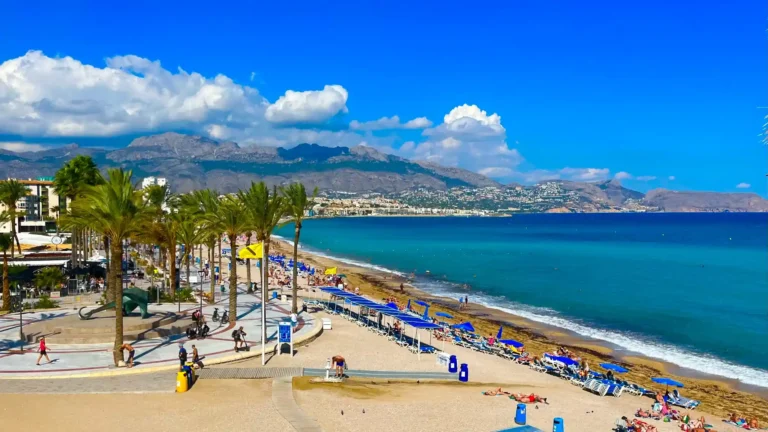
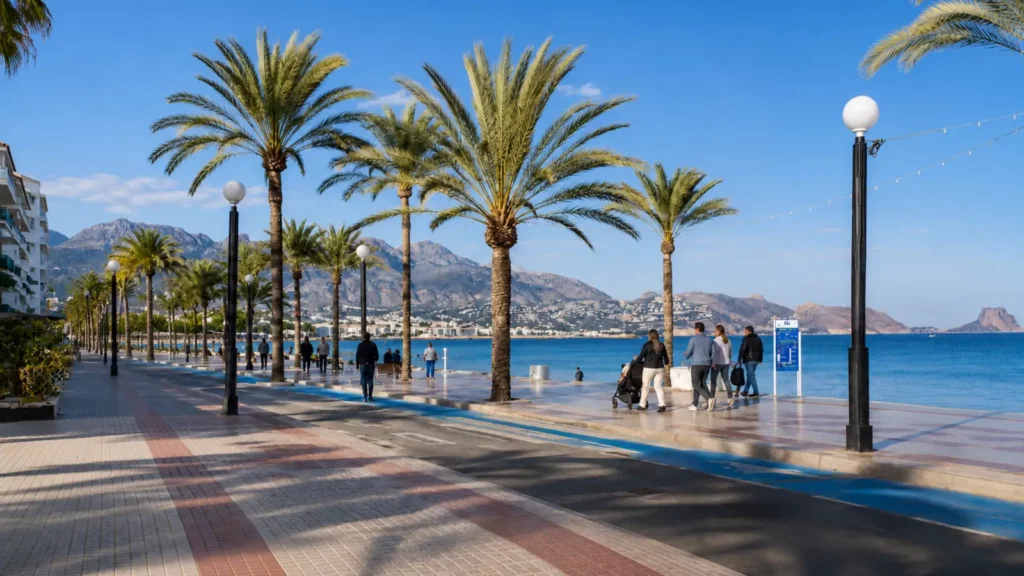
While half of Europe spends months indoors staring at gray skies, heating, and darkness at five in the afternoon, here you can find January with terraces full of sun , people strolling along the Mediterranean , and cyclists climbing towards the Serra Gelada in light long sleeves. Winter exists, yes, but in El Albir it rarely feels like an aggressive season.
We’ve been living here since 2007, and there’s something curious that always happens with newcomers: they bring winter clothes “just in case.” Huge coats. Down jackets. Thick sweaters. And after a few weeks, they realize they’ll hardly ever use them.
That doesn’t mean it’s permanently tropical heat here. That’s a common misconception among those who see four photos from August on Instagram and think they live in the European Caribbean. Albir experiences seasonal changes, wind, humidity, rainy days, and cool nights. What happens is that everything is tempered by the Mediterranean and a very specific microclimate that makes this corner of the Costa Blanca function differently from other nearby areas.
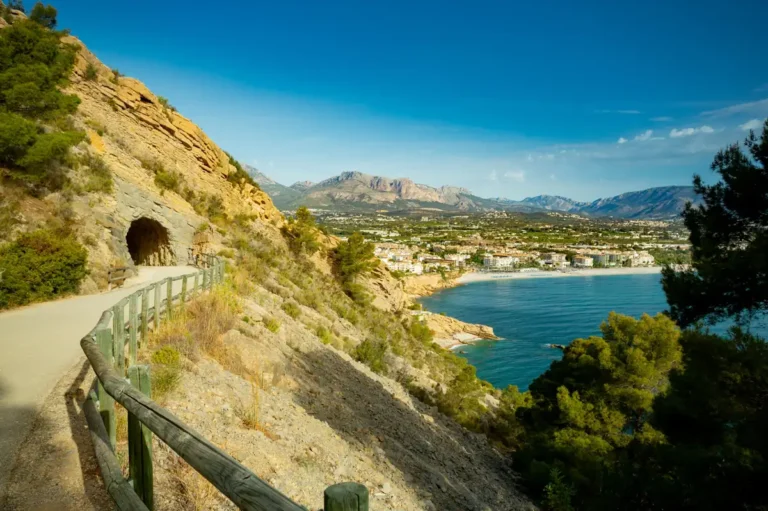
The Serra Gelada mountain range protects part of the bay from the north wind. The sea acts as a natural temperature regulator year-round. The result is an extremely stable climate, with around 300 days of sunshine annually, mild winters, and long summers that extend the beach season far beyond what anyone who has never been here outside of July and August would imagine.
That’s why so many people from Northern Europe end up staying .
Norwegians, Dutch, Swedes, British, and Germans have been settling in L’Alfàs del Pi and El Albir for decades, not just for the beach or tourism, but because their bodies feel the change. They sleep differently. They spend more time outdoors. There’s more light, fewer extremes, and a much more constant connection with the outside world.
In this guide you will find:
- actual temperatures month by month,
- how the seawater changes,
- When is it worth coming depending on what you’re looking for?
- how wind and humidity affect it,
- What is the best time to bathe?
- Which months are ideal for hiking or a quiet life?
- and what it’s really like to live here year-round.
This isn’t an automated compilation of weather data. It’s the experience of having lived here for almost two decades, watching El Albir change in January, in August, during an October DANA storm, or on a humid September night when the Walk of Fame is still packed at eleven o’clock at night.
Table of Contents
ToggleWHAT IS THE CLIMATE LIKE IN ALBIR THROUGHOUT THE YEAR?
The climate in El Albir is mild semi-arid Mediterranean, with mild winters and warm summers moderated by the proximity of the sea.
That sounds technical and cold, but in practice it means something very simple: here you almost never feel trapped by time.
There are no long, harsh winters like in Northern Europe. Nor are there months of continuous rain. And although July and August can be intense, especially during heat waves, the Mediterranean and the sea breeze moderate temperatures considerably compared to inland areas.
The average annual temperature is around 20°C.
There are more than 300 sunny days per year.
Rainfall is relatively scarce and is mainly concentrated between autumn and some spring episodes.
The result is a place where:
- You can walk there practically all year round.
- The terraces work even in winter.
- The beach season is much longer than it seems.
- And activities like hiking, cycling or outdoor living are part of the real daily life of many people.
But the most important thing is not the numbers.
What’s important is stability.
In El Albir, you rarely feel trapped by the weather. Even in winter, there are plenty of enjoyable days. And that completely changes the way you live.
CLIMATE TABLE OF EL ALBIR MONTH BY MONTH
| Month | Maximum temp. | Minimum temp. | Seawater | Rain | Hours of sunshine | General feeling |
|---|---|---|---|---|---|---|
| January | 17°C | 5–8°C | 15°C | Low | 5-6 h | Mild winter |
| February | 18°C | 5–8°C | 14°C | Low | 6 h | Brighter days |
| March | 20°C | 10°C | 15°C | Low | 7 h | Early Spring |
| April | 22°C | 12°C | 16°C | Low | 8 h | Summer atmosphere |
| May | 25°C | 15°C | 19°C | Low | 9 a.m. | The perfect Albir |
| June | 28°C | 19°C | 22°C | Very low | 10 a.m. | Royal Summer |
| July | 31°C | 22°C | 25°C | Minimum | 11 a.m. | Lots of outdoor life |
| August | 32°C | 23°C | 27°C | Minimum | 10 a.m. | Heat and humidity |
| September | 28°C | 20°C | 26°C | Low | 8 h | Best month of the year |
| October | 24°C | 16°C | 23°C | Moderate | 7 h | Beach and hiking |
| November | 20°C | 12°C | 20°C | Moderate | 6 h | Mediterranean Autumn |
| December | 17°C | 5–9°C | 17°C | Low | 5 h | Bright winter |
WATER TEMPERATURE IN ALBIR: WHEN CAN YOU REALLY SWIM?
There is a huge difference between what the internet says and what the body feels.
Many websites state:
“Swimming season starts in May.”
Yes… technically you can swim in May.
But that doesn’t mean the water is pleasant for most people.
The Mediterranean Sea in El Albir operates with a thermal lag:
- It takes a while to warm up in spring,
- and it takes a very long time to cool down after summer.
That’s why:
- April is often very deceptive,
- May divides opinions,
- June is already starting to feel really good,
- And September has the best water of the year.
The best real bathing experience usually goes:
from June until the end of October.
And some years even November remains perfectly bearable for many people in Northern Europe.
Approximate sea temperature in El Albir
| Month | Water Temperature |
|---|---|
| January | 15°C |
| February | 14°C |
| March | 15°C |
| April | 16°C |
| May | 19°C |
| June | 22°C |
| July | 25°C |
| August | 27°C |
| September | 26°C |
| October | 23°C |
| November | 20°C |
| December | 17°C |
There is a very specific moment that the residents know well:
the first week of September.
The sea retains all the heat accumulated from August, but the air begins to cool slightly. The result is probably the best combination of warm water, pleasant weather, and fewer tourists all year round.
JANUARY IN THE ALBIR
January in El Albir is very disconcerting to those arriving from northern Europe.
Not because it’s tropical heat. It isn’t. Nights can easily drop to 5°C or even lower on occasion. But the big change is in the light and the sun.
At midday, on a terrace sheltered from the wind, you can clearly feel the warmth on your face as you eat while gazing at the Mediterranean. And that, in January, completely changes your perception of winter.
The beach is practically empty. The Paseo de las Estrellas has regained its tranquil rhythm. The restaurants are operating without the summer tourist pressure, and the Serra Gelada is entering one of its best times for hiking.
The main protagonist of January is the tramontana wind.
A cold, dry wind blows from the north on certain days and crosses the bay. When it blows strongly, the perceived temperature changes completely. It’s not dangerous or constant, but if you venture out just because you see sunshine, you might be in for a surprise.
It’s one of those details you only understand by living here:
In El Albir, the sun is very deceiving.
You can have a perfect blue sky and still need a jacket because of the wind.
Even so, compared to much of Europe, January here still feels like another climatic dimension.
FEBRUARY IN THE ALBIR
February maintains temperatures very similar to January, but the atmosphere clearly begins to change.
The light lasts longer.
The afternoons are getting longer.
The sun is starting to get stronger.
And although it is technically still winter, many people are already beginning to feel that something is moving towards spring.
In the inland areas of L’Alfàs del Pi and the surrounding countryside, almond trees are beginning to bloom. The vegetation is changing color slightly, and the nearby trails are coming back to life.
February is also one of the most important months for Nordic residential tourism.
Many northern Europeans spend long periods here between November and March, escaping the harsh winters of their home countries. And February is usually the peak of that season.
It’s strange because the town has life… but a completely different life than in August:
- more leisurely,
- more stable,
- more temporary residents than short-term tourists.
The Paseo Carbonell still has a lively atmosphere, but without the noise and overcrowding. You can stroll peacefully, sit without waiting, and enjoy the Mediterranean in a much more relaxed way.
MARCH IN THE ALBIR
March is probably the first month where many people think:
“I could live here.”
The change compared to January is already evident.
The days easily reach 20°C, the terraces fill up again, and the feeling outside is distinctly spring-like. It’s not summer heat, but it’s that kind of temperature where the body begins to completely relax.
The Serra Gelada is especially beautiful in March:
- greener,
- with less dust,
- and still without the harsh summer heat.
It’s probably the best month of the year for hiking.
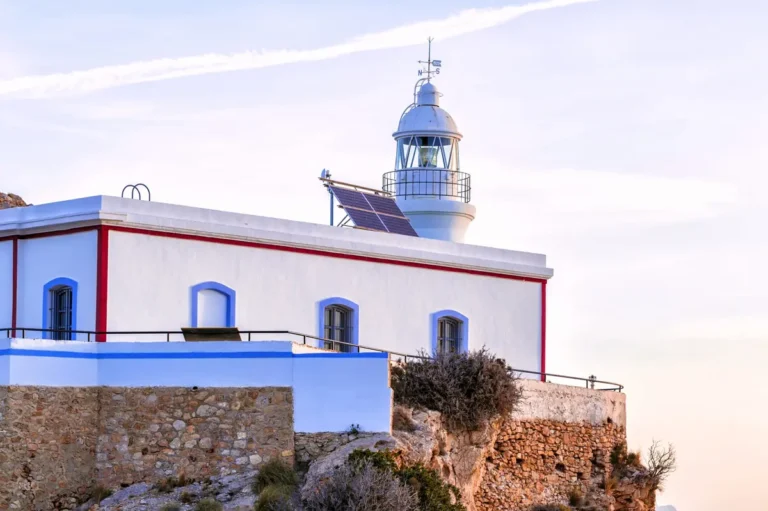
Hiking up to the Albir Lighthouse in March morning is exactly the kind of experience that turns tourists into future residents:
Clean blue sea, mild temperature, silence and a constant feeling of climatic balance that is difficult to explain until you experience it.
In March, the easterly wind also begins to appear.
The humid easterly wind that comes in from the Mediterranean and completely changes the atmosphere:
- the temperature drops slightly,
- It brings moisture,
- and sometimes it covers the horizon with sea mist.
It doesn’t last too long, but it greatly changes the ambient feeling.
APRIL IN THE ALBIR
April is very deceptive.
Visually it looks like summer:
- people in short sleeves,
- full terraces,
- more hours of sunlight,
- beach atmosphere,
- clear skies.
But the Mediterranean is still cold.
And that surprises many of those who come for the first time expecting to bathe like in August.
The water is usually around 16°C, enough for brave people or those used to the North Atlantic, but cold for most.
Even so, April is one of the most pleasant months to travel around the region:
- Altea ,
- Serra Gelada ,
- Guadalest ,
- Fuentes del Algar,
- coastal walks,
- cycling,
- terraces.
Everything works without the thermal exhaustion of summer.
Holy Week completely changes the atmosphere for a few specific days:
Hotels are full, traffic is heavier, and there’s a lot more activity. But outside of those dates, April still maintains a very comfortable balance.
MAY IN THE ALBIR
May is the month that many residents would choose if they could freeze El Albir at a specific time of year.
And it’s easy to understand why.
Summer saturation hasn’t arrived yet, but practically all the good things about summer have already happened:
- pleasant temperatures,
- long days,
- outdoor environment,
- full terraces,
- beach working ,
- and a much more social life.
The water is still a bit chilly for some people, especially in early May, but it’s starting to feel inviting.
The town also still preserves something very valuable:
their natural rhythm.
August completely transforms El Albir.
May no.
In May you still see:
- usual residents,
- businesses operating smoothly,
- comfortable walks,
- restaurants without absurd queues,
- and a beach without feeling overwhelmed.
It is probably the most balanced month of the entire calendar.
JUNE IN THE ALBIR
June is the real start of the Mediterranean summer.
The water is now over 22°C and bathing is starting to feel truly pleasant for almost everyone.
The days are very long:
- dawn early,
- very late sunset,
- many hours of daylight.
And that completely changes life outside of work.
The Walk of Fame starts to fill up every night.
The beach is getting livelier.
Restaurants are working hard.
Nights become more social.
The first half of June is usually especially good:
The harsh heat of full summer has not yet arrived, and tourism remains relatively subdued.
But from the second half of the month onwards, the change is clearly noticeable:
The sun starts to beat down strongly at midday, and the middle hours of the day require shade.
JULY IN THE DIP
July is the full Mediterranean summer.
The beach starts to fill up from mid-morning, the Paseo de las Estrellas has a lively atmosphere until late, and the town operates almost permanently facing the sea.
The heat is intense, but usually drier and more bearable than in August.
That’s why so many people prefer July:
- same environment,
- same energy,
- but less humidity.
The nights are especially lively:
families out for a stroll,
ice cream shops full,
restaurants working late,
People walking along the sea past midnight.
There’s something very Mediterranean about July in El Albir:
the feeling that life happens outside the home.
Yes indeed:
Serra Gelada ceases to be a good idea in broad daylight.
Hiking in summer requires getting up very early. The slopes without shade can become a real oven from mid-morning onwards.
AUGUST IN THE ALBIR
August is pure intensity.
More heat.
More humidity.
More people.
More noise.
More life.
For those coming on holiday looking for a complete Mediterranean atmosphere, August is probably exactly what they imagine:
- beach full,
- hot water,
- lively nights,
- terraces overflowing,
- constant international environment.
But for those who live here all year round, August can get tiring.
The key difference compared to July is the humidity.
Tropical nights are becoming more frequent, and sleeping without air conditioning is no longer pleasant for many people.
The Mediterranean reaches its highest temperatures of the year and some days the water looks almost like a warm swimming pool.
It is also the month where:
- Parking becomes difficult,
- The queues are getting longer,
- and the town loses some of its usual calm.
Even so, it has a very specific energy that many people love.
SEPTEMBER IN THE ALBIR
September is El Albir’s best-kept secret.
And the longer someone lives here, the more they tend to realize it.
The water remains warm thanks to the accumulated heat of August, but the air begins to relax slightly. The light changes. Families with children return to their countries or cities. And the town regains some of its usual character.
The result is probably the best weather combination of the entire year:
- Excellent beach,
- less saturation,
- more comfortable temperatures,
- and a still fully Mediterranean atmosphere.
There’s something very special about September:
Albir can breathe again.
The Paseo Carbonell is regaining space.
Restaurants are no longer overwhelmed.
The beach feels habitable again.
And yet:
Summer is still very much alive.
OCTOBER IN THE ALBIR
October is one of the most underrated months on the entire Costa Blanca.
Many people believe that summer ends in September.
Huge mistake.
In October you can still:
- bathe,
- eating on the terrace,
- walking in short sleeves,
- and enjoy very pleasant sunny days.
Hiking once again becomes the main attraction because the harsh summer heat disappears.
Serra Gelada in October probably has the best conditions of the year:
Perfect temperature, less tourism and much more physical comfort for walking for hours.
However, October also brings the most famous weather phenomenon in the Mediterranean:
the DANA or cold drop.
It doesn’t happen constantly, but when it does, it can unleash very heavy rainfall in just a few hours. These episodes are usually short and very concentrated.
And here appears another advantage of the local microclimate:
The Serra Gelada partially helps to protect the bay from some extreme events compared to other areas of Alicante.
NOVEMBER IN THE ALBIR
November marks the transition to the Mediterranean winter.
But “winter” here is still something very different from the Central European concept.
With highs close to 20°C, there are still plenty of days that are perfect for walking, having a drink in the sun or even sitting by the sea without feeling cold.
The beach empties completely and the town enters one of its quietest versions.
It’s a very pleasant time for:
- rest,
- golf,
- hiking,
- a peaceful life,
- and unhurried gastronomy.
The Mediterranean still retains some of the accumulated heat from the summer, which makes the nights much milder.
DECEMBER IN THE ALBIR
December perfectly sums up why so many people end up coming here every winter.
While much of Europe lives:
hard cold,
snow,
darkness,
and gray days…
Albir continues to offer light, blue skies and temperatures that allow for outdoor living on many days.
It’s not summer.
But it doesn’t feel like a classic European winter either.
The town also has a distinct atmosphere:
calmer,
more residential,
more authentic.
Temporary residents are arriving again, restaurants are picking up speed, and the Mediterranean is still part of the everyday landscape, even though nobody thinks about swimming anymore.
And that’s where many people understand something important:
Albir is not just a summer tourist destination.
It’s a place designed for year-round living.
And that is probably the big difference between El Albir and other places on the Costa Blanca: here life does not disappear when August ends.
There are beaches, trails, terraces, shops, and residents who are active practically year-round. That’s why many people arrive thinking about a vacation… and end up imagining a life here.
If you want to discover more about what the town is really like, what to see, where to eat, which areas to explore, or what life is like in this part of the Mediterranean, you can visit our main guide to El Albir .