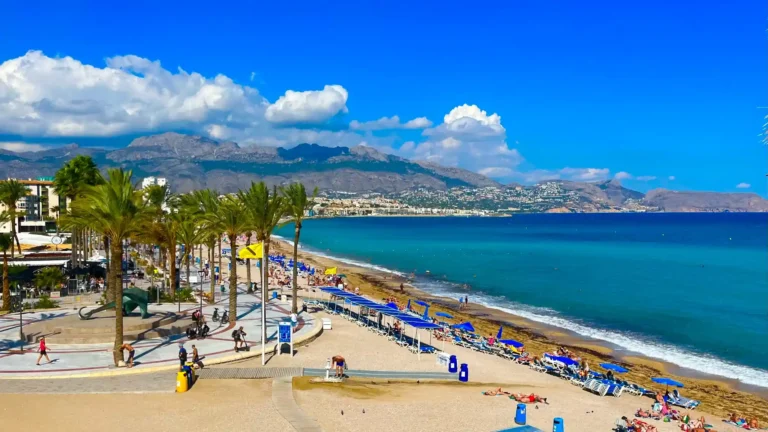

Just a few steps from Albir Beach, tucked between the promenade, the hotels, and the usual bustle of the area, there’s a place most people walk right past without even knowing it’s there: the Villa Romana del Albir.
This isn’t some grand monument with towering columns or a picture-perfect amphitheater. You’re not coming here to see “the Pompeii of Alicante.” You’re coming to understand something far more personal: what life was like in this part of the Mediterranean more than fifteen hundred years ago, when Albir wasn’t a tourist destination but a working landscape of fields, sea, farming, trade, and Roman daily life.
The official name is Museo al Aire Libre Villa Romana de l’Albir, and it sits in one of the most convenient spots you could ask for: near the beach, near the seafront promenade, and very close to the start of the trail up to Albir Lighthouse.
I’ve been living in this area for nearly twenty years, and it still surprises me how little people talk about this place. Plenty of visitors come to Albir, swim, stroll along the waterfront, grab a bite by the sea, and head home without ever realizing that just a few meters away there’s an archaeological site you can actually visit — completely free, and pretty easy to follow thanks to its information panels, exhibition room, and virtual reality displays.
If you’re looking for a cultural outing in El Albir, a peaceful visit with kids, or just something different to pair with a trip to the beach or the lighthouse, the Villa Romana deserves far more attention than it typically gets.
Table of Contents
ToggleWhat Is the Villa Romana del Albir
The Villa Romana del Albir was an ancient Roman rural estate situated in the area around Albir Beach. In simple terms: a significant property, connected to agricultural life, the sea, and a family of means.
But this wasn’t just a house. A Roman villa of this type could include a residential area, formal reception spaces, working areas, agricultural production, storage, and buildings tied to the family’s social standing — like the nearby mausoleum.
The archaeological complex at l’Albir includes several elements: the villa itself, the baths, the residential area, the winery, a necropolis, and a mausoleum located nearby. This helps you understand that there wasn’t simply a single isolated building here, but rather a small rural settlement deeply connected to the surrounding land.
One of the most interesting aspects is that the settlement was continuously inhabited for several centuries. In its early days it had a productive function, primarily connected to winemaking, and later evolved into a more refined residence, with expanded bathhouses and spaces designed for social life and entertaining guests.
That’s what makes this visit more significant than it might seem at first glance. It doesn’t just show you Roman ruins — it helps you see Albir through a completely different lens.
What You Can See During the Visit
The visit begins in a small exhibition room where pieces found during the excavations are displayed. It’s a good introduction to the site because it puts everything in context before you head out to see the remains.
From there, the route continues through the archaeological area, with walkways and interpretive panels. The highlights are the baths, the oecus or main reception room of the dominus, the courtyard, and the winery area.
The baths are, for me, the part that resonates most with visitors. Not because they’re enormous, but because they illustrate so well the standard of living a wealthy family in this area could have. In Roman culture, bathing wasn’t just about hygiene — it was routine, rest, health, social life, and a clear marker of Romanization.
Also worth noting is the area connected to wine production. We tend to picture Albir as a modern beach resort with apartments and tourism, but this area was already tied to the Mediterranean long before the seafront promenade ever existed. The villa had an agricultural and commercial dimension, and that completely changes the way you look at the place.
Also nearby is the Roman mausoleum, on Calle Ruperto Chapí. It’s not a lengthy visit in itself, but it adds context: it reminds us that the family who owned this property didn’t just live and work here — they also left a funerary mark on the surrounding area.
Virtual Reality: The Feature That Makes It All Click
One of the great strengths of the Villa Romana del Albir is its use of technology to interpret the site.
Let’s be honest: for many people, ruins without any explanation are just low walls. Without some basic visual aid, it’s hard to picture rooms, ceilings, bathrooms, courtyards, work areas, or scenes from everyday life.
That’s where the virtual reality headsets and the VRA360 app come in. The experience lets you see reconstructions of the villa and better understand what this space looked like in Roman times.
This works especially well with children and with people who aren’t used to visiting archaeological sites. You don’t need to be an expert in Roman history to enjoy it. The technology bridges the gap between what remains today and what might have been here centuries ago.
If you’re short on time, my advice is simple: don’t rush through the ruins. Use the audiovisual section, read the panels, and take advantage of the virtual reality if it’s available during your visit. It’s what turns a decent visit into a truly memorable one.
Opening Hours and Entry Fee for the Villa Romana del Albir
Entry to the Villa Romana del Albir is free.
Opening hours vary depending on the time of year, so it’s worth checking before you go — especially if you’re visiting El Albir out of season or on a public holiday.
In summer, during June, July, and August, the museum usually opens Tuesday to Saturday in two time slots: morning, from 10:00 to 12:00, and evening, from 19:00 to 22:00. Sundays and Mondays it remains closed.
In winter, the usual hours are Tuesday to Friday from 10:00 to 13:00, and Saturdays, Sundays, and public holidays from 10:00 to 14:00. Mondays it’s closed.
For groups of more than eight people, it’s recommended to check availability and book the guided visit in advance. The museum’s official contact details are the phone number 966 867 023 and the email museovillaromana@lalfas.com.
My personal tip: if you’re going in summer, avoid the hottest hours of the day. The evening slot is much more pleasant, especially if you’re planning to head to the beach or grab dinner in the area afterward. In winter, the morning tends to be the best time to go.
How to Get There and Where It Is
The Roman Villa of Albir is in a very convenient location: next to the Albir Beach area, with entrance through the Bulevard dels Músics area and the Óscar Esplà Avenue.
If you’re on the seafront, you can easily walk there. It’s also close to the start of the path to the Albir Lighthouse, so you can combine both visits in the same morning if you plan well.
You can also walk from the center of Albir, depending on where you’re staying. If you come by car, the beach area can get quite crowded in the summer, especially in July, August, and on weekends. It’s best to arrive early in the morning or take advantage of the late afternoon, when the heat subsides and the visit is much more pleasant.
For a comfortable visit, you can make this plan:
First, visit the Roman Villa, then stroll along Albir Beach, and finish with a drink in the promenade area. If you have more energy, you can extend your trip by climbing to the Albir Lighthouse, although in summer I would separate these activities or avoid the middle of the day.
How long does the visit last?
The Roman Villa of Albir is not a museum to spend half a day in. It’s a short, easy, and very manageable visit.
If you go quickly, you can see it in about 25 or 30 minutes. But if you want to see the room, read the panels, use the audiovisual equipment, and really understand the layout, allow between 45 minutes and an hour.
That’s precisely one of its strengths: it doesn’t demand a lot of time or effort. You can fit it into a beach morning, a quiet afternoon, or before heading off to do something else in El Albir.
For families with children, this length works really well. It doesn’t drag on, it doesn’t involve too much walking, and there are visual elements that help keep their attention.
Un poco de historia, sin convertir esto en una clase pesada
To understand the Roman Villa of Albir, one must imagine this coast long before tourism. The Mediterranean was a major artery of communication, trade, and culture. Not only did people pass through here: products, customs, ideas, and ways of life also passed through.
The villa is linked to that late Roman world in which large rural estates played a very important economic role. They were not simply beautiful houses in the countryside. They were centers of production, administration, and social life.
In the case of Albir, wine production played a key role in the early phases of the settlement. Over time, the villa evolved into a more upscale residence, with spaces such as the baths and the large dining room, designed for a high-status family.
The archaeological complex came to light in 1979, when construction work near Albir Beach uncovered Roman-era remains. In the following decades, excavations were carried out, and in 2008 the Ayuntamiento de l’Alfàs del Pi resumed work alongside the University of Alicante.
The museum opened as an Open-Air Museum in 2011 and was recognised as the first of its kind in the Valencian Community. Since then, the space has gradually incorporated new interpretation resources, 3D technology, virtual reality, and new areas open to visitors.
Why This Villa Matters for Understanding El Albir
The Villa Romana matters because it breaks a very limited idea of Albir: the one that sees it as just a beach, hotels, apartments, and summer tourism.
El Albir has an older, deeper, and far more interesting history than it might seem. The Villa Romana shows that this area was already part of a Mediterranean network of life centuries ago. There was production, trade, families with economic power, and a direct relationship between the land, the sea, and the trade routes.
It also helps explain why the area around Serra Gelada, Albir Beach, and the bay have always been such valuable spaces — not just for their current beauty, but for their position, their access to the sea, and their resources.
Visiting the villa is a simple way to add a layer of history to your trip. After seeing it, the seafront promenade no longer feels like just a nice place for a walk. You start to picture everything that was here before El Albir became the destination we know today.
Is the Villa Romana del Albir Worth Visiting?
If you’re expecting a monumental, huge, and spectacular archaeological site, you might be a bit underwhelmed. The Villa Romana del Albir is small and is visited calmly, not with your jaw dropping the whole time.
Si esperas un yacimiento monumental, enorme y espectacular, probablemente te sepa a poco. La Villa Romana del Albir es pequeña y se visita con calma, no con la boca abierta todo el rato.
But if you’re interested in history, traveling with children, looking for a short cultural outing, or want to do something different near the beach, the visit is well worth it.
It has several clear advantages: it’s free, it’s very well located, it’s easy to understand, it has technology resources, and you can combine it with other nearby plans without losing half a day.
I’d particularly recommend it in these situations:
If you’re visiting with children and want to add a light cultural stop.
If you’re heading to Albir Beach and want to add something different to the visit.
If you’re planning to head up to Albir Lighthouse and want to round off the day with some history.
If you’re interested in Roman history, archaeology, or the past of the Mediterranean.
If you already know the beach and want to see Albir with different eyes.
The Roman Villa doesn’t compete with the lighthouse or the beach. It complements them. It’s the kind of visit that doesn’t seem like much in the brochures, but it leaves you with a clear idea: there was life, work, wealth, and history here long before the beach umbrellas arrived.
Tips for visiting the Roman Villa of Albir
If you’re going in summer, bring water, a hat, and sun protection. Even though the visit isn’t long, the heat in the beach area can be intense.
Check the opening hours before you head over, as they change depending on the season and there may be adjustments on public holidays.
Don’t rush. The museum is small, but if you just walk past the ruins without reading anything, you’ll miss a lot. Spend a few minutes in the exhibition room, with the video, and with the information panels.
Ask about the virtual reality experience if it’s available during your visit. It’s one of the best ways to understand the site.
If you’re going with children, tell them beforehand that they’re not going to see a castle or a colosseum. Tell them they’re going to see how a wealthy Roman family lived, with baths, a dining room, a courtyard, and an area where wine was made. It really changes expectations.
And if you’re staying in El Albir, take the chance to combine the visit with a walk along the beach, a trip up to the Lighthouse, or a quiet meal in the area.
What to See Near the Villa Romana del Albir
The location of the Villa Romana is one of its greatest advantages. Being so close to the beach, you can easily combine it with other spots in Albir.
Albir Beach is just a few steps away and is perfect for a stroll, a swim, or simply continuing the day by the sea.
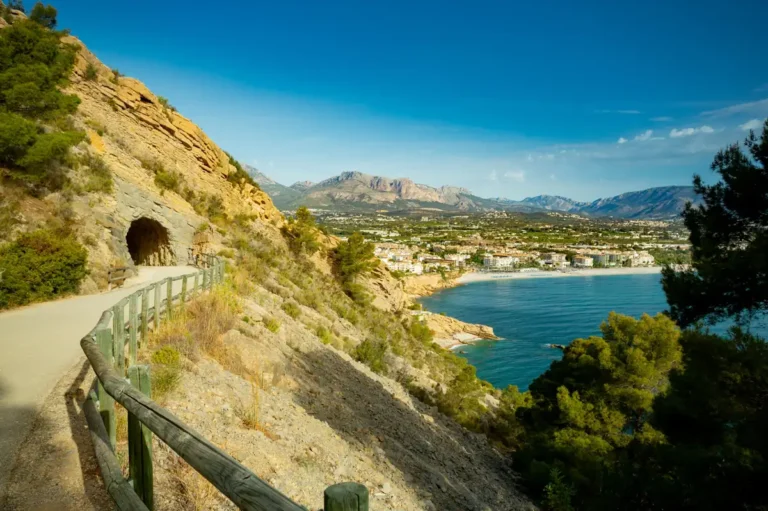
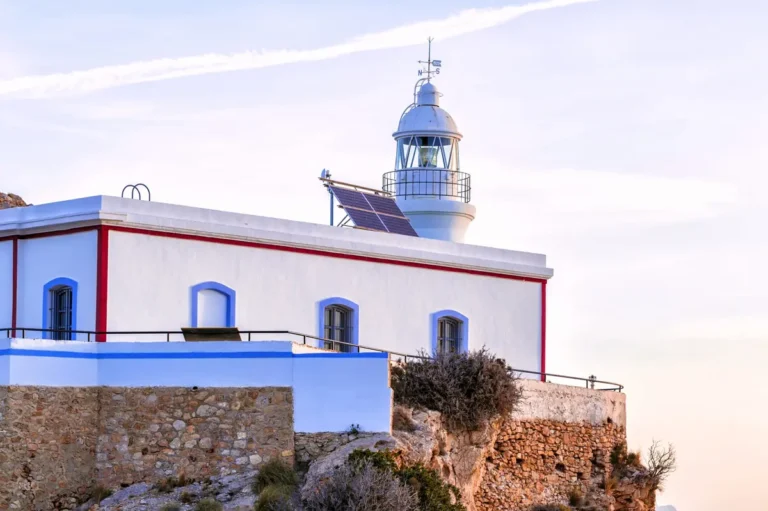
Albir Lighthouse is one of the most well-known routes in the area and is relatively close by. If you enjoy walking, you can combine Roman history and natural scenery in the same day.
Serra Gelada is also very close and helps you better understand the natural and cultural value of this entire stretch of coastline.
The Albir seafront promenade is ideal for a drink after the visit, especially if you’re going in the late afternoon.
And if you want to round off the day, you can look for breakfast, lunch, or dinner options in El Albir, as the area has plenty of choices nearby without needing to move the car.
Frequently asked questions about the Roman Villa of Albir
Is the Roman Villa of Albir free?
Yes. Entry to the Museo al Aire Libre Villa Romana de l’Albir is free.
Where is the Villa Romana del Albir?
It’s next to Albir Beach, in the area of Avenida Óscar Esplà and Bulevard dels Músics, very close to the seafront promenade and the starting point of the trail up to Albir Lighthouse.
How long does it take to visit the Villa Romana del Albir?
The visit can be done in about 30 minutes if you go quickly, although the recommended time is between 45 minutes and an hour to see the exhibition room, the route, the panels, and the audiovisual section.
Is it a good visit with children?
Yes. It’s short, affordable, and easy to combine with other plans. Plus, virtual reality really helps children understand what the villa was like in Roman times.
Is it possible to visit with a stroller or wheelchair?
Yes. The route is adapted for people with reduced mobility and is also pushchair-friendly.
What can you see at the Villa Romana?
During the visit you can see remains of the baths, the oecus or main reception room, the courtyard, the winery, archaeological finds in the exhibition room, and audiovisual resources. The Roman mausoleum is also located near the museum.
Is it worth it if I only have one day in El Albir?
Yes, if you’re interested in history or want to do something different alongside the beach. If you’re purely after the beach and food, it might not be essential. But as a short, free plan that’s easy to combine, it offers excellent value.
The Villa Romana del Albir: A Small Stop with a Lot of History
The Villa Romana del Albir is not the most famous site in the municipality, but it is one of the best at explaining why this corner of the Costa Blanca has far more depth than it might seem.
It is next to the beach, can be visited in a short time, is free and allows you to discover a part of Albir that does not always appear in tourist photos: its Roman past, its relationship with the Mediterranean and its importance as an inhabited space long before modern tourism.
If after visiting the Roman Villa you want to further understand the area, you can continue with our complete guide to El Albir , where we have gathered the main places, plans, routes, beach, history and practical tips to help you get around the town more easily.
If you come to Albir and want more than just beaches, promenades, and restaurants, set aside some time to explore. You don’t need half a day or extensive planning. Just a little curiosity.
And sometimes that’s enough for a place that seemed normal to start telling you another story.