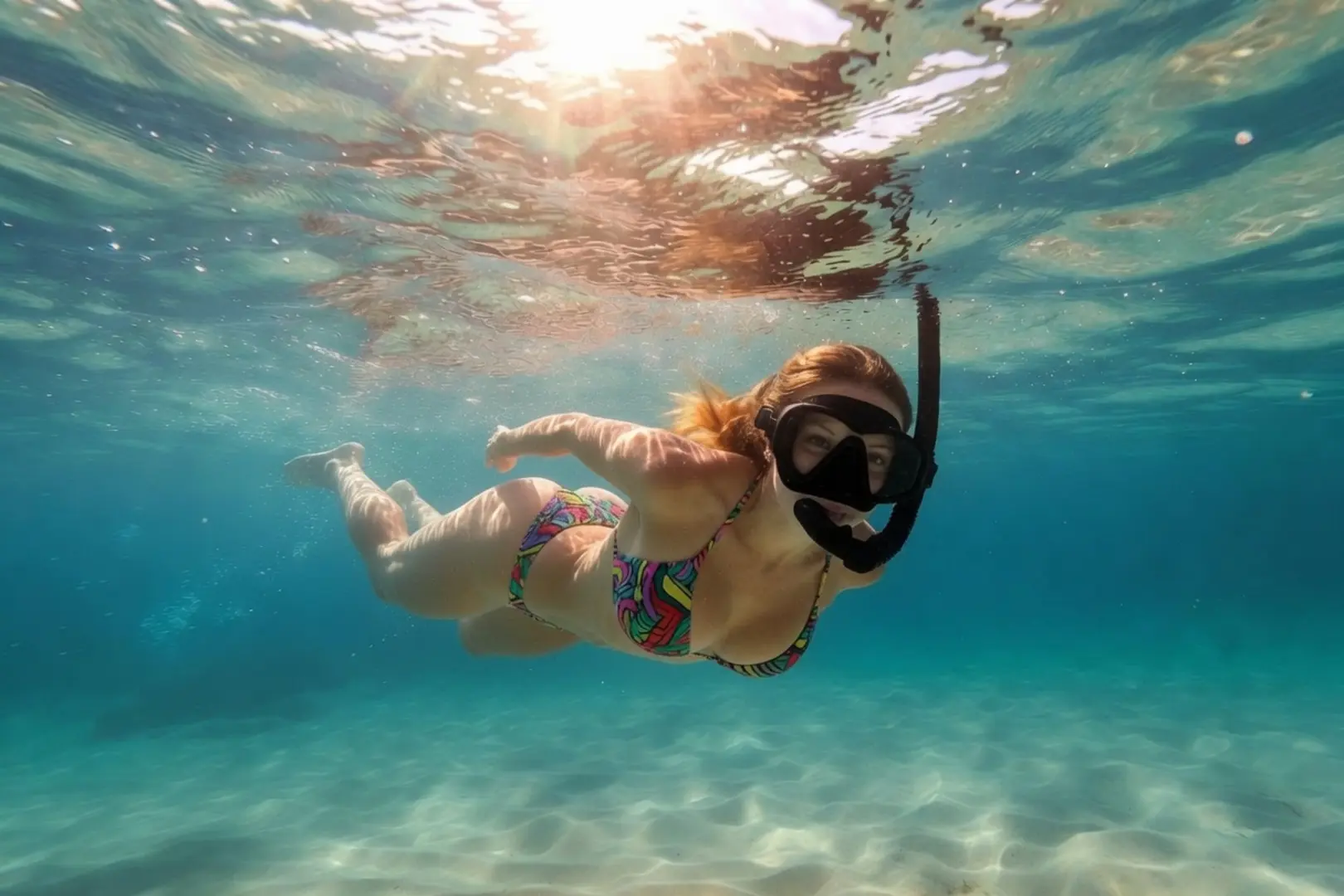
Snorkeling is one of those words we half-use in Spanish. A lot of people hear it and think of scuba diving, or figure it’s just a matter of putting on a mask and off you go. It’s neither. It’s a simple activity, sure, but it has its technique, and doing it right is the difference between swallowing water and giving up after five minutes, or spending an hour gazing at the seabed and losing all track of time. I’ve lived in Albir since 2007, and I see it every summer: the people who know a few basics enjoy it; the ones who just dive in without a clue give up.
So let’s start with the important part: understanding what the activity actually involves. After that, I’ll tell you when and where to try it here, with real, concrete details about the bay.
Table of Contents
ToggleWhat snorkeling actually involves
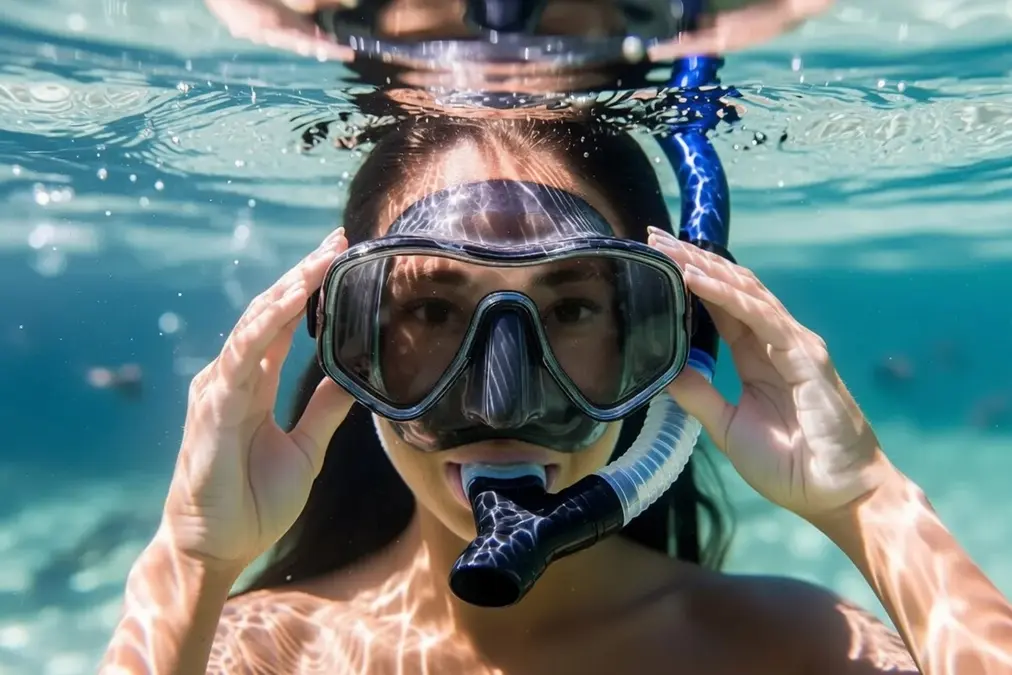
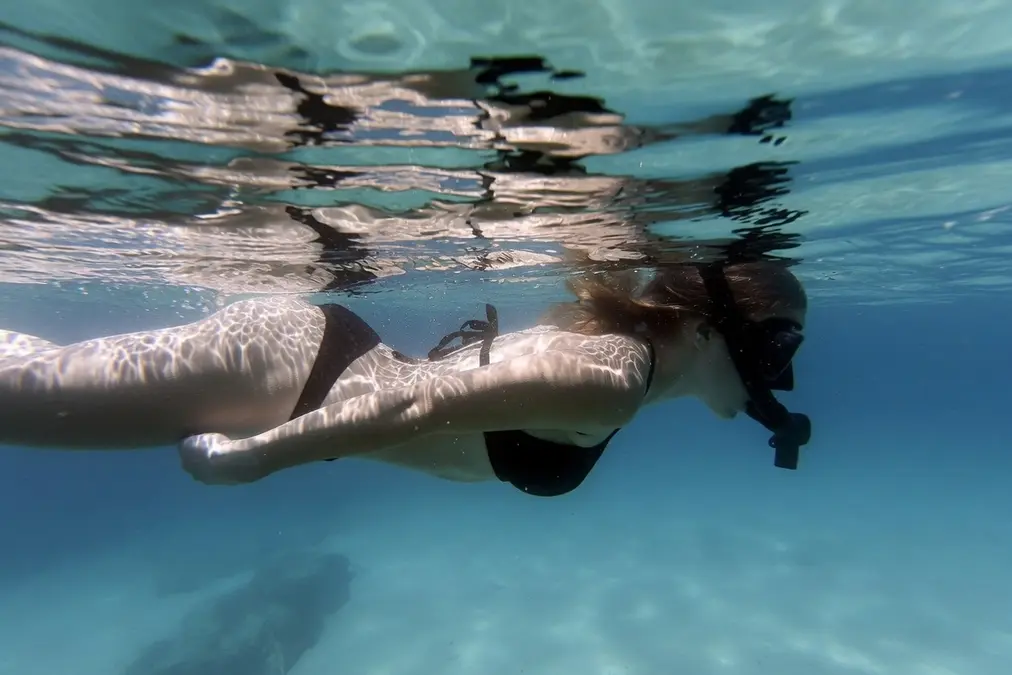
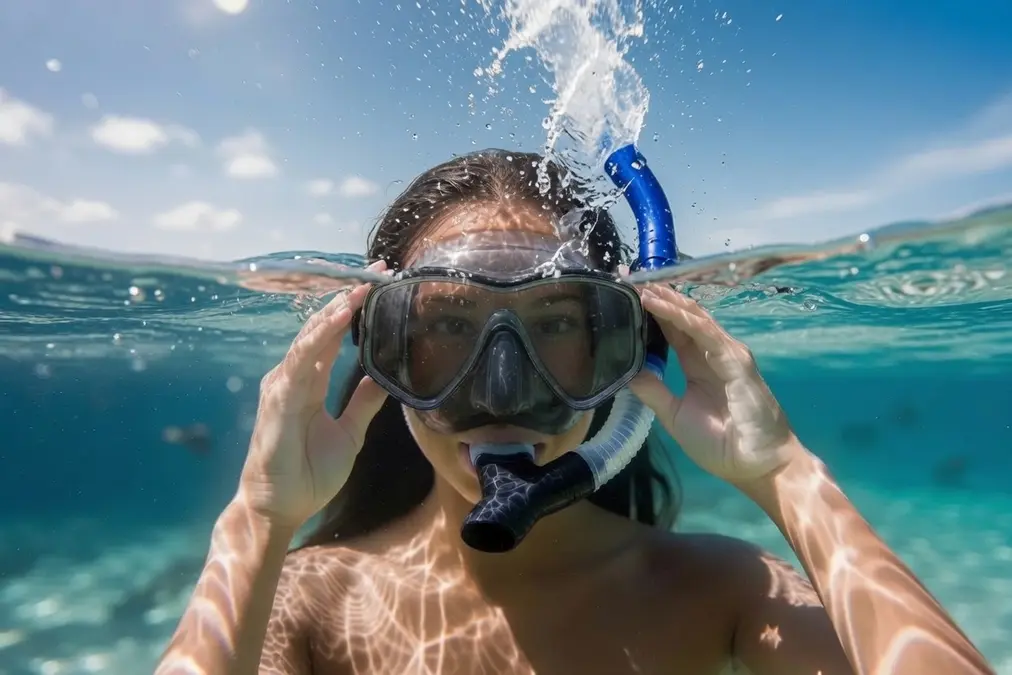
Snorkeling means swimming on the surface, face down, with your face in the water, breathing through a tube that sticks up above the surface. That lets you watch the seabed without lifting your head to breathe. You don’t dive down, you don’t hold your breath, you don’t need tanks — you just stay up top, floating, taking it all in.
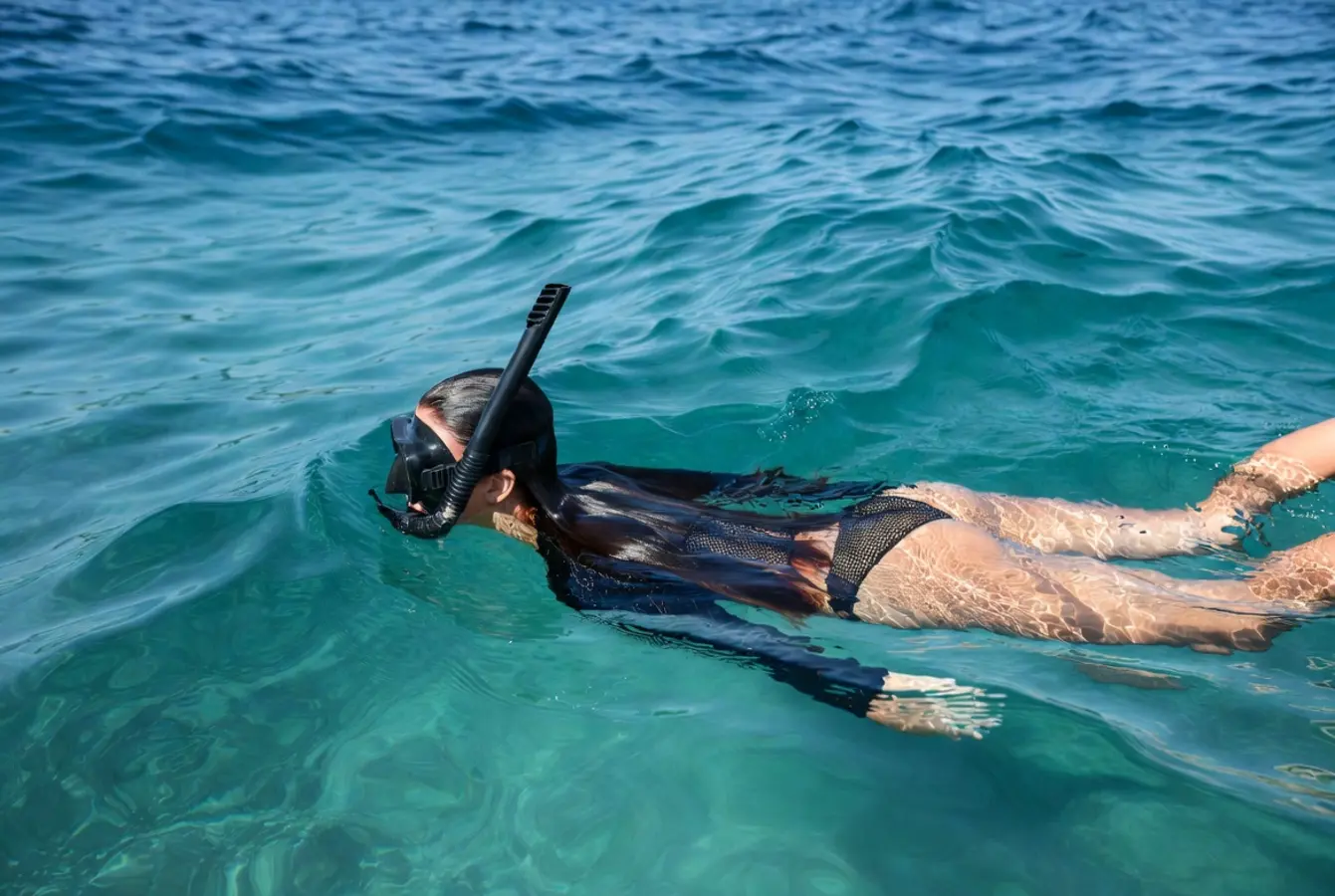
That’s why it’s not scuba diving. Scuba diving requires a course, certification, and expensive gear, and it takes you down to the bottom. Snorkeling doesn’t: if you can float and breathe calmly, you can already do it. It’s the easiest, cheapest way there is to see marine life, and you can start the very same day with no one teaching you — though doing it well does take some technique.
What a beginner needs to know
Here’s the heart of it. Four things, and the whole activity changes completely.
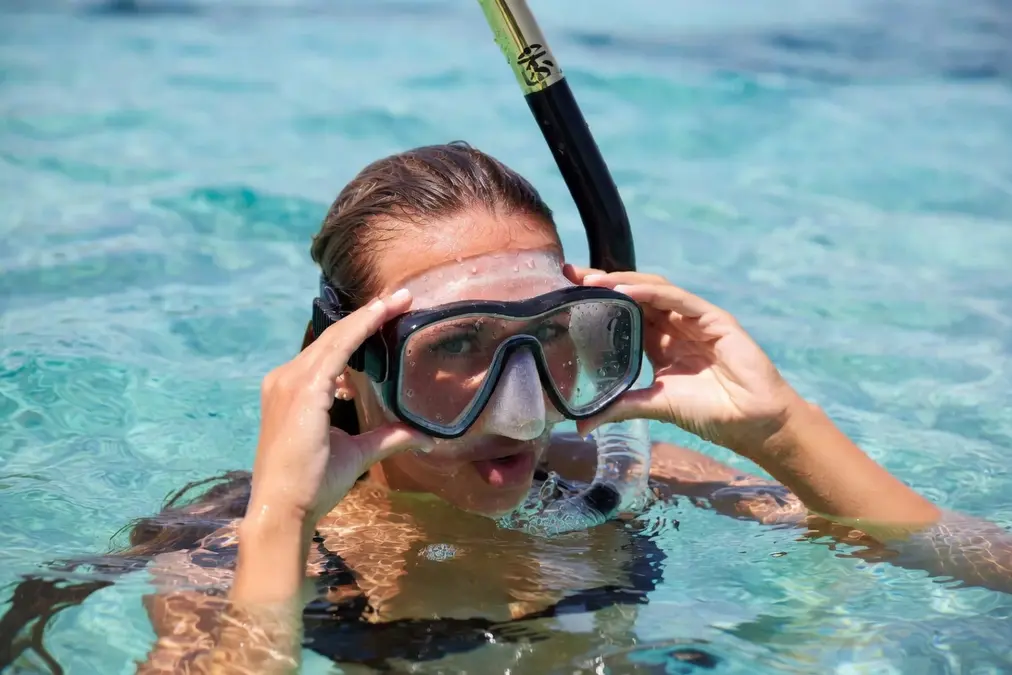
The mask has to seal. Put it on, push your hair off your forehead, and breathe in gently through your nose: if it stays stuck to your face on its own, it seals well. If water keeps seeping in, it’s usually hair getting in the way, or the wrong size for your face. A mask that doesn’t seal ruins your swim, no matter how good the brand is.
Breathe through your mouth, slowly. At first your brain doesn’t quite trust the tube, and you end up breathing fast and nervous. That’s normal. Start where you can stand, put your face in, and breathe slowly until your body relaxes. Within a couple of minutes it becomes automatic, and you forget you’re even wearing a tube.
Float relaxed — don’t swim hard. The trick isn’t moving fast, it’s staying still and looking. Body horizontal, arms at your sides or out in front, and a gentle kick coming from the hip, not the knee. The calmer you go, the more you see, because you don’t scare off the fish and you don’t tire yourself out.
And if water gets into the tube, just blow it out. Don’t yank your head up in a panic: one sharp puff through your mouth clears the tube instantly. It’s the move that’s hardest at first, and the one that gives you the most peace of mind once you’ve got it down.
A trick nobody tells you about: to stop the lens from fogging up, spit inside the mask, rub it around the glass, and rinse it with seawater before putting it on. It sounds gross, but everyone does it, and it works better than any anti-fog product.
How to enjoy it right (and not die trying)
Beginner mistakes are always the same. Rushing and swimming hard, when the opposite is what actually works. Panicking at the first mouthful of water instead of just blowing it out and carrying on. And, most importantly, going out alone and drifting too far from shore. Snorkeling is safe if you go calmly, with company, and pick a day when the sea is calm. With waves or wind, you can’t see the water and your body can’t relax.
You don’t need to hold your breath or dive to the bottom to enjoy it. That’s a different thing (freediving), it has its own risks, and it’s not for beginners. On the surface, just looking down, you already get plenty.
The gear
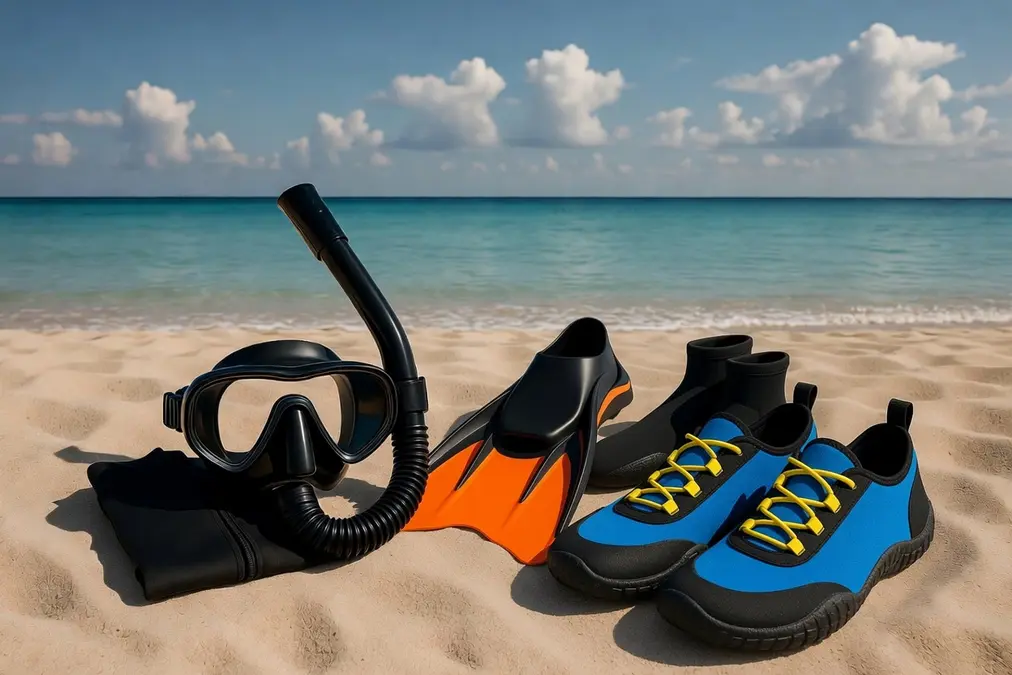
Three pieces of gear. A mask that seals, a tube, and fins if you want them (optional: they help, but they’re not essential in calm water). You don’t need to spend much to get started; a good fit matters more than the brand name. If you’ll be out for a while outside the warm months, a rash guard or a thin wetsuit is welcome. And on a beach like Albir’s, water shoes or aqua sandals are almost mandatory, as you’ll see now.
The best time to go snorkeling in Albir
This is the part that makes the difference between a great day and a letdown, so let’s go with real data, not impressions.
The best stretch runs from June to October. During those months the water is warm enough to stay in for a while comfortably, and the sea tends to be calmer. The warmest water of the year comes between August and September; in fact, September is one of the best months, since the sea holds onto summer’s warmth and there are fewer people around. Outside that window you can still snorkel, but you’ll need a wetsuit and you won’t last as long.
For reference, here’s the approximate average water temperature throughout the year in this part of the Costa Blanca:
| Month | Water temperature (approx.) |
|---|---|
| January | 14 °C |
| February | 13 °C |
| March | 14 °C |
| April | 15 °C |
| May | 18 °C |
| June | 22 °C |
| July | 25 °C |
| August | 26 °C |
| September | 25 °C |
| October | 21 °C |
| November | 18 °C |
| December | 15 °C |
The time of day matters too, and a lot. The best time is early morning: first thing, the sea tends to be calmer and the water clearer, before the midday sea breeze (which blows in here almost every day in summer) starts rippling the surface and stirring up the bottom near shore. Plus, early on there are fewer swimmers kicking up sand and pebbles. If you can choose, get in the water before mid-morning.
And the wind is the factor that decides everything. With a levante (east wind) the sea gets choppy, swell comes straight at you and the water turns cloudy: on those days snorkeling isn’t worth it, you can barely see and it’s uncomfortable. With a poniente or an offshore wind the sea stays flatter and more sheltered, which is when the water turns crystal clear. Before heading down, check the forecast: you’re looking for a calm sea and no levante.
Jellyfish: when to watch out
It’s worth knowing without getting alarmed. On the Costa Blanca, jellyfish are more likely to show up in the warmer months, especially when certain currents and winds push them toward the coast; it’s not constant, it comes in waves. There’s no fixed rule of “this month yes, that month no.” The practical thing is to check on the day itself: there are apps and citizen alerts (like MedusApp) where jellyfish sightings are reported by beach, and the beach flags and staff will warn you if there’s an issue. If you see a warning, it’s better to change your plans that day.
The Bay of Albir: a protected environment
Part of why the visibility underwater here is so good isn’t a coincidence. Albir beach has held a Blue Flag continuously since 1987, and its bathing waters are rated excellent quality. That’s not marketing: these are distinctions awarded based on lab analysis and objective criteria, and they mean genuinely clean water.
What’s more, the whole area sits in the shadow of the Serra Gelada, a Natural Park, and the marine strip is part of the Natura 2000 network (site ES5213021). That means the seabed along this stretch of coast is environmentally protected, which explains the health of what you’ll see down there.
The seagrass meadows especially. That “algae” many people mistake for dirt is actually a protected marine plant under Valencian regulations, and it keeps the water clean, oxygenates the seabed and shelters marine life. The fact that you can see so clearly here is largely thanks to it. Don’t walk on it, don’t pull it up, don’t anchor over it: it’s against the law, and doing so kills the very thing that makes the swimming so good.
Where to get in the water in the bay
Now for the specifics. Albir’s beach is pebbles, not sand, and for snorkeling that works in your favor: the bottom doesn’t stir up the moment you wade in, and the water stays clear near the shore. The catch is getting in — walking barefoot over the pebbles hurts, which is why water shoes matter.
The good stretch is at the north end, toward the foot of the Serra Gelada and the start of the path to the lighthouse. That’s where the bottom stops being loose pebbles and starts turning to rock, which is where the life concentrates. The middle stretch of sand is fine for a relaxed swim, but as a spot to look at the seabed it’s weak: if you’ve come to see something, head north and hug the rocks.
On the rocks and seagrass you’ll typically spot schools of small fish, salema and the odd white seabream. Don’t expect a tropical reef, but for a calm morning gazing at the seabed, it more than delivers.
Safety and respecting the seabed
The basics, which I see broken every single summer: don’t touch or pull up the posidonia, don’t chase the wildlife, and respect the marker buoys and the boat channel if you swim out from shore on the north side. Pick a calm-sea day, go with someone, and don’t head out to open water alone. Stick to those four things, and snorkeling in Albir is one of the easiest and safest ways there is to get a look at the Mediterranean.


