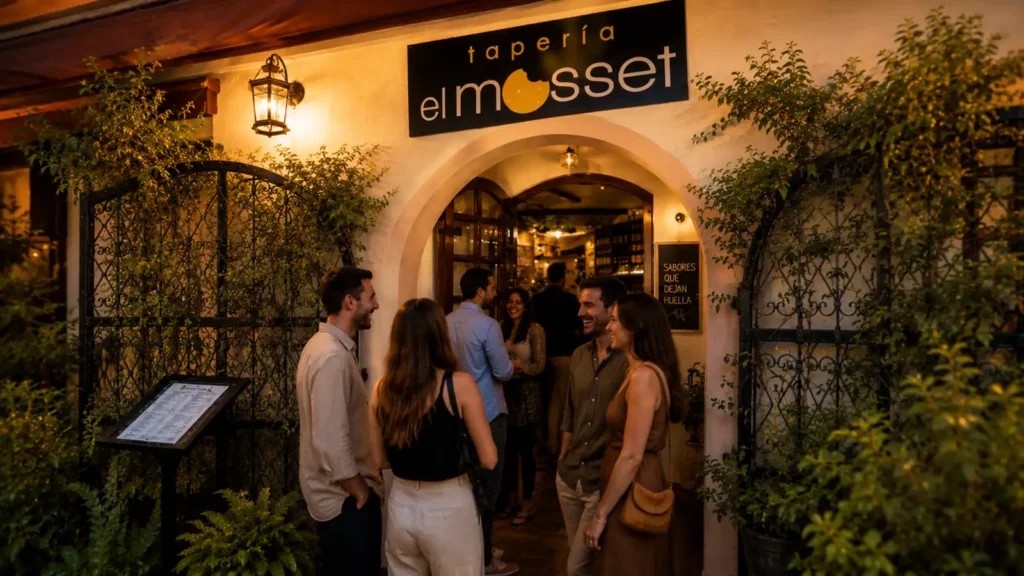

Some restaurants advertise themselves and some get recommended. Casa Teo belongs squarely to the second group. In El Albir, when someone asks where to eat a good rice dish, its name comes up before they’ve finished the sentence. Not because of marketing, but through repetition: for years it has been earning word-of-mouth recommendations, the kind that can’t be bought and the only kind that really counts in a village.
This article is an honest portrait of the place. What it is, what to order, what to expect, what the hundreds of people who’ve rated it online say and, importantly, where it falls short, because no restaurant is perfect and anyone who tells you otherwise is selling you something. We’re not selling anything here. We’re just telling you what one neighbor would tell another.
Table of Contents
ToggleWhy Casa Teo is an almost obligatory stop in El Albir
El Albir is a small place with a restaurant density out of proportion to its size. Hundreds of options squeezed into a few streets, many aimed at the tourist who spends a week and never comes back. In that landscape, the places that survive decade after decade don’t do so by chance. Casa Teo is one of them.
Its formula has no trick: well-made rice dishes, Spanish cooking built on good ingredients, generous portions, sensible prices and service that people describe again and again as warm and personal. In an environment full of fast food dressed up as Mediterranean, a place that cooks its rice to order and does it properly becomes a reference almost without trying.
The proof is in its mixed clientele. Here you’ll find the resident who comes every couple of weeks alongside the tourist who found the place by chance and the Norwegian who has been coming for twenty winters. When a restaurant manages to keep loyal both the person who lives next door and the person who’s only passing through once, it’s doing something right.
Where it is and how to get there
Casa Teo is right in the center of El Albir, in the Monver Albir shopping center, units 8 and 10, at number 47 Camí Vell d’Altea. In practice, it’s on El Albir’s main street, the one that runs the length of the village, on your right-hand side as you come in from the N-332 national road.
You can’t miss it. If you know El Albir at all, you know your way around its central avenue; the restaurant is part of the small shopping center, with the entrance visible from the street. If it’s your first time, any local will point you to it without hesitation.
Parking without the pain
This is a detail that’s worth its weight in gold in El Albir, especially from June to September. Casa Teo has free parking, both on the street itself and in the shopping center’s underground garage. Anyone who has tried to park in El Albir on an August Saturday knows this is no minor luxury: it’s often the difference between choosing one place or another.
Being able to leave the car underground, for free and a few meters from your table, removes real friction. With kids, with grandparents or simply in the heat, that logistical detail weighs as much as the menu.
The surroundings: El Albir’s main avenue
The restaurant is in the commercial and strolling heart of the village, a step away from the shops, terraces and the buzz that gathers along the avenue. That makes it easy to combine: a long lunch followed by a walk down to Albir beach or to the lighthouse, which is a stone’s throw away. It’s the kind of location that lets you make lunch the centerpiece of the day without having to get in the car for anything else.
The story: who Teo is and where this cooking comes from
The restaurant’s name isn’t a brand invented by an agency. Behind it is a real person: Teo, an Andalusian, the owner, a cook at heart and the face of the place. Understanding that explains a good part of what’s served here.
Andalusian roots, rice-cooking soul
The combination is interesting. An Andalusian running a rice restaurant in Valencian territory might seem like a contradiction, but it works precisely because it brings the best of two worlds: the respect for ingredients and generous flavor of the south, applied to the rice dishes that are the emblem of this coast. The result is broad Spanish cooking, without strict regional borders, where paella, the Andalusian mollete and classic tapas all fit on the same menu.
Customers notice. In their reviews you often find the idea of “real food”, “homemade”, “like at home”. That’s the effect of having someone in charge who cooks from their own taste and not from a corporate manual.
From beer bar to reference rice restaurant
The business’s full name says it all: Casa Teo, cervecería y arrocería (beer bar and rice restaurant). That double surname sums up its evolution and its character. It’s a place where you can walk in at eleven in the morning for a beer and a tapa, stay at midday for a rice dish and a two-hour lunch, or come back at night for a late dinner. The kitchen being open continuously, from morning to midnight, reinforces that versatility.
Over time, rice gained prominence until it became the signature. Today, although the menu is broad, rice is the number one reason people book a table. Few businesses manage that transition without losing the soul of a neighborhood beer bar, and Casa Teo has done it: it’s still accessible and unpretentious even though its rice competes with that of much pricier places.
The rice dishes, one by one
If you’re going to Casa Teo for the first time, this is the section you’ll care about most. Rice is the reason the recommendation exists, so it’s worth stopping at each variety. The rice menu is extensive, and each dish suits a different kind of diner. Choosing well makes the difference between a good meal and a memorable one.
The paella, the way in
It’s the classic and the most ordered, especially among first-timers. In customer reviews, the paella is repeatedly described as the best many people can remember eating, with the grain cooked just right and a sofrito with real depth. It’s the safe choice, the one that rarely disappoints and that tends to turn the passing tourist into a customer who promises to come back.
The arroz del senyoret, the favorite of those in the know
This is where the regular separates from the newcomer. The arroz del senyoret comes with all the seafood peeled: prawns, cuttlefish, squid and fish without shells or bones, so you eat without getting your hands messy or interrupting the conversation. Among diners who come back, it’s one of the most praised dishes. It’s the rice for someone who wants to enjoy without working for it, and reviews mention it with particular fondness.
The arroz a banda
Understated and deeply flavored, the arroz a banda packs all the taste of the fish stock and seafood into the grain, with no distractions. It’s the purists’ rice, the one ordered by people who value the flavor of the sea over showiness. Less spectacular to look at than a loaded paella, but for many the most well-rounded in flavor.
The black rice
Made with cuttlefish ink, it’s as striking on the plate as it is intense in the mouth. It especially appeals to anyone looking for something different and to international diners, who are often impressed by its color and its concentrated taste of the sea. It’s also one of the dishes that looks best on the table, a plus when you’re sharing and someone can’t decide what to order.
Creamy and brothy seafood rice
Not all rice dishes are dry. The meloso, halfway between dry and brothy, and the brothy seafood rice, more liquid and comforting, are two of the house’s most celebrated bets. In reviews, the brothy seafood rice is described again and again as spectacular. These are spoon rice dishes, ideal for the cooler months and for anyone who associates seafood with comfort more than with ceremony.
The monkfish and langoustine caldero
It’s one of the dishes loyal customers name with devotion. A powerful seafood stew with monkfish and langoustines as the stars, combining the heartiness of the broth with the delicacy of the shellfish. It’s not the cheapest dish on the menu, but people who order it rarely regret it. It shows up in reviews as one of those dishes worth coming back for.
The fideuà
For anyone who wants the idea of a seafood rice dish but with noodles instead of rice, the fideuà is the alternative. It’s prepared with the same care as the rice dishes and works just as well for sharing. It’s a frequent choice among groups who want some variety without leaving the house’s seafood register.
How long it takes and why
It’s worth being honest about this, because it’s the key to avoiding disappointment. Proper rice isn’t made in advance and left waiting on a tray: it’s cooked to order, from scratch, and that takes time. Between twenty and forty minutes, depending on the dish and how busy the kitchen is, is normal in any serious rice restaurant.
This means two things. First: it’s a good sign, because it guarantees you’re eating freshly made rice and not something reheated. Second: you have to go with the right mindset. This is not a fast-food place. Order some tapas to whet your appetite, put a drink on the table and enjoy the wait as part of the ritual. Anyone who walks in in a hurry gets frustrated; anyone who walks in relaxed leaves delighted. We’ll look at this in more detail in the reviews section, because this wait is precisely the source of almost all the place’s negative criticism.
Beyond the rice: the menu that holds the house up
It would be unfair to reduce Casa Teo to its rice. The menu is broad and you can eat very well without touching a paella. In fact, a good part of its day-to-day life as a beer bar rests on the tapas and starters, which fill the tables outside the rice rush hours.
Tapas and starters
This is beer-bar territory, and there are gems here. The croquettes get a special mention in guides and reviews, to the point of appearing among the best in the area according to online food rankings. The molletes (soft, Andalusian-style bread rolls with different toppings), in their various versions, are another regular, much ordered and very Andalusian. Alongside them come the huevos rotos, the calamari, the Iberian ham and cold cuts platter and the garlic prawns, all regulars in the positive reviews.
The virtue of this part of the menu is that it allows an informal, tasty meal without committing to a two-hour rice dish. A couple of tapas, a drink and you leave happy. It’s also the best way to get a first taste of the place if you’re short on time.
Grilled meats
For anyone who isn’t into seafood, the grilled meats are a solid alternative. The Iberian secreto is among the best-rated meat dishes, and in general the kitchen handles flame-grilled product well. It’s not a specialist Argentine grill, but it does the job with flying colors for the diner who prefers meat while the rest of the table digs into the rice. That ability to keep mixed tables happy, with seafood lovers and meat lovers sitting together, is one of the reasons for its success with groups and families.
Fish
Fresh fish is another of the pillars. As a place with a seafaring vocation, seafood has a presence beyond the rice dishes, and those who order it usually highlight how fresh it is. It’s the natural choice for anyone who wants to eat light and seasonal without giving up the coastal character of the house.
Homemade desserts
This is where people get serious, and rightly so. The desserts are homemade and show up in reviews with an insistence that isn’t usual. The cheesecake, the chocolate cake, the tiramisu and the lime tart come up again and again as the crowd favorites. In more than one review, dessert is what convinces an undecided diner that this place does things with care from start to finish. Don’t leave the table without trying at least one; it’s where the homemade touch is most noticeable.
To drink: sangria on tap and gin and tonics
Two details set Casa Teo’s bar apart. The first is the sangria on tap, uncommon in the area and much celebrated in summer, refreshing and easy to pair with rice. The second is the gin and tonics, which several customers mention as especially well made, ideal for stretching out the after-meal chat. On top of that there’s a good selection of beers, as you’d expect from a beer bar, and wines to go with the food. It’s a place designed both for eating and for staying on.
What the public’s reviews say
This is probably the most useful part of this guide, because it isn’t based on the opinion of one person but on the sediment of hundreds of diners who have left their ratings on the major platforms. Analyzed together, those reviews paint a very clear picture, with light and shadow.
The numbers, platform by platform
The first thing that stands out is that the score changes depending on where you look, and that difference tells a story. On Google, where local and regular customers do most of the rating, Casa Teo sits at around 4.4 out of 5, a high score that reflects a loyal and satisfied clientele. On Restaurant Guru, which aggregates reviews from several sources, it hovers around 4.3. On Tripadvisor, the platform most used by international tourists just passing through, the score drops to about 3.9.
These figures are an approximate snapshot and fluctuate over time, so treat them as a guide rather than as fixed data. But the trend is stable and significant: the restaurant scores higher among people who know it well than among those who try it just once. And that gap, far from being a problem, explains a lot about how the place works.
What comes up most among people who return
When you read the highest ratings, certain themes repeat with almost mechanical regularity. The first is the quality of the rice, named the best in the area by many diners, some of whom say they arrived on the recommendation of people with no connection to the restaurant. The second is the generosity of the portions, a much-appreciated quality that reinforces the feeling of eating well for what you pay.
The third big theme is the service. Teo’s name comes up repeatedly in the reviews, which is unusual and very telling: it means the owner is present, that people associate him with personal attention and that this human factor is part of the experience. Alongside him, the staff are praised as friendly, attentive and quick even at very busy times. The fourth theme is value for money, which many describe as among the best in El Albir, with the pleasant surprise of a bill that’s lower than expected.
On top of that come very frequently cited practical points: the terrace, the free parking and the fact that the kitchen closes late, something uncommon in the area and much appreciated by anyone who wants to dine after eleven.
The criticisms, unvarnished
No place is perfect, and hiding the complaints would be treating you like a tourist being sold smoke. Casa Teo’s negative reviews do exist and, interestingly, almost all of them point in the same direction: the wait and the overcrowding on the busiest days.
The pattern is clear. At peak times, with the restaurant full, the rice can take longer than it should, and some diners have reported long waits and even, in isolated cases, rice that didn’t arrive at its best because of the pressure on the kitchen. The honest reading is this: the problem isn’t quality, it’s capacity. When a place with real rice fills up beyond its comfortable pace, timings suffer. It’s the price of success and of cooking every rice dish to order.
The practical conclusion is simple. If you’re going at peak time in high season, book, go without a rush and accept that the rice will take a while. If you can choose, avoid the peaks and the experience will be noticeably better. Most of the bad reviews are, at heart, a clash of expectations: diners who expected fast food in a place that, by definition, isn’t.
The gap between the resident and the passing tourist
Here’s the key to interpreting everything above. The difference in score between Google and Tripadvisor isn’t random: it’s a portrait of two different ways of experiencing the restaurant.
The resident knows the place. They know the rice takes time, they know what to order, they go unhurried, they pick good days and good times, and that’s why their experience is almost always excellent. The tourist who walks in once, hungry and in a rush, in the middle of August and without a reservation, has a much better chance of running into the place’s less friendly side: the wait. Hence the slightly lower score.
The moral for you, reader, is that you can choose which group to be in. With the information in this guide, you have everything you need to experience Casa Teo the way a local does and not the way a clueless tourist suffers it. And that, in practice, turns a 3.9 into a personal 4.5.
The atmosphere and the terrace
Casa Teo is a family-friendly, welcoming place, with no pretensions of being a starched-tablecloth restaurant. People describe it as comfortable, lively, with that energy of a place that’s usually full, which in hospitality is the best of signs: nobody queues at a bad restaurant.
The terrace is one of its great assets. It has covered and uncovered areas, which makes it usable all year round. In summer, the open-air part lets you eat with the El Albir breeze; in winter or on windy days, the covered area keeps things comfortable without giving up being outside. That flexibility is gold on a coast where the weather, though mild, is changeable.
It’s also a place that works well with children and large groups, thanks to the portions for sharing and a menu broad enough to keep everyone happy. Families are an important part of its regular clientele, and that sets the tone of the atmosphere: relaxed, noisy in a good way, made for long lingering meals.
Price and value for money
If there’s one absolute consensus in the reviews, it’s this: you eat well for what it costs. Value for money is perhaps the most repeated and least disputed point about the whole restaurant. Diners who describe themselves as demanding agree that the bill is usually friendlier than expected for the quality and quantity served.
It’s not a bargain-basement place, because good rice and good seafood carry a cost that can’t be faked. But it isn’t an expensive restaurant for what it offers either, and that’s where its balance lies. In the context of El Albir, where there’s no shortage of places charging tourist-zone prices for mediocre food, Casa Teo stands out for feeding you properly at a fair price. It’s one of those places where you don’t feel you’ve paid for the location, but for what you’ve eaten.
A place made for international El Albir
El Albir isn’t just any Costa Blanca village. It has a huge, well-established international community, with a particularly notable Norwegian presence, along with British, Dutch and other northern Europeans who live here for long stretches or year-round. Casa Teo understands that audience like few others.
The most telling detail is its own website, available in Spanish, English and Norwegian. It’s not a casual gesture: it’s proof of a restaurant that knows who sits at its tables and has decided to speak the language of its real clientele. For newcomers still wrestling with Spanish, this is reassuring. Here you won’t have trouble understanding the menu or ordering, and you’ll find an atmosphere used to the mix of nationalities that defines El Albir.
That cosmopolitan character coexists, however, with deeply Spanish cooking. And that’s part of its charm: it’s the place where the settled Norwegian takes visitors to show them what real rice is like, and where the Spaniard finds the taste of home. A culinary meeting point between two worlds that coexist daily in El Albir.
How it stacks up against other rice restaurants in the area
El Albir and its surroundings have a competitive rice scene. It’s not the only place to eat good rice, and it would be dishonest to tell you it is. But Casa Teo occupies a very specific place that’s hard to match: quality rice at a reasonable price, in an informal, family atmosphere, right in the center and with parking.
Other places may compete on one particular front, but few combine all those factors at once. There are pricier, more ceremonious rice restaurants, and there are cheaper, lower-level options. Casa Teo sits in that virtuous middle ground where quality is high, the price is honest and the experience is comfortable. That balance is precisely what keeps it full year after year.
If you want to compare at your own pace and decide for yourself, the best thing is to explore the other options in the area with the same critical eye. For that you have our guide to restaurants in El Albir, where we analyze other places with the same honest approach we’ve applied here.
Tips for your first visit
If it’s your first time, a few neighborly tips will save you mistakes and make sure you have a good experience.
Book if you’re going on a weekend or in high season. It’s not a whim: it’s the difference between sitting down right away or waiting. You can book by phone or WhatsApp, and in summer it makes all the difference.
Go without a rush. The rice takes time because it’s made to order. Go in with a long-lunch mindset and all will be well. If you’re in a hurry, order tapas instead of rice that day.
Start with some tapas. While you wait for the rice, a couple of croquettes, some molletes or some calamari whet your appetite and make the wait pleasant. It’s also the best way to get to know the other side of the house.
If you’re a first-timer, the paella is the safe choice; if you want to play like a local, order the arroz del senyoret or the brothy seafood rice. And if there are several of you, mix it up: one rice dish to share and a meat or fish dish keeps the whole table happy.
Don’t skip dessert. It’s homemade and it’s where many diners end up falling in love with the place. The cheesecake rarely fails.
Choose your moment well. If you can avoid the absolute peak of an August Saturday at half past two, do so. On weekdays or at less crowded times, the experience is calmer and the service quicker.
Opening hours, reservations and contact
Casa Teo is open every day of the week, Monday to Sunday, with continuous hours from nine in the morning until midnight. That range is one of its big advantages: it works for breakfast, lunch, an afternoon snack or a late dinner, which is unusual in the area.
To book or ask a question, the phone number is 966 86 52 52 and the WhatsApp is 670 642 498. The official website is casa-teo.es, available in Spanish, English and Norwegian. In high season and on weekends, booking isn’t a suggestion, it’s the sensible thing to do. It’s best to confirm hours and availability directly with the restaurant, as they can vary depending on the time of year.
Frequently asked questions about Casa Teo
Is Casa Teo just a rice restaurant?
No. Rice is its specialty and its signature, but the menu is broad and includes tapas, starters, grilled meats, fresh fish and homemade desserts. You can eat wonderfully without ordering rice, although it would be a shame to miss it on your first visit.
What’s the best rice to order?
It depends on your profile. For a first time, the paella is the safe choice. If you want to eat without getting messy, the arroz del senyoret, with all the seafood peeled, is the regulars’ favorite. For the cold months, the brothy seafood rice is comforting and highly praised. And if you’re after something special, the monkfish and langoustine caldero is one of those dishes people come back for.
Do you need to book?
On weekdays and in low season it’s usually not essential, but on weekends and in summer it’s highly recommended. You can book by phone on 966 86 52 52, or by WhatsApp on 670 642 498.
Why does the rice take so long?
Because it’s cooked to order, from scratch, the way good rice should be. That’s a guarantee of quality, not a flaw. The normal wait is between twenty and forty minutes depending on the dish and how busy the kitchen is. Going unhurried and ordering some tapas to start is the key to enjoying the wait.
Does it have a terrace?
Yes, it has a covered and an uncovered terrace, which lets you eat outside practically all year round, both in summer and on cooler or windier days.
Is there somewhere to park?
Yes, and it’s one of its big selling points. It has free parking on the street and in the underground garage of the shopping center where it’s located, which is very valuable in El Albir, especially in high season.
How late can you have dinner?
The kitchen stays open until midnight, which is uncommon in the area. It’s a good option for anyone who wants to dine late and still find the kitchen running.
Do they cater to international customers?
Yes. It’s a restaurant very used to El Albir’s international clientele, with a regular presence of Norwegian, British and Dutch residents. Its own website is available in Spanish, English and Norwegian, which gives an idea of how comfortable it is for a foreign audience.
Is it suitable for kids or groups?
Very much so. It’s a family place, with generous portions for sharing and a broad menu that keeps seafood lovers and meat lovers equally happy. It works very well for group meals and informal celebrations.
Is it expensive?
Not for what it offers. Value for money is the aspect its customers praise most. It’s not a bargain-basement place, but you really eat for a fair price, something that in a tourist area like El Albir isn’t always easy to find.
Conclusion: why it’s worth it
Casa Teo isn’t a hidden discovery or a secret nobody knows. It’s just the opposite: a well-established classic that has spent years earning its reputation one rice dish at a time. Its strength lies in consistency, in doing the hard things well over the long haul, in treating the neighbor and the visitor the same, and in never betraying the formula that made it great.
It has its shadows, and we’ve told you about them without embellishment: the waits at peak times and the overcrowding on the busiest days. But they’re shadows you can sidestep with a little information, the kind we’ve given you in this guide. Go unhurried, choose your moment well, order with judgment and you’ll enjoy one of the best rice dishes in El Albir at a price that rarely disappoints.
If you’re after real Spanish food, personal service and that homemade flavor that’s so scarce in tourist areas, this is your place. Casa Teo is one of those stops that explain why El Albir is worth getting to know slowly, beyond the beach and the obvious.
And when you want to keep discovering the area, you have two paths: keep exploring where to eat in our guide to restaurants in El Albir, or go back to the Live in Albir homepage to discover everything the village has to offer, from routes to corners only someone who lives here knows.