
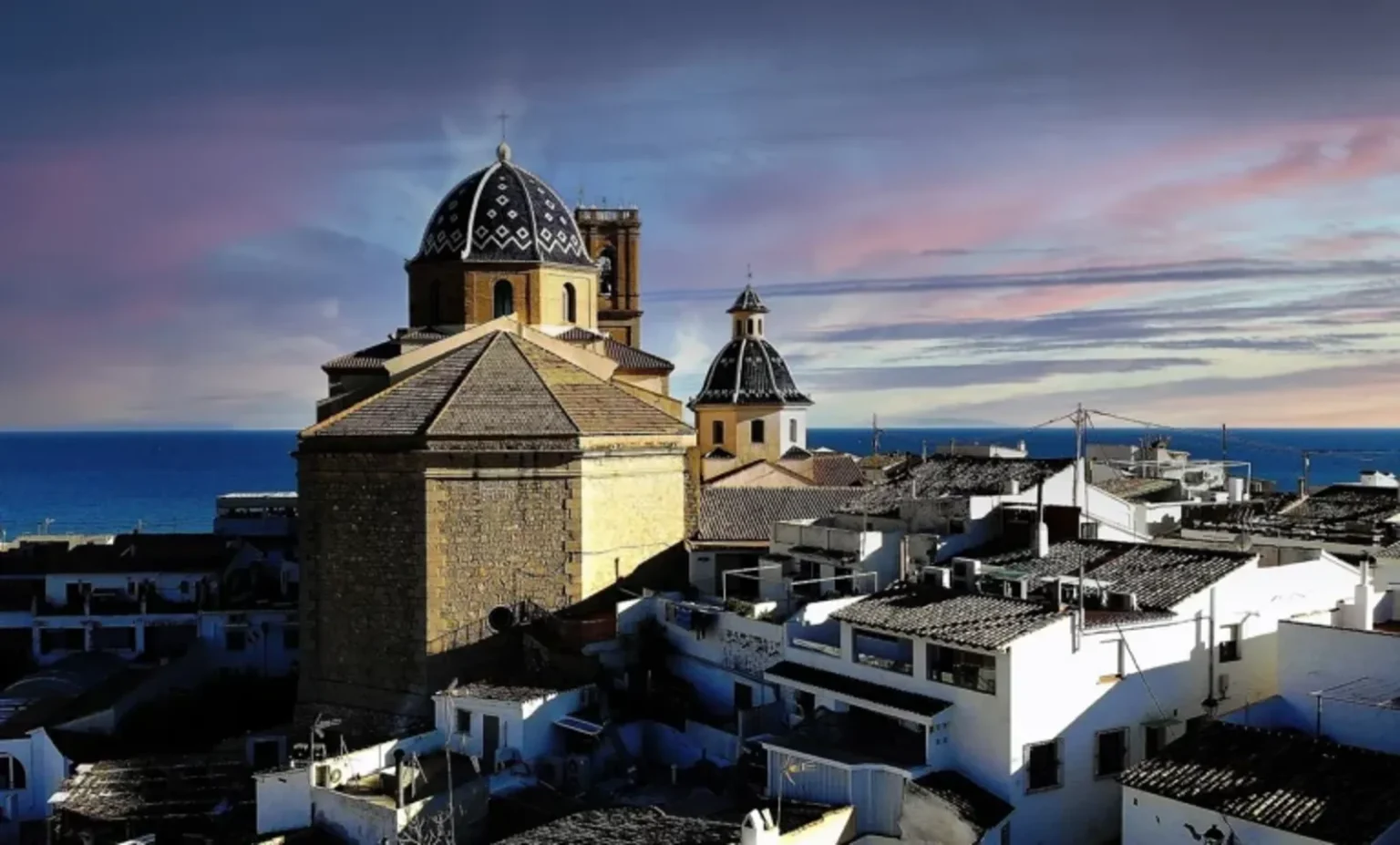
If El Albir is the place to switch off and enjoy the natural scenery, Altea is where you go for art, culture and authentic village life. Just a few kilometres apart, these two towns complement each other perfectly. Altea is Albir’s more cultural neighbour — and one of the most distinctive towns on the entire Costa Blanca.
Table of Contents
ToggleA Walk Through the History of Altea’s Old Town
The first place to visit in Altea is its famous old town — a maze of cobbled streets that wind up the hillside to the Church of the Virgen del Consuelo. Its blue dome, visible from miles around, is the most iconic symbol of the town. Wandering through the old town takes you back through the region’s history while offering spectacular views of the coast, with the Mediterranean as a backdrop.
This historic quarter is known for its bohemian atmosphere — art galleries, artisan boutiques and ceramics shops, all stocking unique handmade pieces by local artists. The artistic influence has turned Altea into a magnet for creatives from across Europe, earning it the nickname “the cradle of art on the Costa Blanca”.
Altea’s Living Culture
Altea is much more than a pretty town. Throughout the year it hosts a lively programme of cultural events: open-air concerts, art festivals, traditional markets and theatrical performances that draw both locals and visitors. The Berklee Valencia campus has its studios here, giving the town a permanent connection to contemporary music and the arts.
The town’s artistic reputation is not recent — it was established over decades, as painters, sculptors and writers from Spain and beyond settled here drawn by the quality of the Mediterranean light. Today that legacy lives on in its galleries, studios and the general aesthetic of the streets themselves.
The Castle of Altea and its Views
Climbing beyond the old town, you reach impressive viewpoints overlooking the entire Bay of Altea and the Mediterranean. At the top stand the ruins of a 16th-century fort — a historical landmark that rewards the climb with both cultural interest and extraordinary panoramic views.
Mediterranean Gastronomy: Flavours Worth Savouring
Altea is also a serious food destination. Restaurants in both the old town and along the seafront promenade serve a wide range of Mediterranean dishes using fresh local produce. The rice dishes are not to be missed — particularly arròs a banda and seafood paella, both local classics.
The seafront promenade is one of the best places to eat, with a row of restaurants serving fresh seafood and traditional dishes right by the water, best enjoyed with a glass of local white wine.
Altea and Albir: A Natural Connection
The proximity between Altea and Albir makes it easy to enjoy both on the same trip. Albir offers beach, nature and a quieter pace; Altea adds culture, gastronomy and architectural beauty. The two towns are connected by a coastal path that can be walked or cycled in under 30 minutes — making them natural companions for any visit to the Marina Baixa.
Hidden Corners: Altea’s Best-Kept Secrets
Despite being a well-known destination, Altea still has secrets for curious visitors. One of them is the Banys de la Reina — a series of natural Roman-era rock pools hidden along the rocky coastline. Said to have been used by royalty for private bathing, today they make a perfect spot for a quiet escape and a refreshing swim.
Another lesser-known gem is the Museo Navarro Ramón, an art gallery dedicated to one of the region’s most important painters. It offers a deeper understanding of Altea’s rich artistic history and work that captures the Mediterranean landscape and way of life.
Beyond the Old Town: Exploring Altea in Depth
One of Altea’s less-visited treasures is the Fundación Eberhard Schlotter, a space housing the work of this German painter who made the town his home. The museum stands out not only for its permanent collection but also for its temporary exhibitions spanning a wide range of styles and periods — always with a Mediterranean sensibility at their core.
Beyond art, Altea rewards slow exploration: the smaller squares away from the tourist trail, the local morning market, the fishing harbour at dusk, the ceramics workshops where you can watch pieces being made. These are the moments that make Altea feel genuinely different from the rest of the Costa Blanca.


