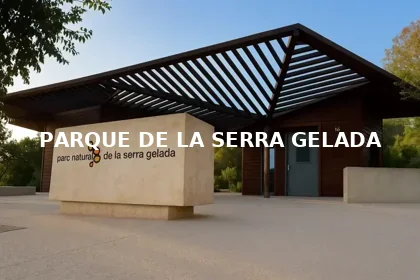

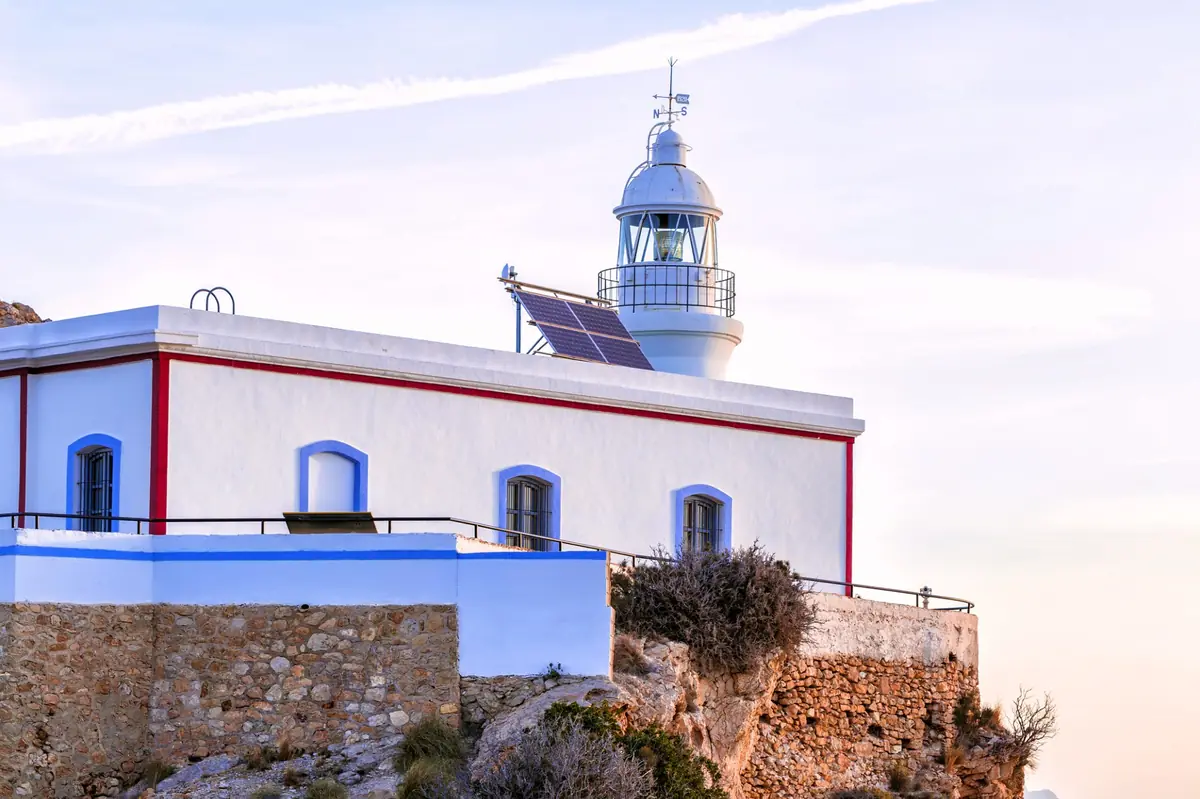
The Albir Lighthouse , also known as Faro de l’Albir , is one of the most popular routes on the Costa Blanca and a must-see if you visit Albir or l’Alfàs del Pi . This walk, fully paved and accessible to all ages , runs through the heart of the Serra Gelada Natural Park , a protected area between Altea and Benidorm famous for its cliffs, biodiversity, and viewpoints with spectacular views of the Mediterranean Sea .
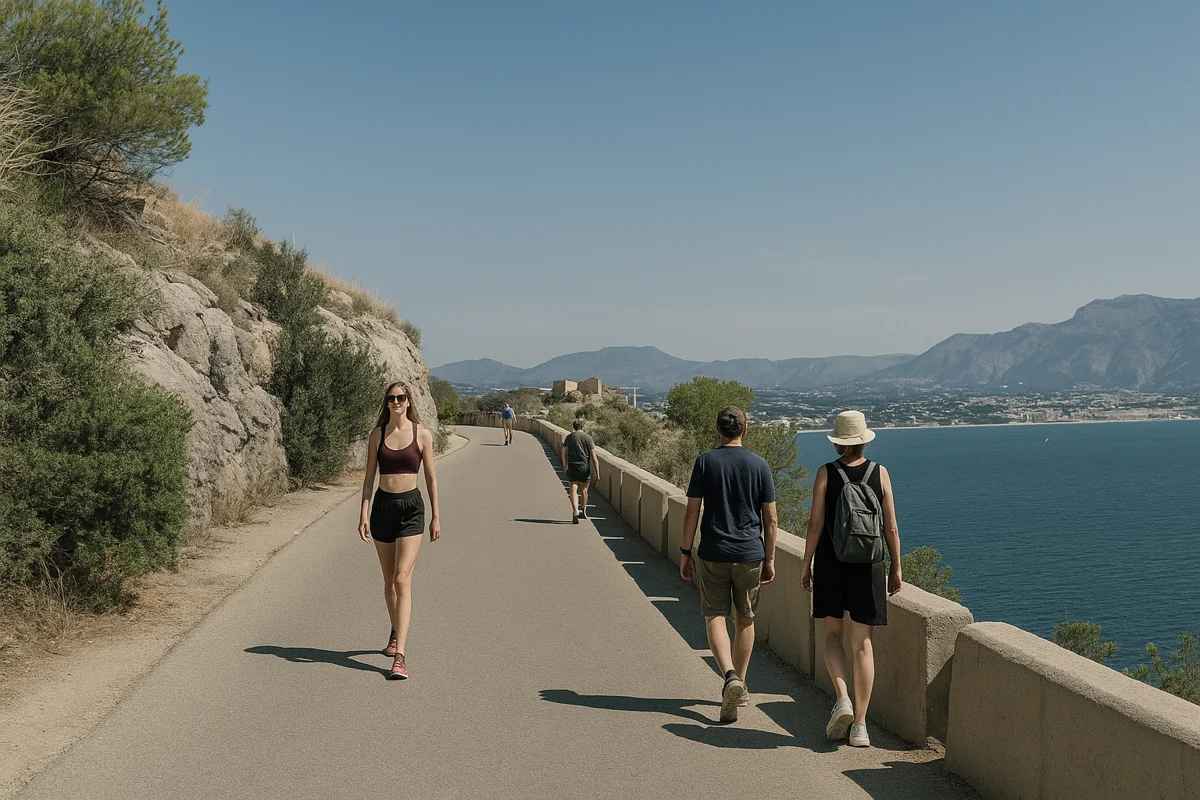
The path to the lighthouse is an experience that combines nature, history, and gentle exercise . From the park entrance, a 2.5 km paved track (5 km round trip) winds between limestone mountains and the deep blue sea, offering panoramic views of Altea Bay , the Peñón de Ifach in Calpe, and, on the clearest days, even the island of Ibiza .
Inaugurated in 1863 , the lighthouse was built on the site of the old Bombarda Tower , a 16th-century watchtower that protected the coast from pirate attacks. Today, the building houses an Interpretation Center with cultural and audiovisual exhibits, as well as panels about the lives of lighthouse keepers, navigation, and the natural wealth of the park.
Table of Contents
ToggleTECHNICAL DATA SHEET FOR THE ROUTE TO THE ALBIR LIGHTHOUSE
| Main data | Details |
|---|---|
| Total distance | 5 km (round trip) |
| Average duration | 1 hour – 1 hour 30 minutes (with stops) |
| Accumulated elevation gain | 100–120 m |
| Type of route: | Linear, paved |
| Difficulty: | Very easy; ideal for families, seniors, and strollers |
| Start | Parking and information booth of the Serra Gelada Natural Park |
| Services: | Benches, viewpoints, interpretive panels and fountain at the entrance |
| Maximum altitude | 112 m |
| Best time of day: | Sunrise or sunset |
| accessible | , paved and signposted |
HOW TO GET TO THE ALBIR LIGHTHOUSE?
The Albir Lighthouse is located within the Serra Gelada Natural Park , in the municipality of l’Alfàs del Pi , Alicante province. It is easily accessible by both car and public transport, making it one of the most popular tourist destinations on the Costa Blanca throughout the year.
By car
From Alicante or Valencia , you can get there via the AP-7 motorway (exit 65 Benidorm/Alfaz del Pi) or via the N-332 road to El Albir.
At the end of Camino del Faro , next to the park entrance, there is a free parking area with limited capacity. During peak season, it’s best to arrive early, as the parking lot usually fills up before 10:00 AM. The paved path leading to the lighthouse starts from there.
Those staying in Benidorm , Altea , or Alfaz del Pi can easily reach the park in about 15 minutes by car. There are also scenic routes that allow access by bicycle or motorbike, always respecting the park’s permitted hours.
By public transport
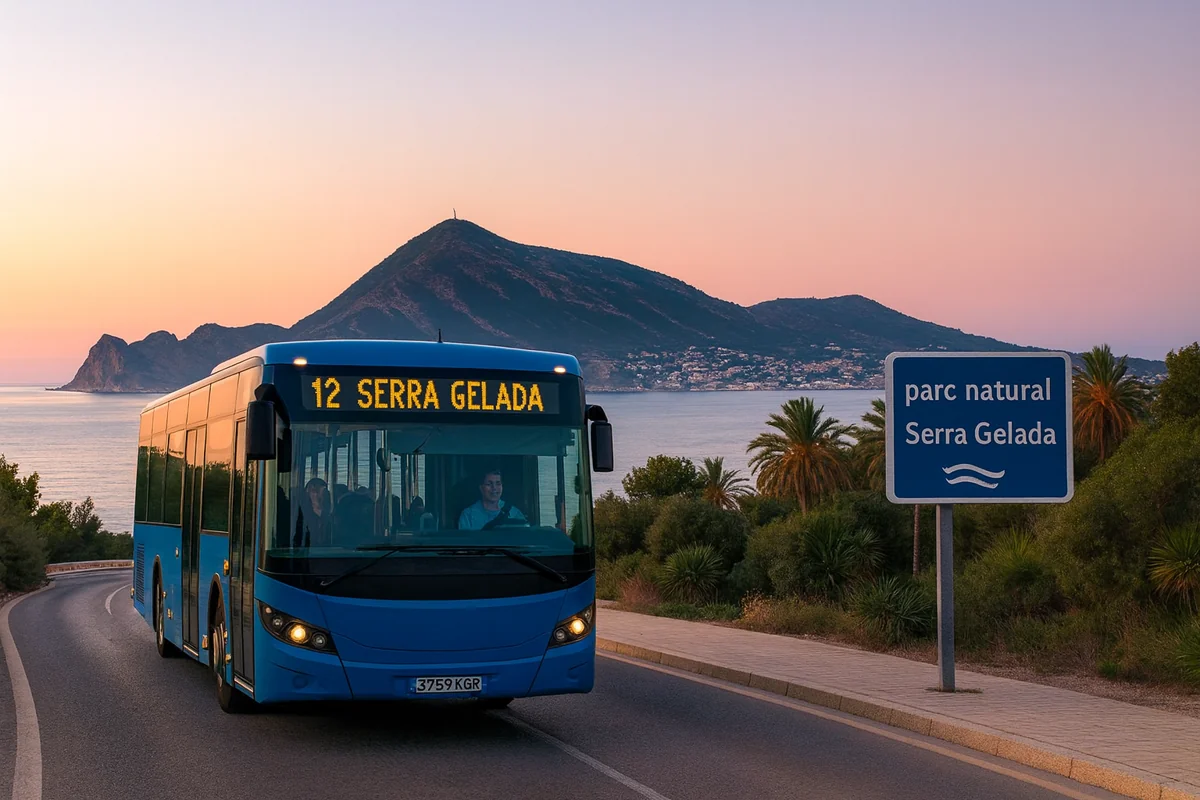
The most eco-friendly and practical option is the Alicante Metropolitan Tram , Line 9 (Benidorm-Denia). The nearest stop is L’Albir , from where you can walk for about 30 minutes or take the Llorente Bus, which stops right at the park entrance.
During the summer, there are more frequent services from Benidorm and Altea , and taxis are available 24 hours a day.
Local tip: If you plan to return at sunset, check the tram or bus timetables before you leave: the last one usually runs around 10:00 pm in peak season.
TIPS FOR VISITING THE ALBIR LIGHTHOUSE.
Best time to visit
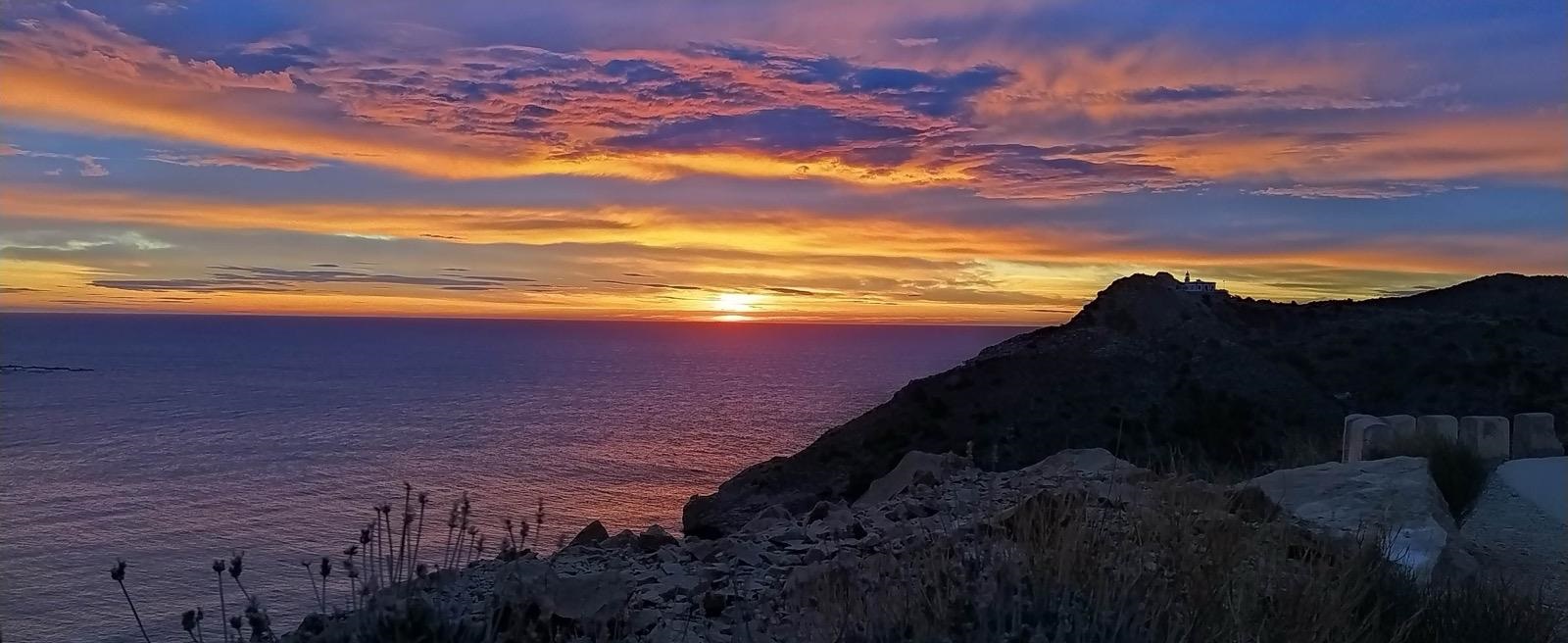
The best time is early in the morning or at sunset , when the light is softer and the temperatures are pleasant.
During the summer, avoid the middle of the day: the path lacks shade and the heat index can exceed 35°C.
Weekdays are perfect for enjoying the walk with fewer people and listening to the sound of the sea and the seagulls.
Accessibility and amenities
The Albir Lighthouse route is one of the most accessible in the Valencian Community:
Continuous asphalt pavement, without stones or steps.
Suitable for baby strollers, the elderly, and wheelchairs.
It has benches and panoramic viewpoints distributed along the route.
At the starting point there is a drinking water fountain , a rest area and information panels .
The park is adapted to facilitate visits for people with reduced mobility; however, it is recommended to have help if you wish to reach the last, slightly inclined section.
What to pack
Although the route is short, the surroundings are completely natural and there are no bars or shops along the way.
Pack a small backpack with:
Water (minimum 1 liter per person).
Sunscreen and a cap or hat.
Comfortable and breathable footwear , preferably athletic.
Camera or mobile phone : the path offers some of the best viewpoints in the Marina Baixa.
If you are going with a pet , bring a leash and portable water bowl : dogs are welcome, but they must always be controlled and not leave the paved road.
WHAT TO SEE ON THE WAY TO THE ALBIR LIGHTHOUSE?
Hiking to the Albir Lighthouse is an experience that goes far beyond a simple stroll: every bend in the path offers a point of interest, a new landscape, or a story to tell. The route combines nature, geology, heritage, and environmental interpretation , all within the Serra Gelada Natural Park , one of the most unique protected areas on the Costa Blanca.
Punta Bombarda Lookout
Halfway along the route, this natural viewpoint allows you to enjoy a panoramic view of the bay of Altea , with the Peñón de Ifach silhouetted in the background and the Mediterranean extending to the horizon.
On clear days, you can even make out the silhouette of Ibiza . It’s an ideal spot to take a break, hydrate, and take photos, especially at sunrise or sunset, when the warm light bathes the cliffs of the Serra Gelada in gold.
Photography tip: Use a wide-angle lens or your phone’s panorama mode to capture the entire curve of the bay.
Ochre Mines
One of the most interesting sections of the route is the old ochre mines , visible on the right before reaching the lighthouse. These reddish veins were exploited from the 19th century—and, according to some studies, even from Roman times—to extract the natural pigment used to make dyes for textiles and ceramics .
The cuts in the rock and remnants of the old galleries are still visible. The intense ochre color of the walls contrasts with the blue of the sea, making it one of the most photographed spots in the park.
Warning: the mines are a protected area; do not enter the galleries or remove any material.
Cliffs and rock formations
The trail runs along the edge of the Serra Gelada cliffs , which drop vertically more than 300 meters to the Mediterranean. These limestone walls, formed millions of years ago under the sea, display folds and fractures that reveal the power of nature.
Marine erosion has created caves and natural arches like the Cova del Bou , or Boca de la Balena ( Whale’s Mouth), so named for its resemblance to a whale’s open mouth. From this vantage point, the sounds of the waves crashing against the rocks are a mesmerizing spectacle for the senses.
Albir Lighthouse Interpretation Centre
The walk culminates at the Albir Lighthouse , built in 1863 and now a small museum and viewpoint . Inside, there are interactive panels and exhibits about the history of the lighthouse, the lives of the former lighthouse keepers, and the marine biodiversity of the Serra Gelada.
The building retains part of the original dwelling and offers 180° views of the sea. Admission is free and it is usually open from Tuesday to Sunday, from 10:00 to 13:30 (hours subject to change depending on the season).
Extra: From the lighthouse terrace you can observe with binoculars the ships sailing in front of Altea and, occasionally, schools of dolphins.
HIGHLIGHTS AT THE START OF THE ROUTE.
The experience begins as soon as you leave the Serra Gelada Natural Park parking lot. Next to the information booth, you’ll find a small recreation area with benches, a fountain, and picnic tables —ideal for preparing for your hike or stretching before starting your walk. From here, the paved path leads to the Albir Lighthouse , surrounded by Mediterranean vegetation—rosemary, dwarf palm, mastic trees, and Aleppo pines—that perfume the air.
Along the trail, various interpretive panels explain the history of the lighthouse, the wildlife that inhabits the cliffs, and geological curiosities of the park. It’s a perfect route for children or families , as each stop reveals something different: how the cliffs were formed, why the sea has such an intense blue color, or which birds fly over the coast.
💡 Local tip: Right at the start there is a high viewpoint overlooking the car park and the beginning of the trail; it’s a good place to take a group photo before starting the climb.
ALFONSO YÉBENES SIMÓN VIEWPOINT
Shortly before reaching the lighthouse, you’ll find the Alfonso Yébenes Simón viewpoint , one of the most spectacular natural balconies on the Costa Blanca. From here, you can admire the cliffs of the Serra Gelada plunging into the Mediterranean, with the bay of Altea , the Peñón de Ifach , and, on clear days, the island of Ibiza silhouetted against the horizon.
This viewpoint pays homage to one of the driving forces behind the natural park and is also a key spot for photographers and birdwatchers . At dawn, golden light illuminates the cliffs; at dusk, the sun sets behind the mountains of Callosa d’en Sarrià, creating reddish hues impossible to capture on camera.
📸 Recommendation: Bring binoculars or a telephoto lens; with a bit of luck you may see peregrine falcons or European shags flying over the coast.
RECOMMENDED DETOURS (OPTIONAL)
Although the main road is linear and paved, there are several optional detours for those seeking adventure or less traveled landscapes:
Ochre Mines: remnants of 19th-century mining activity, with reddish walls contrasting with the blue of the sea. From here, you can take unique photographs of the Serra Gelada ocher , a symbol of the park.
⚠️ Important: Do not enter the mines; the tunnels are protected and may be unstable.
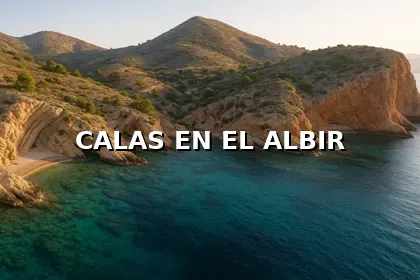
Cala del Metge / Caleta del Amerador : small, hidden coves with turquoise waters, ideal for snorkeling or a relaxing swim . Access is steep and requires appropriate footwear; not recommended for young children or people with reduced mobility.
Alt del Gobernador (438 m): the highest point of the Serra Gelada. A challenging hiking or trail running route , with 360° views over Albir, Benidorm, and the Sierra de Aitana. It’s a favorite among athletes and landscape photographers .
🥾 Safety tip: If you choose any of these detours, carry plenty of water, check the weather forecast, and avoid the hottest hours of the day. In summer, the rocky terrain reaches very high temperatures.
RULES OF THE SERRA GELADA NATURAL PARK
To preserve the beauty of the environment, it is essential to follow basic conservation guidelines. The Serra Gelada Natural Park is a protected area, and its balance depends on the behavior of every visitor.
Dogs: allowed, but always on a leash and picking up their excrement.
Bicycles and scooters: circulation is subject to time slots and seasonal regulations . In peak season, it may be restricted for pedestrian safety.
Smoking or lighting fires is prohibited , even in open areas.
Waste: Use the recycling bins next to the information booth and do not leave any trash along the route.
Sun protection and water: the path has little shade; wear a hat, sunglasses and at least 1 liter of water per person.
Remember: you are in one of the first marine-terrestrial natural parks in the Valencian Community. Every little helps to keep it alive.
AND AFTER VISITING THE ALBIR LIGHTHOUSE, WHAT ELSE CAN YOU DO?
Once you’ve reached the Albir Lighthouse and enjoyed the views, the park and its surroundings offer countless ways to continue exploring the Costa Blanca . From water sports to cultural and nature trails, there are options for all tastes and energy levels.
Diving and snorkeling in the Serra Gelada
The Serra Gelada Natural Park is an underwater paradise. Its crystal-clear waters are home to meadows of Posidonia oceanica , a protected ecosystem that provides refuge for dozens of species of fish and mollusks.
Several local companies offer guided snorkeling and diving excursions from Albir Beach or the port of Altea , adapted to all levels.
You can observe octopuses, gilthead bream, groupers and starfish in an environment that combines biodiversity and tranquility.
Tip: The best times for diving are between 9:00 and 12:00, when the sun shines through the water and enhances the turquoise tones of the bottom.
Boat trips from Altea
Just 10 minutes from Albir, the port of Altea organizes boat trips and coastal excursions that explore the Serra Gelada from the sea.
These trips allow you to see the lighthouse from a different perspective, admire the cliffs and, with a bit of luck, spot bottlenose dolphins or sea turtles .
Some routes include swimming in the open sea or a stop in front of Isla de l’Olla , a protected natural enclave and one of the most beautiful spots on the Alicante coast.
Recommended for families and couples: sunset excursions with a glass of wine and views of the illuminated lighthouse.
Visit to the Old Town of Altea
After the sea, it’s time to get lost in history. Just a few minutes away by car, Altea’s Old Town is a Mediterranean gem of cobbled streets, whitewashed houses, and sea viewpoints.
Don’t miss the Church of Our Lady of Consolation , with its famous blue and white dome , or the artists’ workshops that fill the neighborhood with life.
Ideal for strolling at sunset, dining on a terrace and contemplating the lights of the bay, where hours before you were walking towards the lighthouse.
Hiking trails in the Serra Gelada
Beyond the lighthouse, the park offers trails for all levels , from gentle seaside routes to challenging climbs like the Alt del Gobernador (438 m) .
This summit offers a 360° panoramic view over the bay of Altea, Benidorm and Puig Campana.
There are also paths that lead down to hidden coves like Cala del Metge or Cala de la Mina , perfect for combining hiking, swimming and photography .
💪 For athletes: the “Albir Lighthouse Race” is held every summer and follows the same paved road as the lighthouse, combining running and nature.
Exploration of nearby coves
The coastline between Albir and Altea is full of small coves with turquoise waters and rocky bottoms ideal for free diving.
Cala del Metge and Cala de la Mina are the most well-known, although access is somewhat challenging. In return, they offer absolute tranquility and direct contact with nature .
These are places without beach bars or services, so it’s best to come prepared with water, an umbrella, and appropriate footwear.
Stargazing
Thanks to the low light pollution, the area around the lighthouse and the Serra Gelada is one of the best spots in the Marina Baixa to see the night sky .
Several local associations organize astronomy nights with telescopes, where you can observe Saturn, Jupiter or the craters of the Moon.
If you prefer to do it on your own, simply walk away from the parking lot and let the silence and the stars accompany you.
DISCOVER THE FLORA AND FAUNA OF THE SERRA GELADA
The Serra Gelada Natural Park , which includes the Albir Lighthouse route, is a privileged enclave where unique marine and terrestrial ecosystems coexist on the Costa Blanca .
Typical flora of the Mediterranean
Dwarf palm: the only native palm tree of Europe, hardy and low-growing. It is a symbol of Mediterranean vegetation.
Mastic tree: a robust shrub with evergreen leaves; in autumn its red fruits add color to the landscape.
Rosemary and thyme: aromatic plants that fill the air with fragrance, especially in spring.
Juniper and Aleppo pine: they cover the slopes and offer refuge to birds and small mammals.
Fauna of the natural park
Peregrine falcon: the most emblematic predator of the Serra Gelada; it can sometimes be seen gliding over the cliffs.
Seagulls and European shags: common on the rocks by the sea, where they dry in the sun after diving.
Iberian lizard: small, fast and harmless; it enjoys sunbathing on the stones of the road.
Bottlenose dolphins: occasionally visible from the lighthouse or on boat trips.
🐾 Suggestion: Bring binoculars; it is common to spot birds of prey in the Alfonso Yébenes viewpoint area.
MARINE ECOSYSTEMS AND POSIDONIA OCEANICA
Beneath the surface of the sea that borders the lighthouse lies a true underwater forest : the meadows of Posidonia oceanica .
This plant, unique to the Mediterranean, releases oxygen, slows coastal erosion and serves as a nursery for fish, crustaceans and mollusks.
Its presence is a sign of clean waters and healthy ecosystems , which is why the Serra Gelada was declared a marine-terrestrial natural park.
⚠️ Important: Posidonia seagrass is a protected habitat. Do not step on it or uproot it while snorkeling or anchoring boats.
For up-to-date information on access, routes and conservation, consult the official website of the Serra Gelada Natural Park or the tourist office of l’Alfàs del Pi .
Other recommended external resources
Serra Gelada Natural Park – Generalitat Valenciana
https://parquesnaturales.gva.es/es/web/pn-serra-gelada
Official information on routes, conservation and regulations.Tourism L’Alfàs del Pi
https://www.lalfas.es/concejalias/turismo/
Calendar of events, cultural activities and guided tours.Alicante Metropolitan Tram
https://www.tramalicante.es/
Public transport schedules and connections to El Albir.Blue Flag Association
https://www.banderaazul.org/
Award-winning beaches, including Albir Beach.Wikiloc – Albir Lighthouse Route
https://es.wikiloc.com/rutas-a-pie/ruta-del-faro-del-albir-1563240
GPS track, photos and hiker reviews.
FAQs about the route to the Albir Lighthouse
Is the route safe for children and the elderly?
Yes. The 2.5 km one-way (5 km round-trip) paved trail is easy and has benches and viewing points for resting. It’s suitable for families and seniors, as long as they wear comfortable shoes and bring water.
Are there public restrooms on the route ?
No. There are no restrooms along the trail, so it is recommended to use the facilities in the Albir urban area before entering the park.
Are pets allowed?
Yes, dogs are allowed, as long as they are kept on a leash and under control. Remember to bring water for your pet, especially on hot days, and always pick up after them.
Can I do the route by bike?
It is not recommended, as it is a shared pedestrian path, and the trail narrows in some sections. Bicycle access is regulated and may be prohibited during peak season to ensure everyone’s safety.
Is it wheelchair or stroller accessible?
Yes, the route is paved and level. However, on some gently sloping sections, you may need assistance pushing.
Can you see dolphins from the coast?
Occasionally, yes, especially on calm days. They’re most likely to be spotted in the early morning or at dusk. Binoculars will enhance the experience.
How long does it take to get to the lighthouse?
Walking at a leisurely pace, the walk to the lighthouse takes between 40 and 50 minutes. If you stop at the viewing points or visit the Interpretation Center, allow between 1 hour and 1 hour 30 minutes.
Is there an entrance fee to access the lighthouse or the park?
No, access is free to both the route and the Interpretation Center.
YOU MAY ALSO BE INTERESTED IN THIS:
After visiting the lighthouse, you can continue exploring from our main El Albir guide , or continue in the navigation cluster below where we’ve gathered all the local plans, routes, and tips.